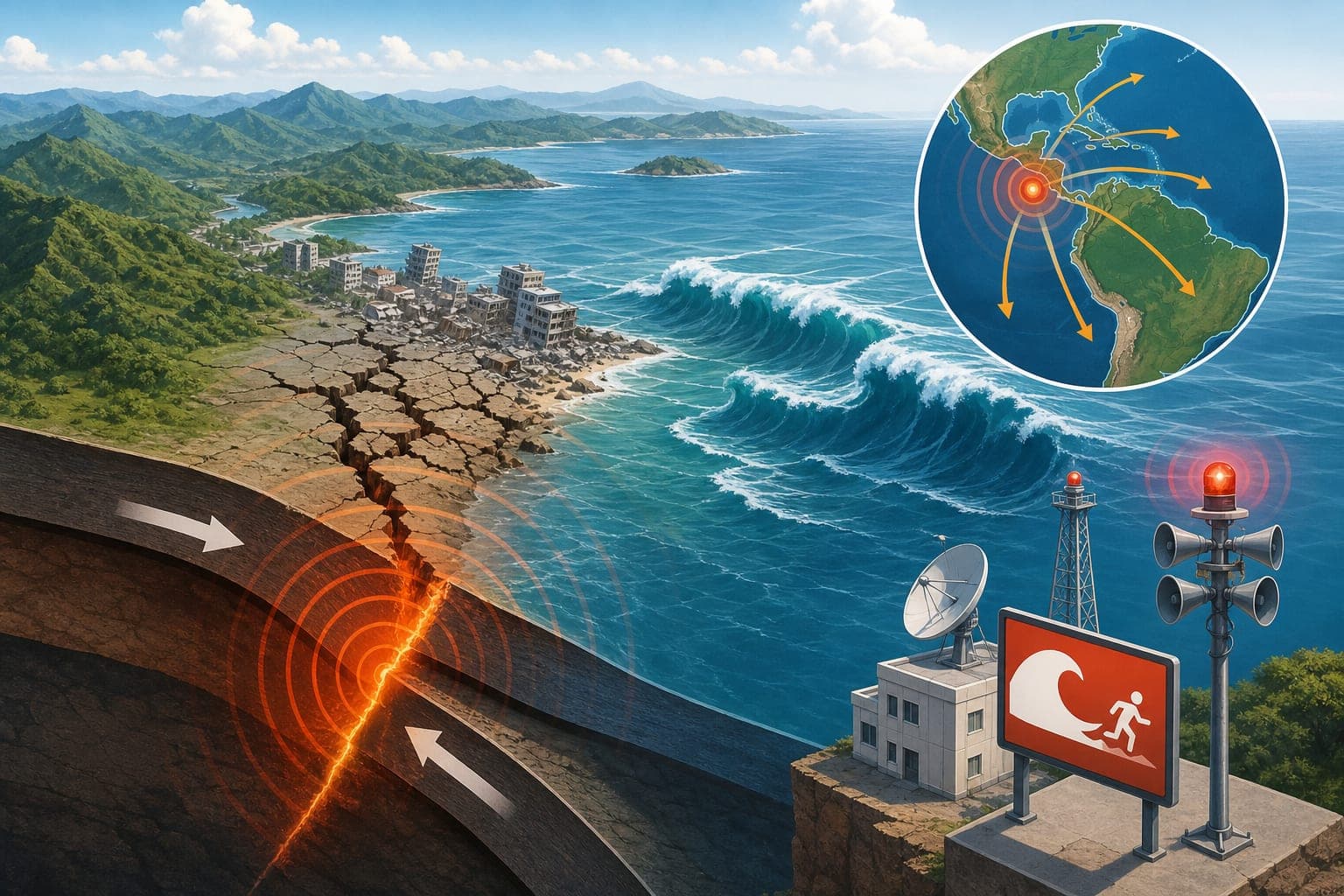
On October 9, 2026, a magnitude 7.7 earthquake struck the Azuero Peninsula in southern Panama. The earthquake occurred at a shallow depth of about 12.6 kilometres. Buildings were damaged, power was cut, and flights were temporarily stopped. Residents across the country felt strong shaking and rushed outside. It was reported to be the largest earthquake in Panama in recorded history.
The earthquake's epicentre was near the small community of Pitaloza Arriba. Scientists attributed the event to the Azuero-Sona Fault System in southern Panama. This fault system had built up enormous pressure over time. When that pressure was released, the seismic energy travelled across the entire country. More than a dozen significant aftershocks followed the initial earthquake.
Tsunami warnings were immediately issued for several countries in Central and South America. Waves up to three metres high were considered possible along Panama's coastline. The warnings covered Panama, Colombia, Ecuador, Nicaragua, and Guatemala, among others. Fortunately, the tsunami threat was later cancelled after careful monitoring by scientists. Schools were closed and the president called for calm among the population.
This event highlights the critical importance of early warning systems for natural disasters. If countries did not invest in monitoring technology, many more lives would be at risk. Experts believe that earthquake preparedness programmes can greatly reduce casualties and damage. The earthquake also demonstrated that even regions with rare seismic activity can experience devastating events. Continued research into fault systems remains essential for public safety worldwide.