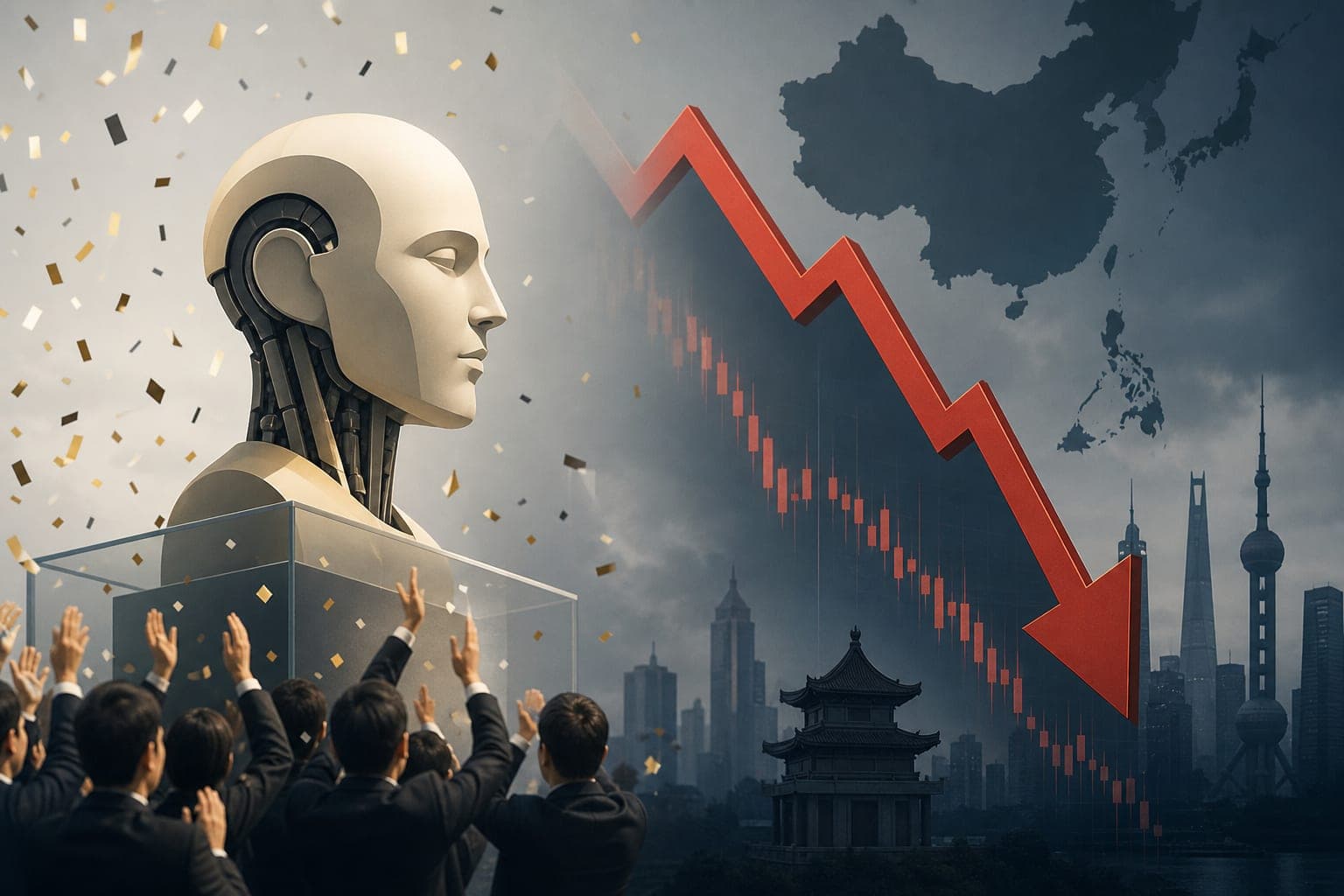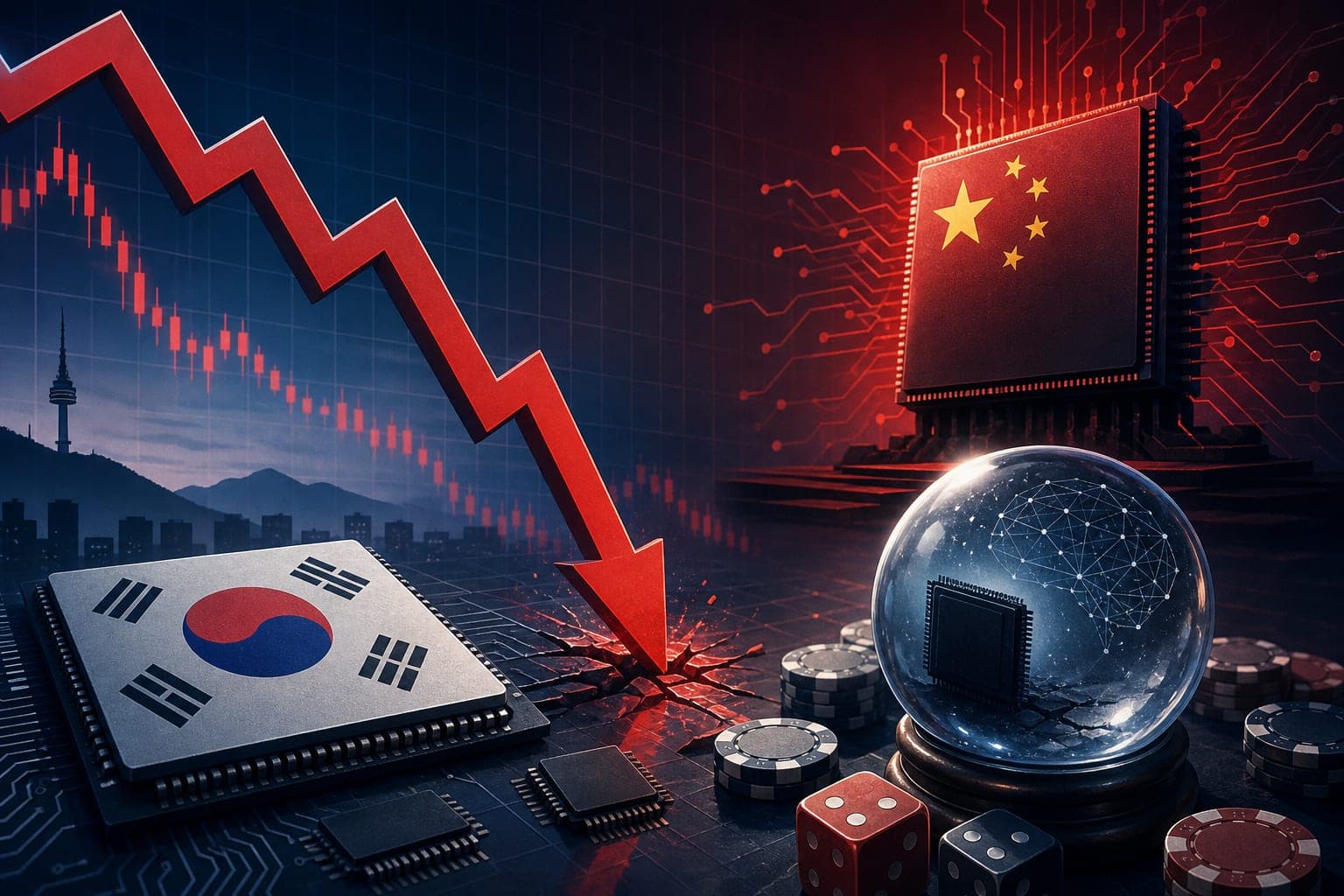
Seldom has a single trading session so starkly exposed the vulnerabilities of a market tethered to one industry. South Korea's benchmark Kospi index plummeted more than seven percent on Tuesday, briefly breaking below 6,000. Samsung Electronics and SK Hynix, which together constitute over half of the market's total capitalization, fell sharply. The rout was triggered by a confluence of concerns: rising Chinese competition and mounting skepticism about the AI boom's durability.
At the heart of the sell-off lies a technological challenge from China's ChangXin Memory Technologies. CXMT announced significant progress on a novel 4F-squared memory cell architecture that could boost chip density substantially. This design could potentially leapfrog Samsung's comparable roadmap by approximately two years, unsettling incumbents. The prospect of a formidable Chinese rival intensified fears that the oligopoly enjoyed by Korean and American chipmakers may erode.
Compounding these anxieties were provocative remarks from Broadcom CEO Hock Tan at a conference in Singapore. Tan likened many AI investors to casino gamblers, suggesting they lack comprehension of the technologies they fund. He questioned whether enterprises are squandering capital on AI initiatives without clear commercial returns. Such candid commentary from a prominent industry insider amplified the prevailing unease across semiconductor markets worldwide.
The repercussions extended well beyond Seoul. Taiwan's Taiex and Japan's Nikkei 225 each declined nearly two percent following overnight losses among US chipmakers. Micron Technology retreated approximately four percent, while Broadcom and Nvidia also registered notable declines. Foreign investors accelerated their withdrawal from Korean equities, offloading over six billion dollars in October alone. The synchronized downturn illustrates the profound interconnectedness of global semiconductor supply chains and capital flows.
Whether this correction constitutes a temporary recalibration or signals a structural shift remains subject to debate. The Kospi now sits roughly one-third below its June record high, when it surpassed 9,000. Analysts caution that uncertainty over the industry's upcycle persisting beyond 2028 continues to weigh on valuations. For investors, the episode serves as a sobering reminder that concentrated market exposure can amplify both gains and losses.