
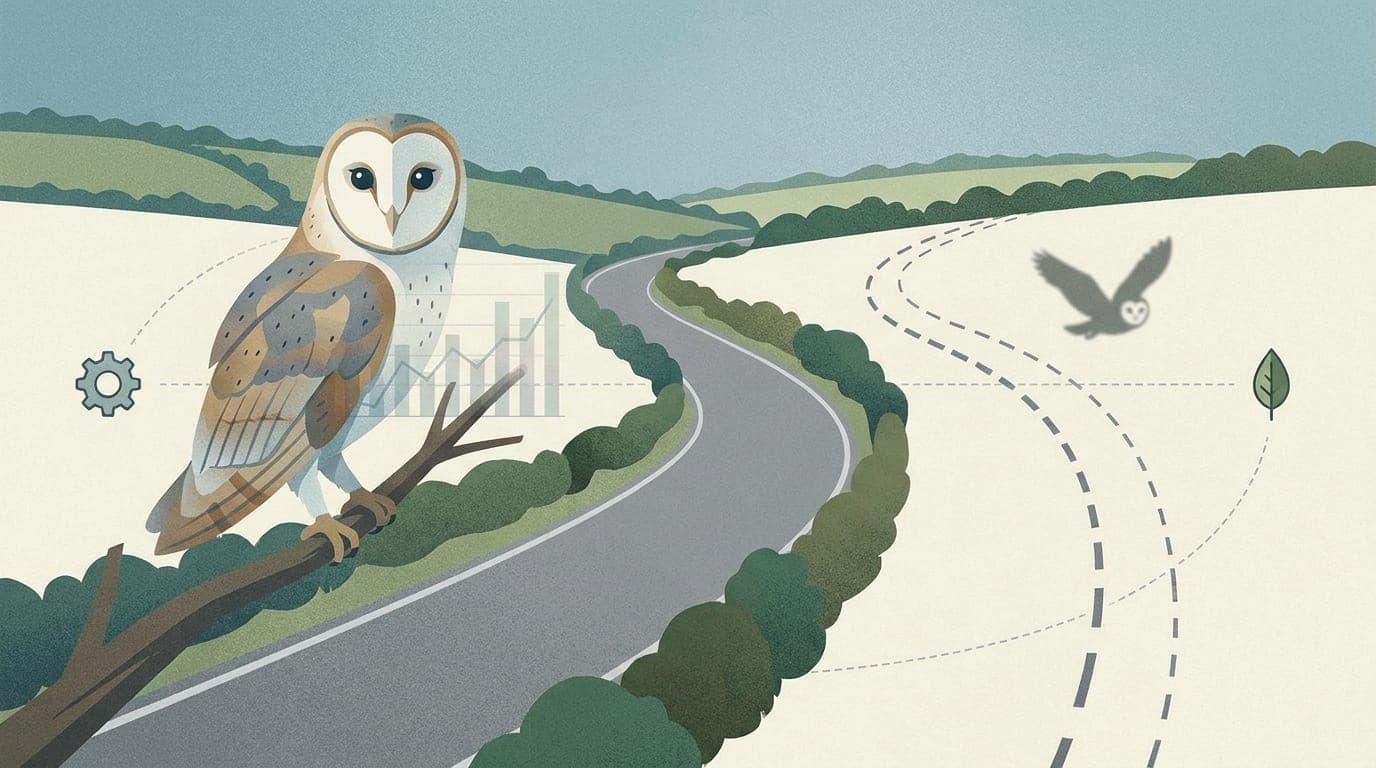
A proposed bypass in Herefordshire has ignited a heated debate about wildlife conservation. Environmentalists have raised serious concerns about the impact on local barn owls. The bypass project, which had been discussed for decades, recently progressed significantly. Herefordshire Council appointed a contractor in March 2026 to begin construction. The 3.6-kilometre road will link the A49 and A465 south-west of Hereford.
Barn owls are particularly susceptible to vehicle collisions due to their low-flying hunting behaviour. Research by the Barn Owl Trust reveals alarming statistics about road mortality. Britain's 4,000 pairs of barn owls produce approximately 12,000 young annually. An estimated 3,000 to 5,000 of these juveniles are killed on roads each year. Although major roads constitute less than two percent of Britain's roads, they account for over ninety percent of casualties.
The Herefordshire Wildlife Trust has examined the bypass route's potential ecological consequences. The proposed road would sever important habitats, including grasslands, woodlands, and orchards. Barn owls inhabit these landscapes, hunting small mammals across farmland at dawn and dusk. Conservationists argue that mitigation measures, such as planted tree screens, should be mandatory. These screens force owls to fly above traffic height, thereby reducing fatal collisions.
Supporters of the bypass emphasise its economic and social benefits for the region. Traffic on the A465 is expected to decrease by up to twenty percent. The council has pledged to implement ecological protections throughout the construction process. Nevertheless, critics contend that infrastructure development must not compromise endangered wildlife. Had comprehensive environmental safeguards been integrated from the outset, this conflict might have been avoided.