
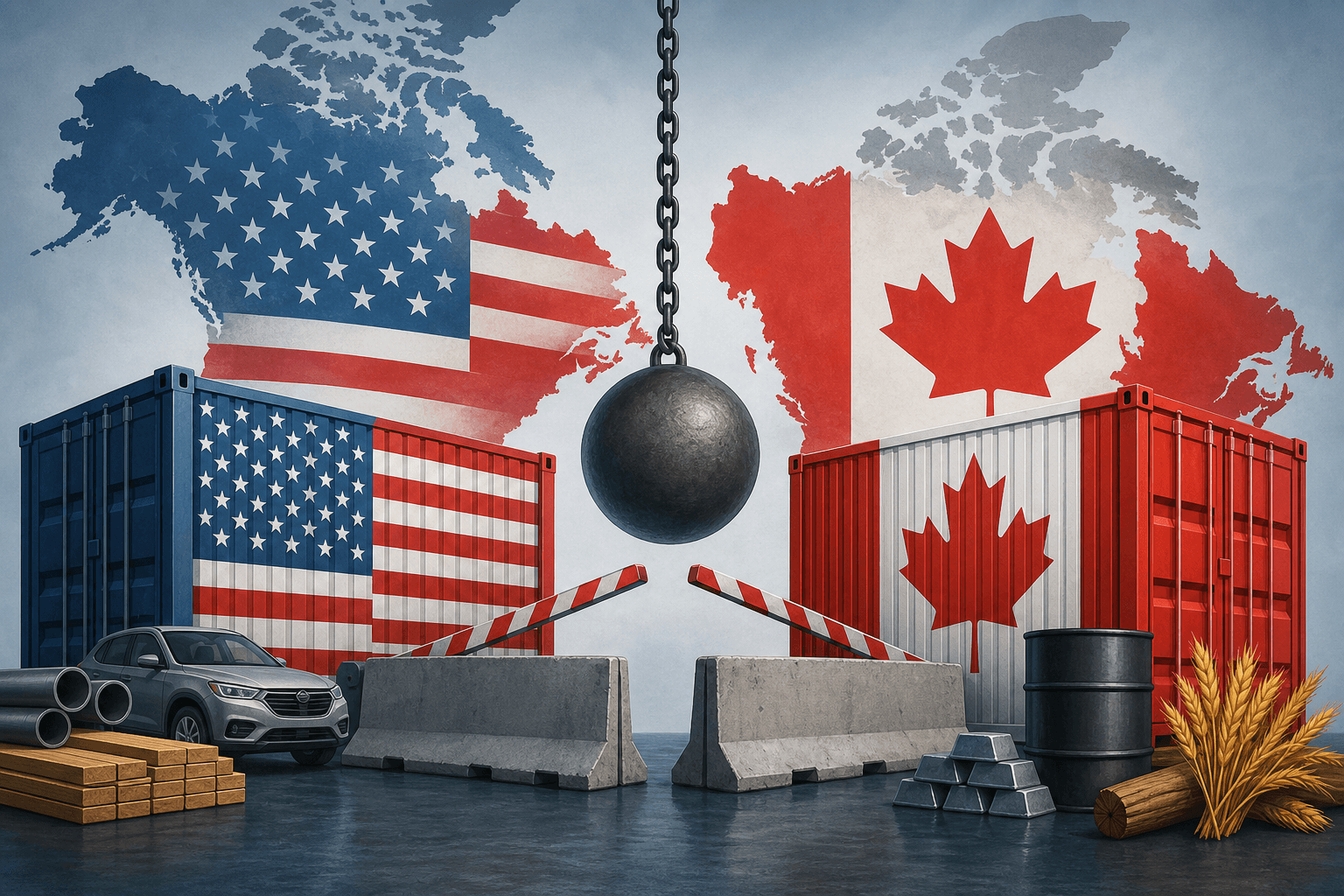
Seldom has a bilateral trade relationship deteriorated as rapidly as that between the United States and Canada in recent months. On September 8, 2026, President Trump signed five proclamations imposing import bans on Canadian dairy, alcoholic beverages, and motorcycles. These unprecedented measures came in direct retaliation after Canada enacted tariffs on approximately twenty billion dollars of American exports. The escalation marks a significant departure from decades of integrated cross-border commerce between the two nations.
The legal foundation for these actions lies in Section 338 of the Tariff Act of 1930. This obscure provision had not been formally invoked since the late 1940s. It authorises the president to impose duties of up to fifty percent on goods from countries deemed discriminatory toward American commerce. The statute also permits the outright exclusion of imports, a far more punitive instrument than conventional tariffs. Notably, these measures apply regardless of compliance with the existing trade agreement between the two countries.
Beyond the import bans, the administration expanded its existing fifty percent tariffs to encompass additional Canadian products. Items such as mattresses, motorboats, golf carts, and all-terrain vehicles now face heightened duties effective September 15. Simultaneously, certain previously targeted goods, including cement and road salt, were removed from the tariff list. Officials stated that adjustments reflected feedback from businesses whose supply chains were particularly dependent on Canadian imports.
The economic ramifications of this dispute extend well beyond the specific goods targeted. Canada's economy, roughly one-tenth the size of its American counterpart, sends approximately seventy percent of its exports southward. Analysts at Oxford Economics estimate that current tariffs could reduce Canadian GDP by 0.3 percentage points. Furthermore, economists warn that American consumers may face higher prices, thereby exacerbating existing affordability concerns. The disruption has already prompted Canadian businesses to accelerate efforts toward trade diversification.
What remains uncertain is whether this confrontational approach will yield the concessions that proponents anticipate. Historical precedent suggests that protectionist escalation often triggers retaliatory cycles detrimental to both parties. The invocation of a Depression-era statute underscores the administration's determination to find durable legal authority for its trade agenda. Nevertheless, the broader trajectory of this dispute will likely hinge on whether diplomatic channels can be reopened before further entrenchment occurs.