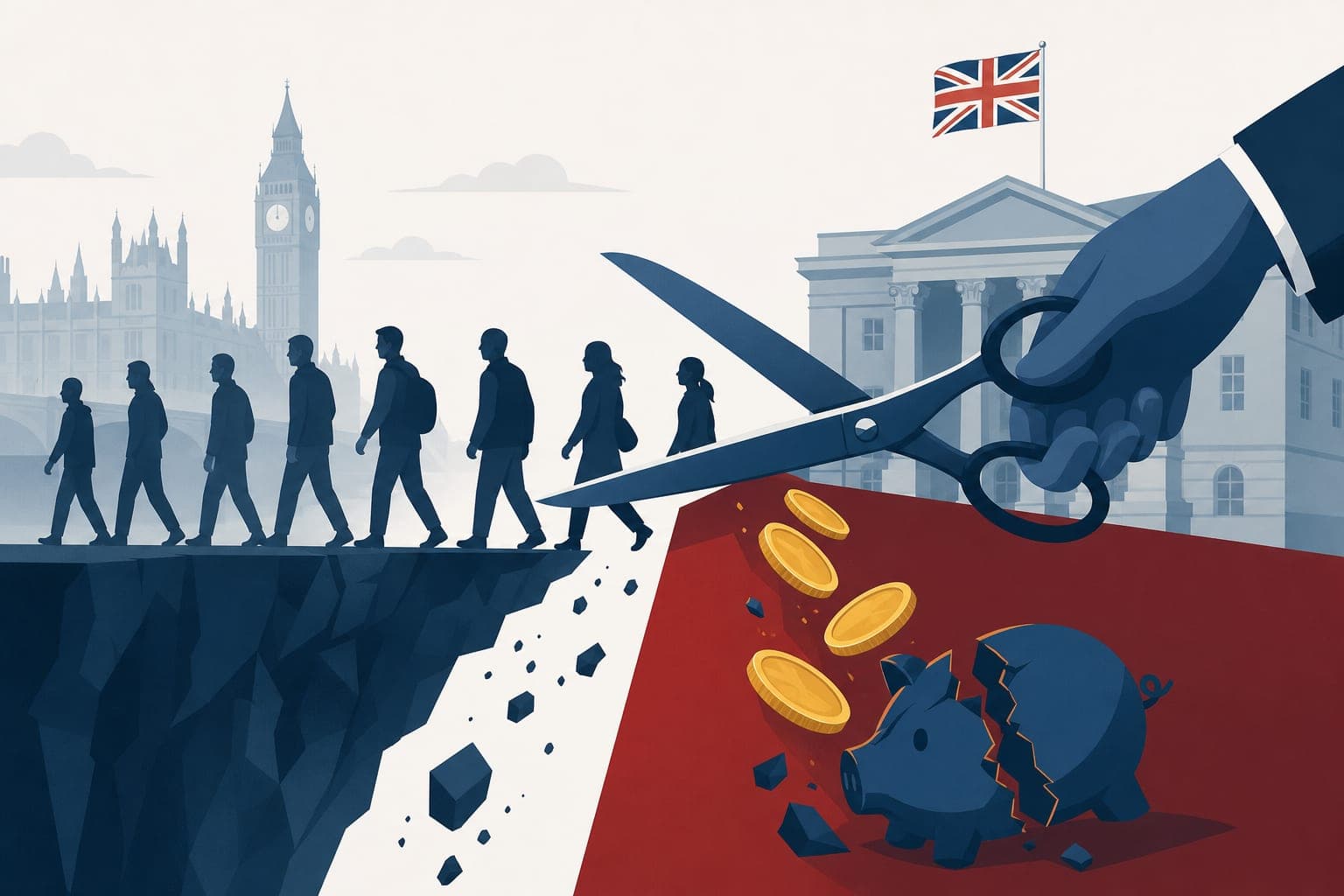
Seldom has a fiscal dilemma been so starkly illustrated. According to the Office for Budget Responsibility, every 100,000 immigrants lost to the UK costs the Treasury approximately £7 billion. As net migration has nearly halved to 171,000 in 2025, the implications for public finances are profound. The government now confronts an uncomfortable paradox between its political pledges and its fiscal obligations.
The Institute for Fiscal Studies has warned that Britain's migration crackdown could cost the Treasury up to £4 billion by the 2029-30 tax year. Moreover, the OBR estimated in 2024 that 200,000 fewer arrivals each year would generate roughly £20 billion in additional annual borrowing within five years. These projections underscore how dependent the UK's fiscal framework has become on migrant labour contributions.
What distinguishes this debate from previous immigration discussions is its fundamentally economic character. Migrants of working age typically contribute through income tax, national insurance, and consumer spending. They arrive with education already funded by their home countries, claim fewer state benefits, and many depart before reaching retirement age. Consequently, their net fiscal contribution tends to exceed that of the average resident.
The erosion of fiscal headroom compounds the challenge for policymakers. Rising gilt yields have already diminished the government's estimated £23.6 billion in fiscal space. Measures discouraging international students and skilled workers represent a significant hit to national coffers. Were the government to sustain its restrictive stance, the cumulative revenue shortfall could prove untenable for public services.
This predicament raises a pivotal strategic question for business leaders and investors alike. A shrinking working-age population constrains economic output, dampens consumer demand, and intensifies labour market shortages. Not only does immigration policy shape demographic trends, but it also determines the trajectory of sovereign borrowing costs. Ultimately, the trade-off between border control and fiscal sustainability may define Britain's economic outlook for years to come.