
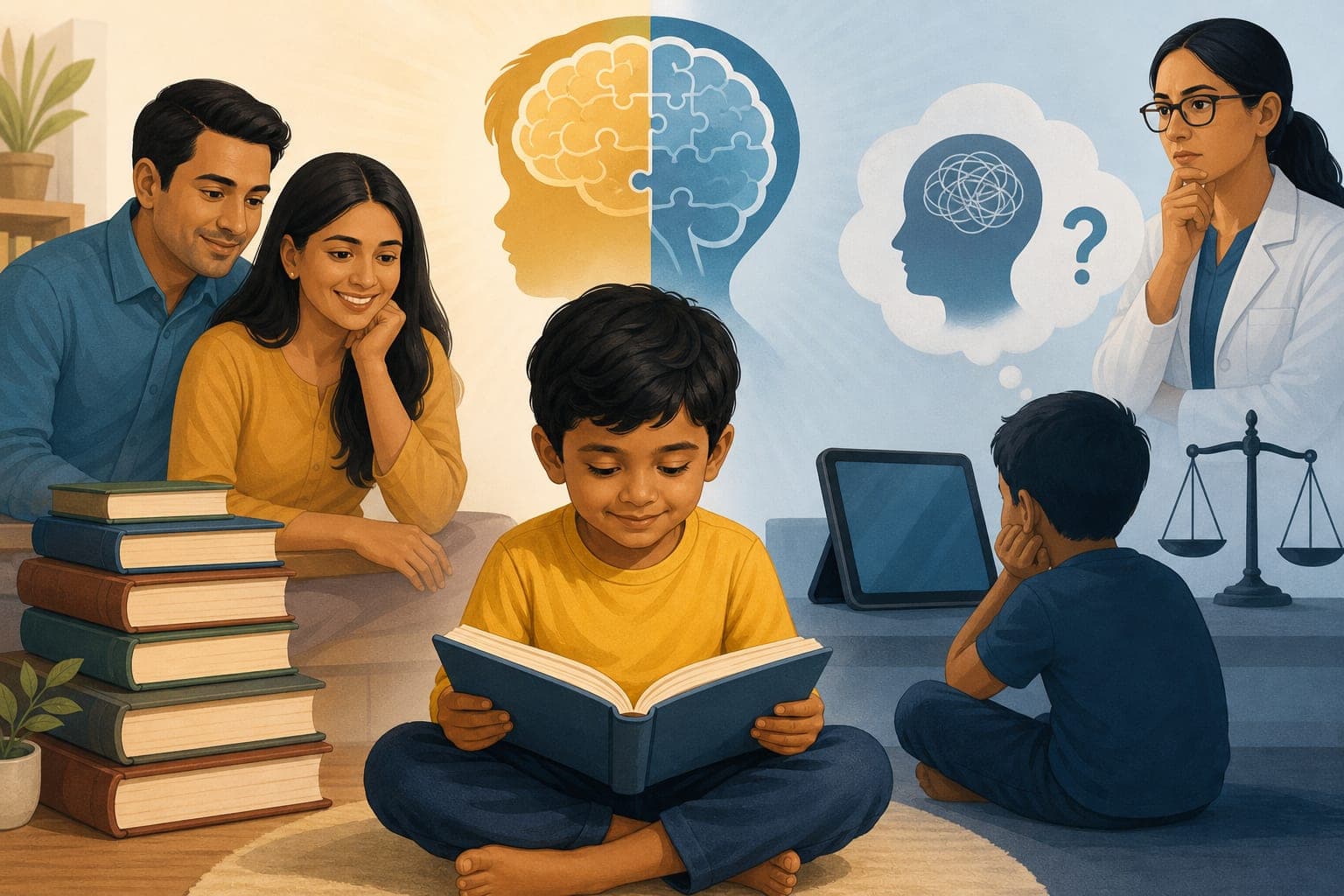
A four-year-old Canadian boy of Indian origin has achieved something remarkable. Arjun Prajapati scored 141 on the Stanford-Binet Intelligence test. This placed him in the 99.7th percentile for his age group. He was then accepted into both Mensa and Intertel. Mensa accepts only people who score in the top two percent.
Arjun began reading on his own at just two years old. Since then, he has explored more than three thousand books. His parents chose books over tablets and limited his screen time strictly. They believe that reading helped develop his natural curiosity deeply. Today, he works through mathematics at a fifth-grade level.
The debate about screen time and child development remains unsettled. Some research suggests that too much screen use may harm young children. However, a recent Finnish study found a surprising connection. Children with more screen time showed better thinking skills as teenagers. Researchers now say the type of content matters most.
Many experts also question whether IQ tests truly measure intelligence. These tests focus mainly on reasoning and problem-solving abilities. They do not assess creativity, emotional understanding, or practical wisdom. If IQ tests were broader, they would capture a fuller picture. Still, Arjun's story highlights the possible benefits of early reading.