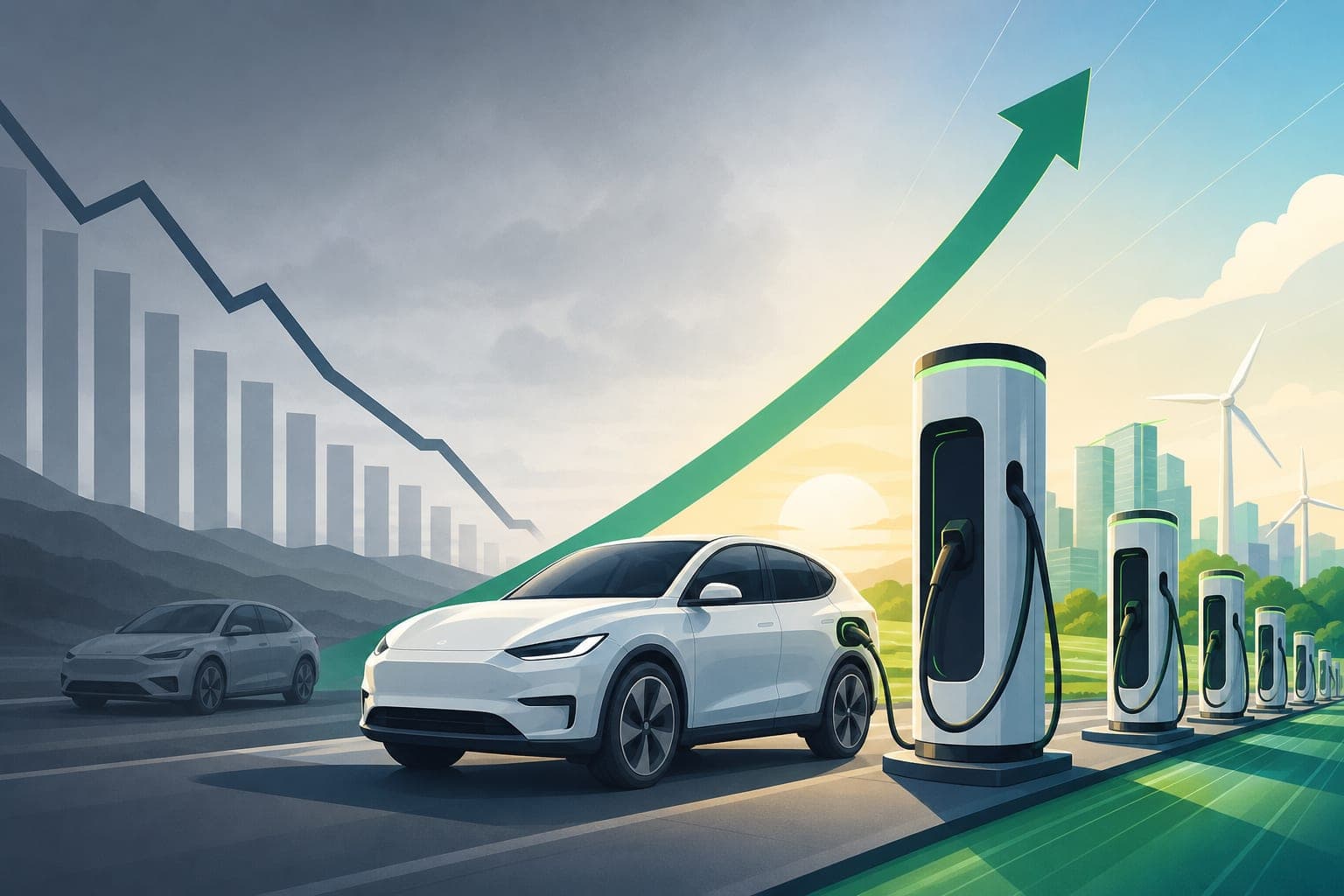
Seldom has a market downturn obscured such a compelling counternarrative. U.S. electric vehicle sales have plunged roughly 30% year-over-year, dragging battery-powered cars to just 6% of domestic auto sales. Yet beneath this grim headline, charging infrastructure providers are forging ahead with remarkable resilience. The paradox underscores a strategic bet by the industry on long-term electrification.
In the first quarter of 2026, American networks installed 3,387 new DC fast-charging ports across 617 new stations. This pace mirrors the record-setting trajectory of 2025, when over 18,000 fast-charging ports were deployed nationwide. The total U.S. public fast-charging footprint now exceeds 80,000 ports, a milestone few analysts had anticipated this soon. Utilization has remained stable, signaling that demand continues to absorb new capacity.
What distinguishes this expansion from earlier phases is a decisive pivot toward quality over quantity. Operators are consolidating chargers at existing high-traffic sites rather than dispersing them across new locations. High-power units delivering over 250 kilowatts now dominate new installations, substantially reducing charging times. Charger reliability has also improved, with most states reporting uptime rates between 90% and 95%.
The expiration of federal EV tax credits has undeniably dampened consumer appetite for electric vehicles. Nevertheless, private investment from automakers, retailers, and charging firms has largely offset the decline in public funding. OEM-backed networks such as Ionna are elevating the user experience with amenities like canopies and rest areas. This private-sector resilience suggests the infrastructure buildout is no longer contingent upon government subsidies alone.
For prospective EV buyers, the improving charging landscape may ultimately prove more consequential than short-term sales figures. A recent survey found that 53% of U.S. drivers are now more open to considering an EV than a year ago. Should this latent demand materialize, the infrastructure will be ready to accommodate it. The current downturn, paradoxically, may be laying the groundwork for a more robust and sustainable EV market.