
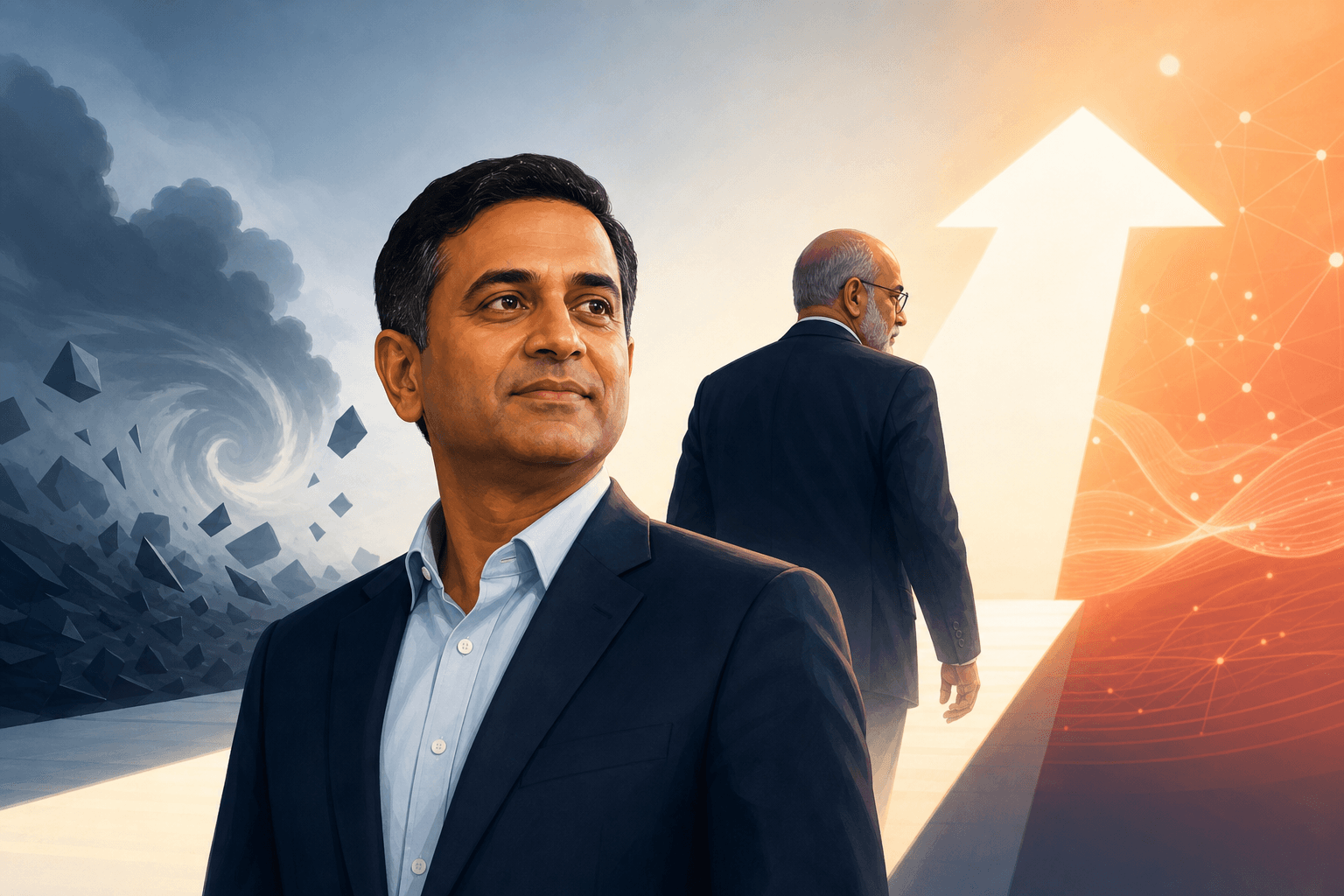
Seldom has a CEO succession in the technology sector carried such strategic weight. Adobe's board has unanimously appointed Anil Chakravarthy as the company's next president and chief executive officer. The transition, effective December 1, 2026, concludes Shantanu Narayen's remarkable nineteen-year tenure at the helm. Narayen will assume the role of executive chair, ensuring continuity during this pivotal handover. The appointment follows a rigorous selection process overseen by lead independent director Frank Calderoni.
Chakravarthy brings formidable credentials to the position. He joined Adobe in January 2020 after serving as CEO of Informatica, an enterprise cloud data management firm. At Adobe, he has spearheaded the Customer Experience Orchestration business and worldwide field operations. His track record includes guiding Informatica through a major transformation to cloud and subscription services. He also holds a doctorate from the Massachusetts Institute of Technology.
The leadership change arrives at a consequential moment for Adobe. Investor sentiment has deteriorated sharply, with shares declining twenty-five percent in 2024 and another twenty-one percent in 2025. The stock remains down approximately eighteen percent in 2026. This sustained downturn reflects broader market apprehension about generative AI disrupting established software companies. Adobe's board evidently concluded that fresh executive vision was imperative.
Chakravarthy has articulated a strategic vision centered on agentic software for creativity, productivity, and customer experience. This framing signals both continuity and evolution in Adobe's approach to artificial intelligence. The company's Firefly AI engine has already demonstrated commercial traction, reaching substantial recurring revenue. Should Chakravarthy successfully accelerate Adobe's AI monetization, the company could reclaim its premium market valuation. Conversely, failure to differentiate against nimble AI-native competitors would further erode shareholder confidence.
What distinguishes this succession from typical corporate leadership transitions is its timing amid profound industry disruption. Adobe must simultaneously defend its creative software dominance while pioneering new AI-driven revenue streams. Narayen's continued involvement as executive chair provides institutional knowledge that few successors enjoy. The market's initial reaction was cautious, with shares declining roughly two percent in extended trading. Nevertheless, Chakravarthy's enterprise expertise may prove instrumental in navigating this transformative era.