
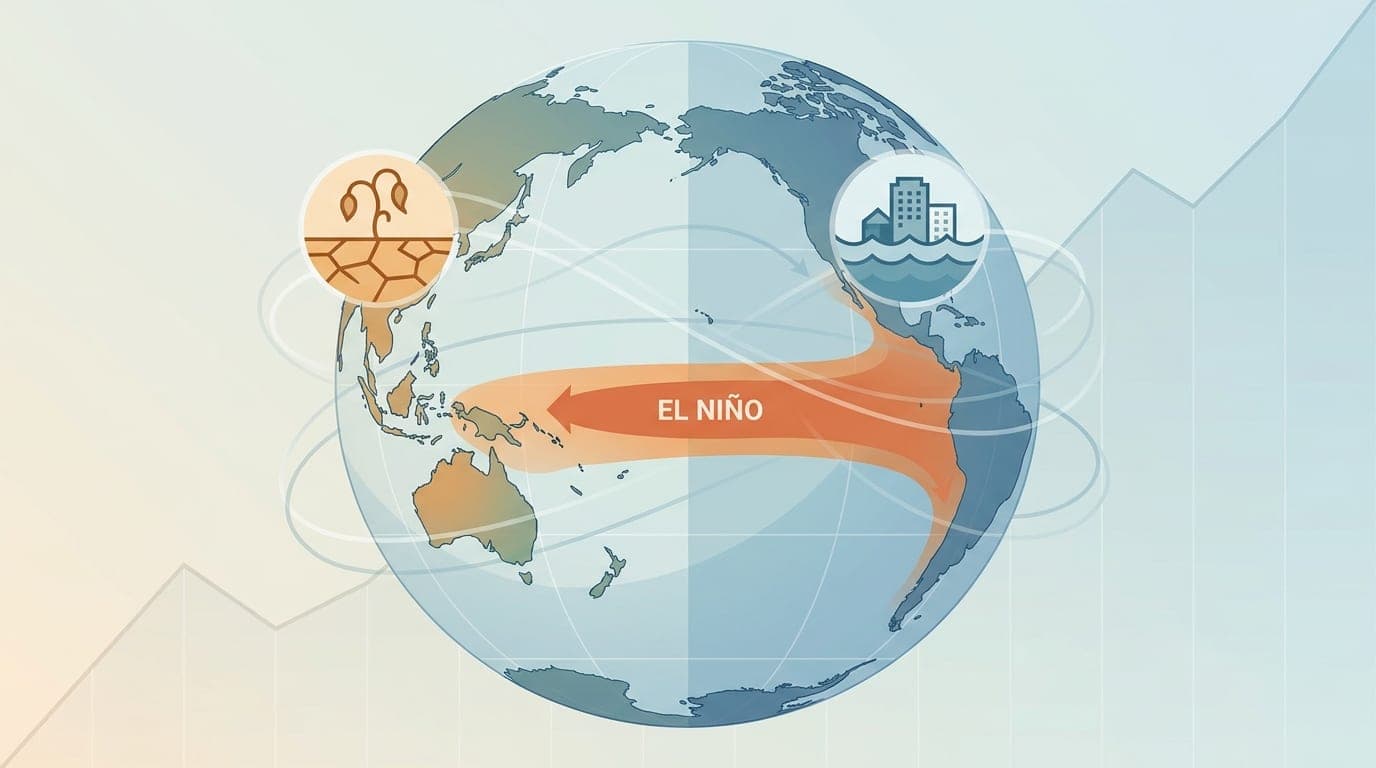
Seldom has the scientific community expressed such unanimous concern over an impending climate event. According to NOAA's Climate Prediction Center, there is an 82 percent probability of El Niño emerging by mid-2026. The phenomenon, driven by complex ocean-atmosphere interactions in the tropical Pacific, could persist through winter 2027. Some researchers now estimate a 50 percent chance of it becoming the strongest event in 140 years.
El Niño is fundamentally a natural climate cycle triggered when tropical Pacific waters warm beyond critical thresholds. Trade winds that ordinarily push warm water westward weaken or reverse during such episodes. This allows accumulated subsurface heat to surge eastward along the equator, disrupting atmospheric circulation globally. A Super El Niño is formally classified when sea surface temperatures exceed two degrees Celsius above normal.
What distinguishes this prospective event from previous occurrences is the unprecedented backdrop of global warming. Climate scientist Daniel Swain has cautioned that humanity has never witnessed a strong El Niño amid such elevated baseline temperatures. Consequently, the coupling of natural variability with anthropogenic warming could yield impacts that are genuinely without historical precedent. Either 2026 or 2027 may set a new global temperature record.
The ramifications for agriculture and food security are particularly alarming. El Niño has historically been linked to catastrophic crop failures, wildfires, and severe droughts across vulnerable regions. During the 2023 event, maize production declined by up to 70 percent in parts of southern Africa. Research estimates that global economic losses from El Niño events amount to trillions of dollars over subsequent years.
Regional impacts are expected to vary considerably, illustrating the phenomenon's far-reaching teleconnections. Increased flooding threatens East Africa, Peru, and the southern United States, while drought conditions may intensify across India and Australia. Furthermore, stronger El Niño events typically suppress Atlantic hurricane activity while amplifying storms in the eastern Pacific. Preparedness through seasonal forecasting remains indispensable for mitigating these multifaceted risks.