
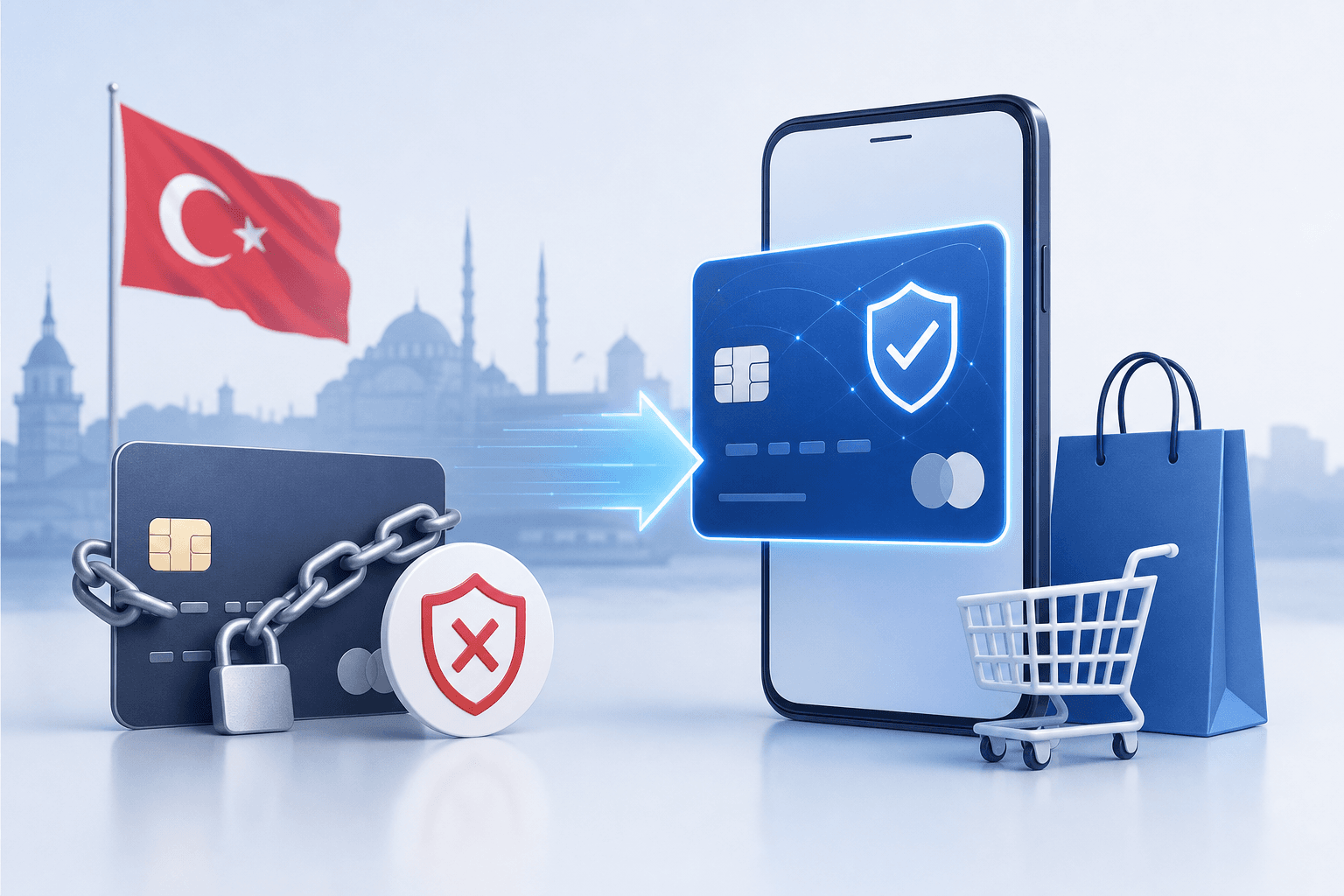
The way people shop online in Turkey is going through a major shift. Banking experts and cybersecurity professionals are warning consumers against sharing physical credit card details online. As e-commerce volume grows, so do data breaches and unauthorized transactions. Experts say the era of using traditional credit cards online may be ending.
Virtual card technology is emerging as the preferred alternative for online payments. These digital cards hide the user's real card number completely. They can be generated through mobile banking apps in just a few seconds. Each virtual card allows a spending limit equal to the purchase amount only. This approach minimizes the risk of fraud if a merchant's system is compromised.
Turkey's e-commerce sector faces significant cybersecurity threats that drive this transition. The country's rapidly growing online retail industry is targeted by twelve percent of cyberattacks. Payment card theft and phishing remain among the most common threats. Over eight thousand phishing domains were recently found imitating Turkish banking services. These alarming figures make a strong case for adopting virtual card solutions.
Industry analysts believe virtual cards will reshape digital commerce across the region. If all consumers adopted virtual cards, online fraud rates would decline substantially. Banks now offer instant virtual card creation, removing barriers to widespread adoption. The strategic shift represents both a security upgrade and a competitive advantage for businesses.