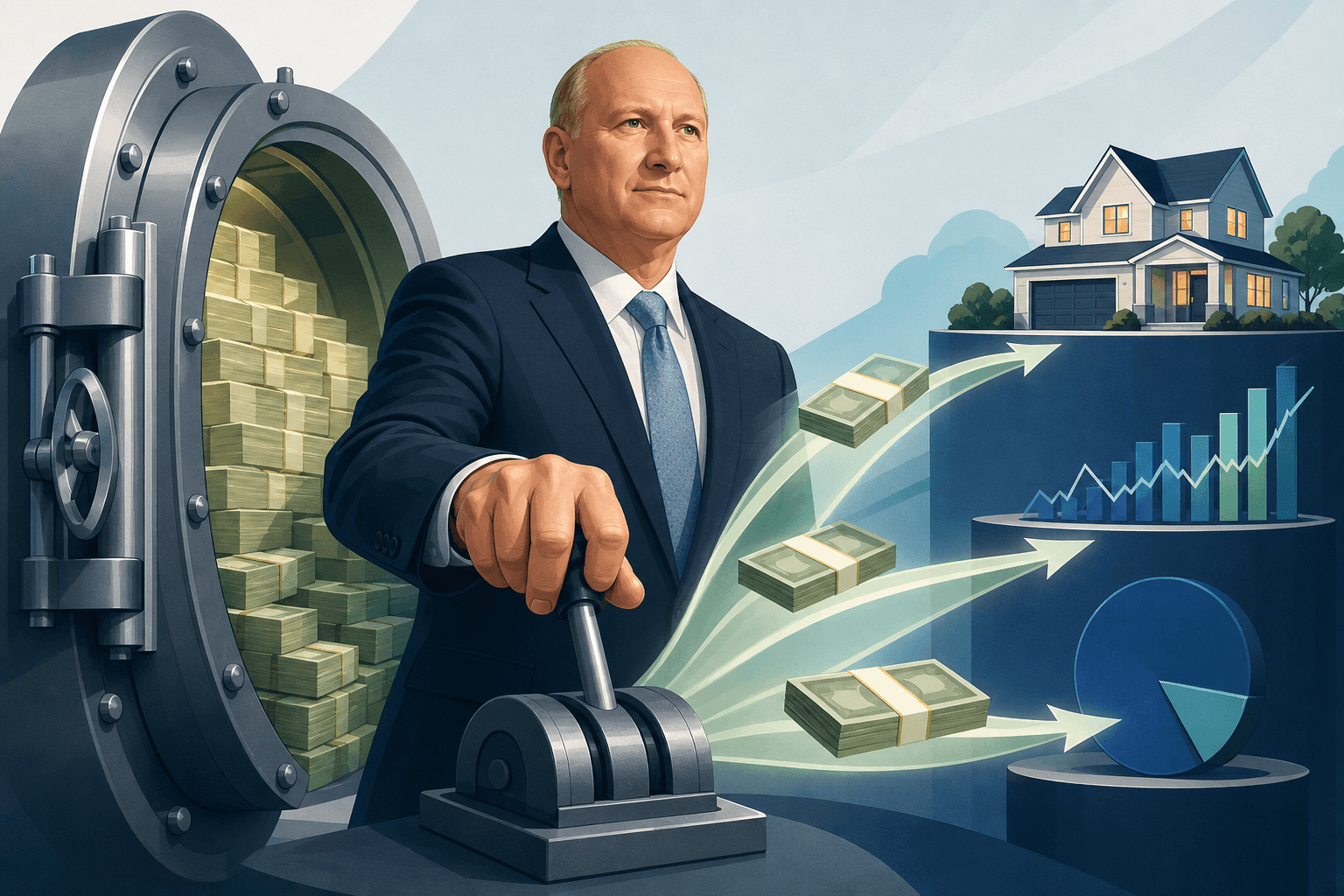
Seldom has a corporate succession attracted such intense scrutiny as that of Berkshire Hathaway's leadership transition. Greg Abel formally assumed the role of chief executive officer on January 1, 2026. Warren Buffett, who had steered the conglomerate for over six decades, transitioned to the position of chairman. Abel inherited a formidable cash reserve of approximately $397 billion, the largest corporate cash hoard in American history. The defining question of his tenure is whether he can deploy that capital as astutely as his predecessor.
Abel has wasted little time in demonstrating a willingness to put capital to work. In July, Berkshire finalized an all-cash acquisition of homebuilder Taylor Morrison for roughly $6.8 billion. Simultaneously, the firm committed approximately $23 billion to Alphabet through a series of transactions. This included a $10 billion private placement completed in June. The velocity of these investments signals a decisive departure from the prolonged period of cash accumulation.
Beyond acquisitions, Abel has also resumed share buybacks after a nearly two-year hiatus. Berkshire repurchased $4.5 billion of its own stock during the second quarter of 2026. The conglomerate's second-quarter operating earnings rose 16 percent year-over-year to approximately $13 billion. Net earnings more than doubled, reaching $25.7 billion, though investment gains distorted the bottom line. These robust results have bolstered confidence in the underlying operational resilience of the business.
What distinguishes Abel's emerging strategy is a pronounced emphasis on acquiring whole companies rather than passive equity stakes. The Taylor Morrison deal positions Berkshire within the residential construction sector amid a persistent housing shortage. Meanwhile, the Alphabet stake reflects a strategic pivot toward digital advertising, cloud computing, and artificial intelligence. This diversification underscores Abel's pragmatic approach to navigating an evolving economic landscape. Analysts have characterised his early moves as disciplined yet assertive.
Nevertheless, considerable challenges remain on the horizon for Abel and his leadership team. Berkshire's stock has underperformed the broader market, gaining just 3 percent year-to-date versus the S&P 500's 13 percent rise. Insurance underwriting profits declined 13 percent in the second quarter, exposing a vulnerability in a core segment. With $365.5 billion still in reserves, the market expects further consequential deployment of capital. Whether Abel can replicate the extraordinary returns that defined the Buffett era remains an open and pivotal question.