
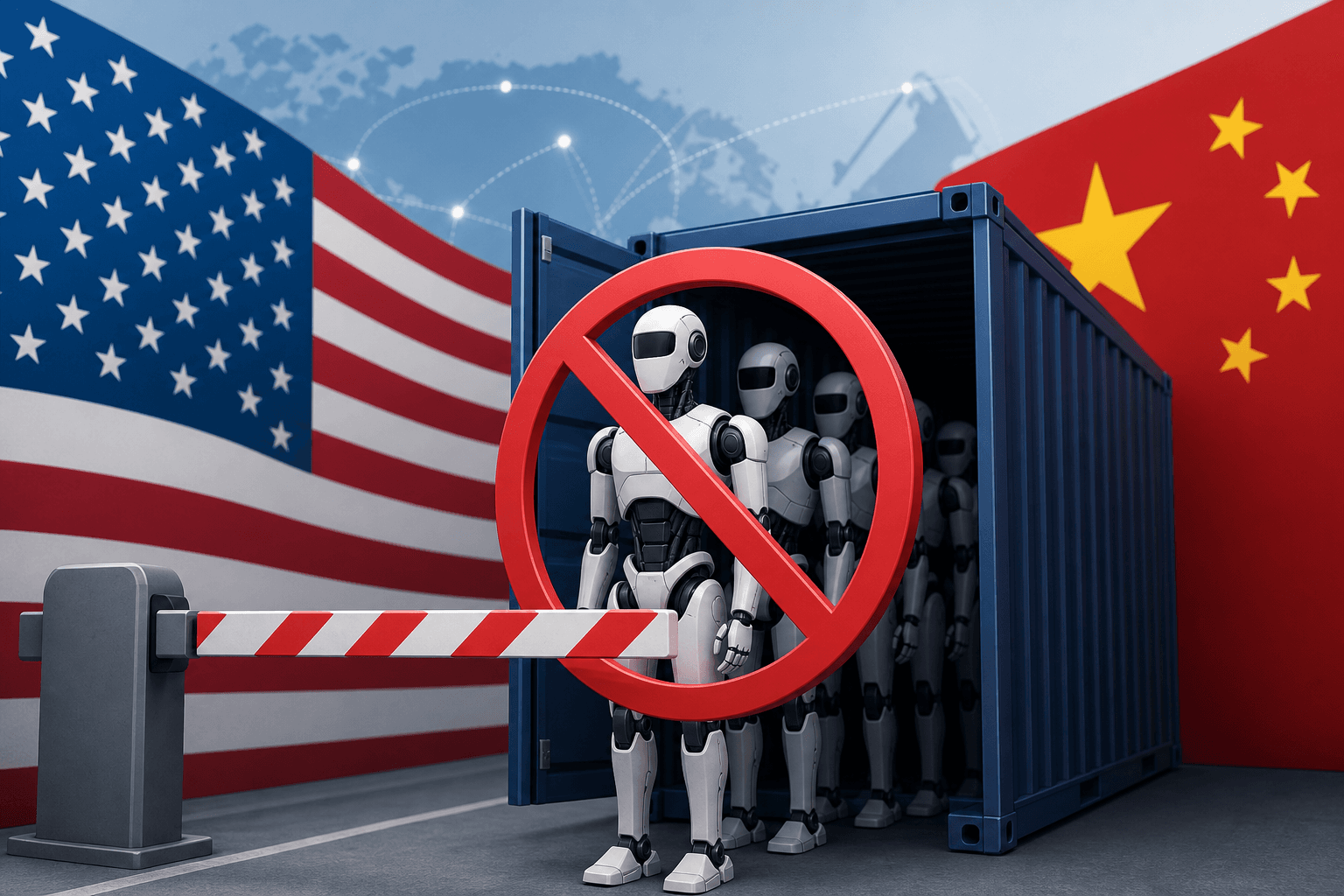
Seldom has a single regulatory action so dramatically disrupted an emerging global industry. The Federal Communications Commission announced on Tuesday a ban on imports of new foreign-made humanoid robots. The prohibition, which also covers quadruped robots and power inverters, targets products deemed to pose unacceptable national security risks. China, which commands an estimated 85% share of the global humanoid robot market, is the primary target of this measure.
The rationale underpinning the ban centers on cybersecurity vulnerabilities inherent in networked robotic systems. A White House-convened interagency body concluded that internet-connected robots could compromise critical infrastructure. Officials warned that offshore production leaves US supply chains susceptible to foreign disruption. The restrictions mirror earlier measures taken against Chinese-made drones and electric vehicles.
For domestic robotics firms, the ban may constitute a strategic windfall. Companies such as Figure AI, Agility Robotics, and Apptronik are scaling production of commercial humanoid robots. Agility Robotics is pursuing a landmark $2.5 billion public listing, becoming the first US-listed pure-play humanoid company. Proponents contend that reduced foreign competition will bolster domestic manufacturing and curtail dependence on overseas technology.
Beijing has condemned the decision, accusing Washington of politicizing trade and technology. China's commerce ministry warned that the escalating restrictions severely damage bilateral economic stability. Analysts note this action adds to a steady drumbeat of flashpoints ahead of a planned Trump-Xi summit in September. Morgan Stanley forecasts China's humanoid robot market could reach $15 billion by 2030, underscoring the enormous stakes.
Nevertheless, the long-term ramifications remain uncertain. Shielding domestic firms from competition could diminish the impetus to innovate rapidly. Chinese manufacturers have been scaling production and reducing costs faster than most overseas competitors. Whether this protectionist approach ultimately strengthens or undermines American technological supremacy will depend on sustained investment and execution.