
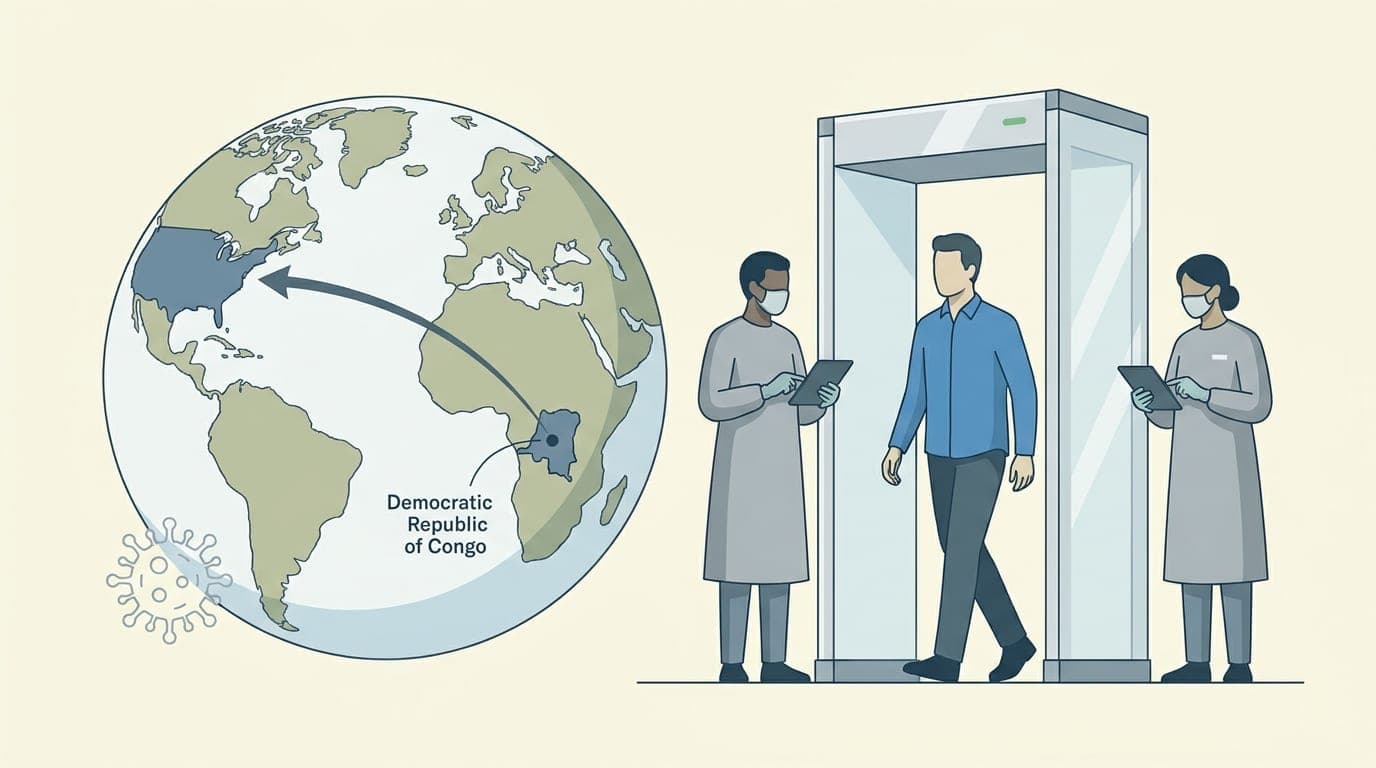
An American citizen has tested positive for Ebola while working in the Democratic Republic of Congo. The individual is being transported to Germany for specialized treatment. Six other Americans, identified as high-risk contacts, are also being evacuated for observation. In response, the United States has implemented enhanced screening at airports and other ports of entry. Health experts had been growing increasingly alarmed before this case was confirmed.
On May 18, 2026, the CDC and the Department of Homeland Security invoked Title 42. This public health law restricts entry into the country during outbreaks of communicable diseases. Non-U.S. passport holders who had visited Uganda, Congo, or South Sudan face entry restrictions. The mandate applies to anyone who traveled through these nations within the previous twenty-one days. The U.S. Embassy in Kampala has also temporarily suspended all visa services.
The outbreak involves the Bundibugyo strain of Ebola, for which no approved vaccine currently exists. As of May 19, authorities had reported over five hundred suspected cases and more than one hundred deaths. The World Health Organization declared the situation a public health emergency of international concern. Cases had reportedly been spreading undetected before health authorities recognized the scale of transmission. Epidemiologists warn that undetected spread could have been occurring for weeks.
The U.S. government mobilized thirteen million dollars in foreign assistance within forty-eight hours of confirmation. This funding supports surveillance, laboratory capacity, and clinical case management in affected regions. Despite these unprecedented measures, the CDC has assessed the immediate risk to the general American public as low. Nevertheless, experts argue that international coordination remains indispensable for containing the outbreak. Had global health systems been better prepared, the response could have been even swifter.