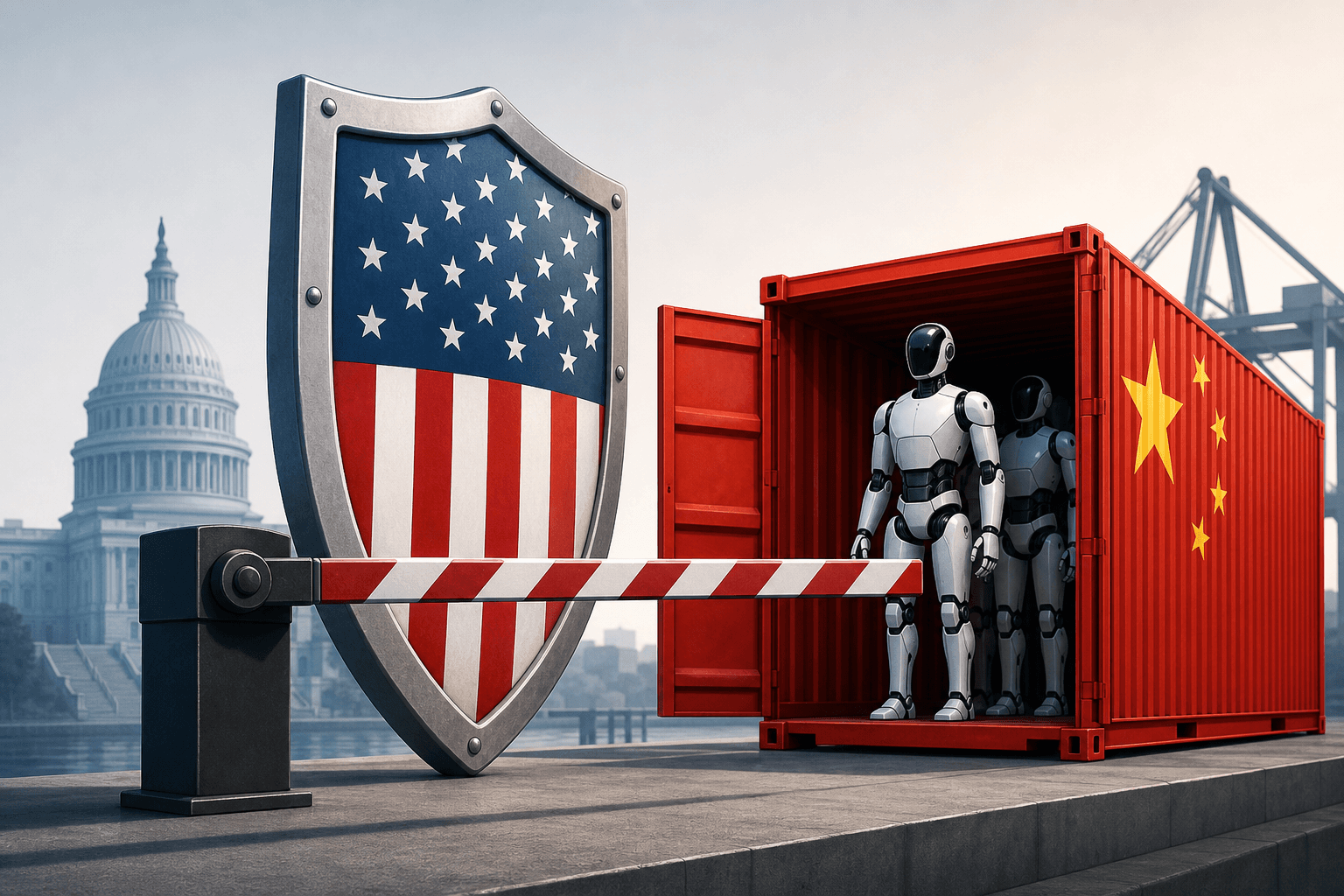
Seldom has a single regulatory action so profoundly disrupted the trajectory of an emerging global industry. The U.S. Federal Communications Commission announced a sweeping ban on imports of new foreign-made humanoid robots. The prohibition, which also covers quadruped robots and connected power inverters, explicitly cites national security risks. Although the FCC did not name China directly, analysts widely regard the measure as targeting Chinese manufacturers.
The rationale behind the ban centers on cybersecurity vulnerabilities and supply chain resilience. A White House interagency task force concluded that internet-connected robots could enable foreign surveillance of critical infrastructure. FCC Chairperson Brendan Carr stated that the objective was to secure America's critical supply chains. The restrictions took effect immediately but apply only to new models not yet authorized for sale.
China's dominance in this nascent sector makes the implications particularly consequential. Chinese firms hold an estimated 85% share of the global humanoid robot market. Unitree alone commands nearly 20% of worldwide shipments, while U.S. counterparts like Tesla shipped only a few hundred units. Morgan Stanley forecasts China's humanoid robot market could reach $15 billion by 2030, underscoring the commercial stakes involved.
The ban also threatens to unravel cross-border technology collaborations that have underpinned industry growth. Nvidia recently unveiled a humanoid robot reference design incorporating Unitree's chassis and its own Blackwell chips. The Pentagon, however, has listed Unitree among firms with alleged ties to China's military. Such entanglements illustrate the precarious intersection of commercial innovation and geopolitical rivalry.
Beijing has responded forcefully, accusing Washington of protectionism and vowing countermeasures to defend Chinese business interests. The dispute arrives ahead of a planned September summit between Presidents Trump and Xi Jinping. For U.S. firms such as Tesla, Figure AI, and Boston Dynamics, the ban may constitute a strategic windfall. Whether this protectionist approach ultimately bolsters or undermines American competitiveness remains an open question.