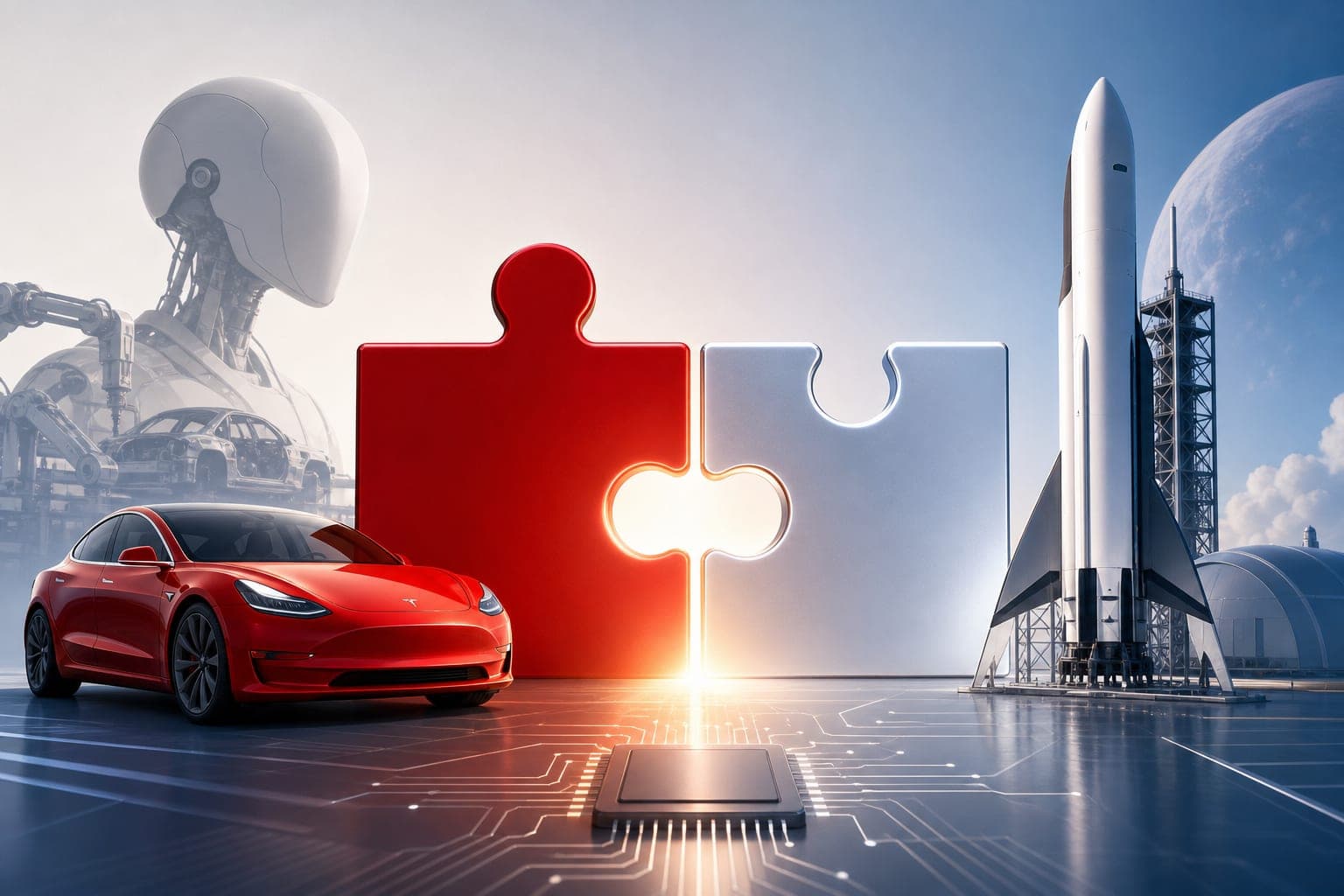
Seldom has a corporate announcement generated such immediate market reverberations. During SpaceX's third-quarter earnings call on October 20, Elon Musk confirmed that both companies had formed special committees. These committees, comprising independent directors, are tasked with evaluating a potential merger. Musk expressed his conviction that combining the two entities would be a sound strategic move. SpaceX shares subsequently surged more than eight percent the following morning.
The proposed consolidation would create an unprecedented conglomerate valued at roughly $3.5 trillion. SpaceX reported quarterly revenue of $14.6 billion, reflecting a remarkable 161 percent year-over-year increase. Net income reached $4.4 billion, a dramatic reversal from a $1.05 billion loss in the prior-year period. Such robust financial performance has strengthened the strategic rationale for the proposed tie-up.
What underpins the merger thesis is the growing convergence between the two companies' operations. They already collaborate on semiconductor fabrication through the jointly developed Terafab chip plant. Tesla invested approximately $2 billion in an AI subsidiary of SpaceX earlier this year. SpaceX's AI division, meanwhile, spent over $430 million on Tesla's Megapack battery storage systems.
Nevertheless, formidable obstacles remain before any transaction could be finalized. As a conflicted party under securities regulations, Musk cannot participate in the committee deliberations. He described the process as an unusual arrangement in which two groups negotiate without his involvement. On the Tesla side, approval from a majority of all outstanding shares would be required.
Analysts are already scrutinizing the deal's feasibility and potential structure. RBC Capital Markets has modeled a combined entity worth $3.74 trillion, with SpaceX shareholders holding the majority stake. Barclays has identified Tesla's upcoming annual meeting as a potential deadline for announcing terms. Whether this unprecedented consolidation materializes will ultimately depend on shareholder sentiment and fiduciary considerations.