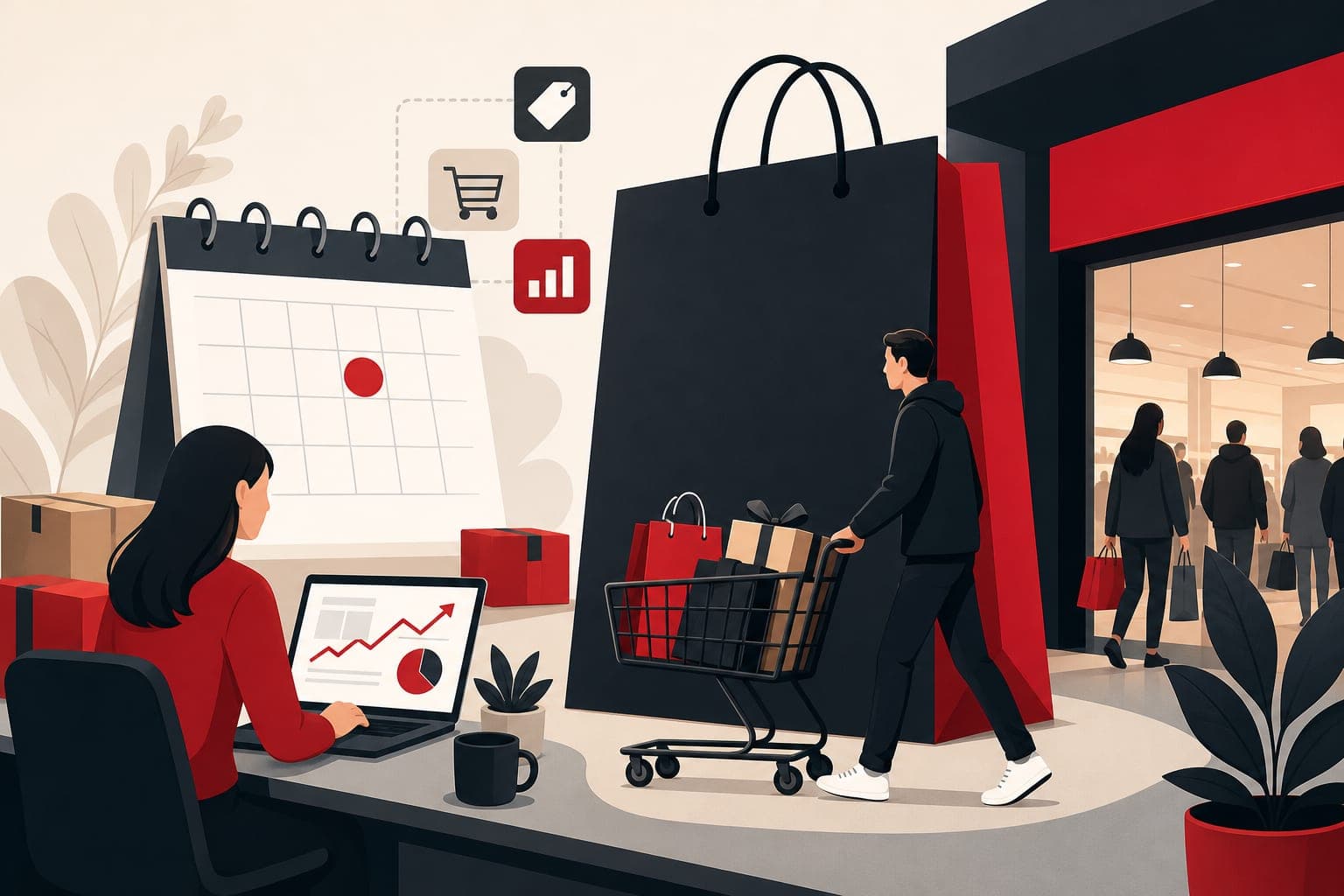
Black Friday 2026 is on November 27, the day after Thanksgiving. It remains the busiest shopping day of the year in the United States. However, the event has expanded well beyond a single day. Consumer engagement now builds throughout November, with shoppers comparing prices for weeks. Retailers that activate only during the final hours risk missing key opportunities.
U.S. consumers spent $17.5 billion during Black Friday last year. Online sales increased by about 15 percent compared to the previous year. The global average discount rate was around 26 percent across product categories. Electronics and apparel attracted the deepest discounts and highest consumer interest. These figures signal that competitive pricing remains a critical strategy for retailers.
Several trends are expected to shape Black Friday 2026. Mobile commerce has become the primary shopping channel for many buyers. AI-powered personalization is shifting from a competitive advantage to a baseline expectation. Buy Now, Pay Later services continue to grow as shoppers prioritize flexible payments. Consumers are also more deliberate, researching products carefully before making purchase decisions.
For retailers, winning in 2026 will demand precision and early planning. Brands that build richer audiences and deliver relevant experiences will gain an edge. Smaller businesses can compete by targeting niche markets and launching promotions early. If retailers invested more in data and personalization, they would likely see stronger returns. The holiday shopping season is no longer just about discounts.