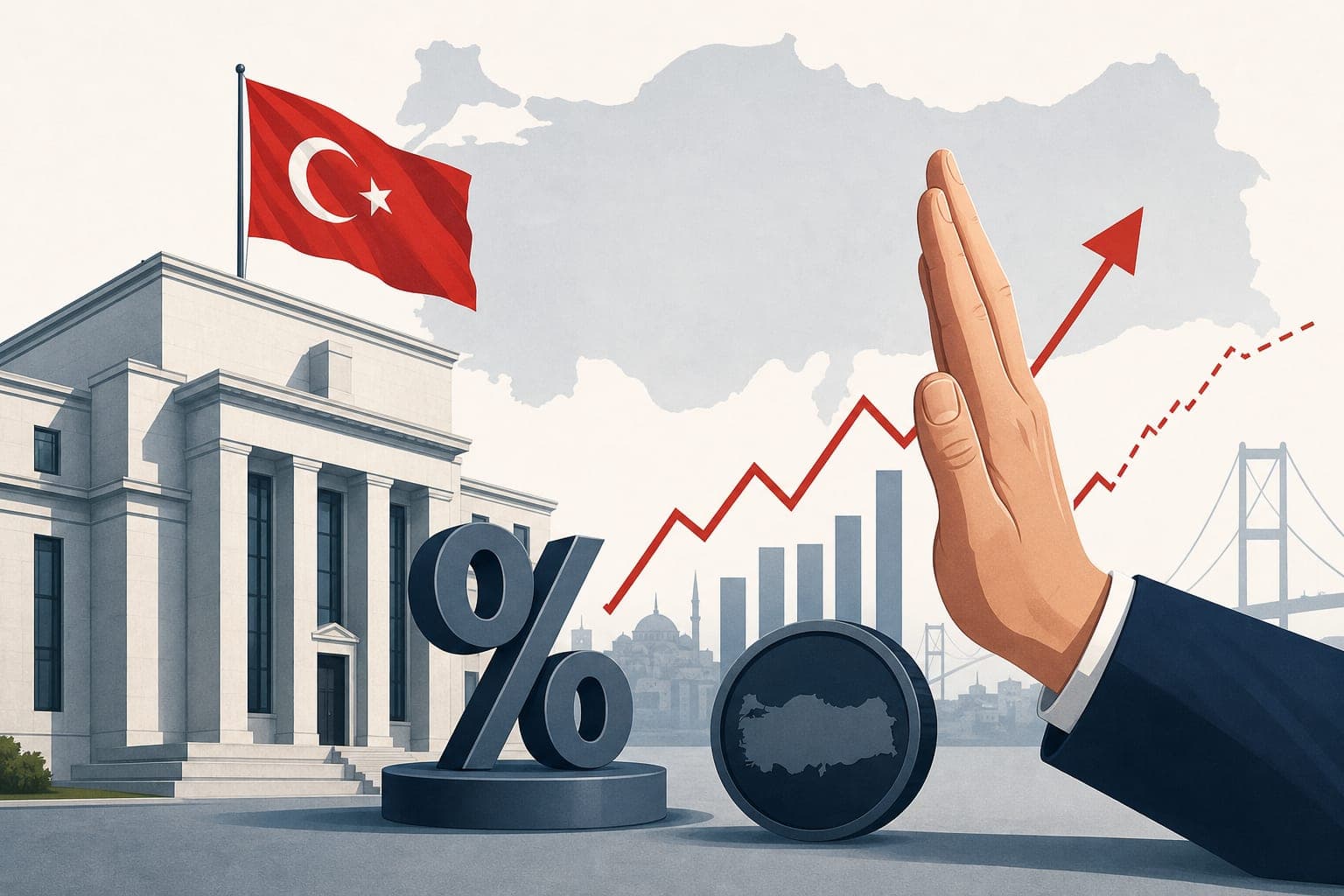
Seldom has Turkey's monetary policy attracted such sustained scrutiny from global financial institutions. Citigroup's latest assessment warns that the Central Bank of Turkey faces a narrow path forward. The benchmark policy rate has remained at 37% through five consecutive decisions this year. Investors are now focused on the upcoming October 22 meeting for any indication of easing.
Citi's economists see limited scope for rate cuts in the second half of 2026. They project the policy rate will end the year at 35%, implying only modest reductions. Twelve-month inflation expectations have risen sharply, climbing 159 basis points from their February low to 23.69%. This deterioration in the inflation anchor complicates any argument for premature monetary loosening.
Turkey's annual inflation rate declined to 29.73% in September, marking a fourth consecutive monthly deceleration. Nevertheless, the figure remains well above the central bank's year-end target of 28%. Geopolitical tensions, particularly elevated energy prices linked to the Middle East conflict, have added upward pressure. The IMF recently raised its average inflation forecast for Turkey to 31.2% this year.
What distinguishes the current dilemma is the tension between disinflation credibility and economic growth. GDP growth expectations have fallen to 3.1%, reflecting the fifth consecutive monthly decline in forecasts. Weaker domestic demand has not yet yielded meaningful disinflation, leaving the exchange rate to bear the burden. A premature cut risks eroding Turkey's real yield buffer of approximately 5.5 percentage points.
For emerging market investors, Turkey's monetary trajectory carries broader implications for portfolio allocation. Should the central bank maintain its hawkish stance, the lira may benefit from sustained capital inflows. Conversely, any perceived erosion of policy credibility could trigger renewed depreciation and capital flight. The consensus view suggests that prudence, rather than haste, will define the remainder of the easing cycle.