
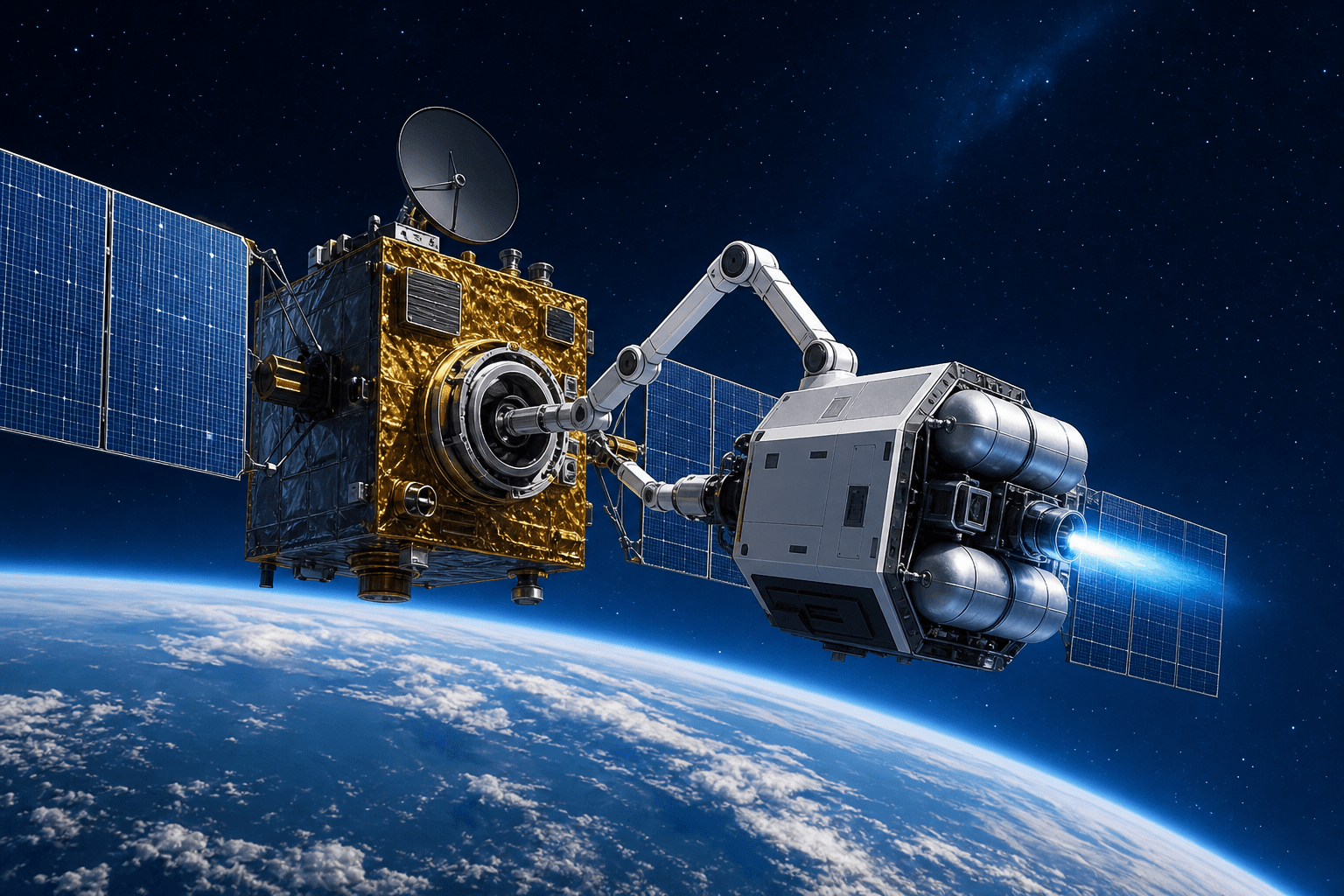
A new industry is emerging high above Earth. Private companies have begun launching missions to refuel and repair satellites in orbit. These spacecraft, which had been considered disposable, can now have their working lives extended. Most satellites in geostationary orbit retire not because they fail, but because their fuel runs out. This trend has created a significant business opportunity worth billions of dollars.
Northrop Grumman pioneered this market with its Mission Extension Vehicle program. Its MEV-1 spacecraft successfully added five years of service to an Intelsat satellite. The vehicle docked with the aging satellite in 2020 and completed its mission in 2025. In July 2026, Northrop Grumman launched its advanced Mission Robotic Vehicle with three extension pods. Meanwhile, startup Astroscale plans to refuel U.S. Space Force satellites in orbit this year.
The financial rationale behind satellite servicing is compelling for operators. A single communications satellite can cost up to 250 million dollars to build and launch. Had operators adopted servicing solutions earlier, they could have avoided retiring valuable assets prematurely. Over 95 percent of the 100 billion dollars generated annually in satellite revenue comes from geostationary assets. Extending their lifespan represents an extraordinary return on investment for the industry.
Beyond the financial benefits, satellite servicing addresses the growing problem of space debris. Approximately 2,000 large defunct objects currently orbit Earth, posing collision risks to active spacecraft. Failure to address this issue could cost the industry up to 42 billion dollars over the next decade. Industry analysts project that the satellite life extension market will reach nearly seven billion dollars by 2030. Strategic partnerships between aerospace companies and government agencies are accelerating this sector's growth considerably.