
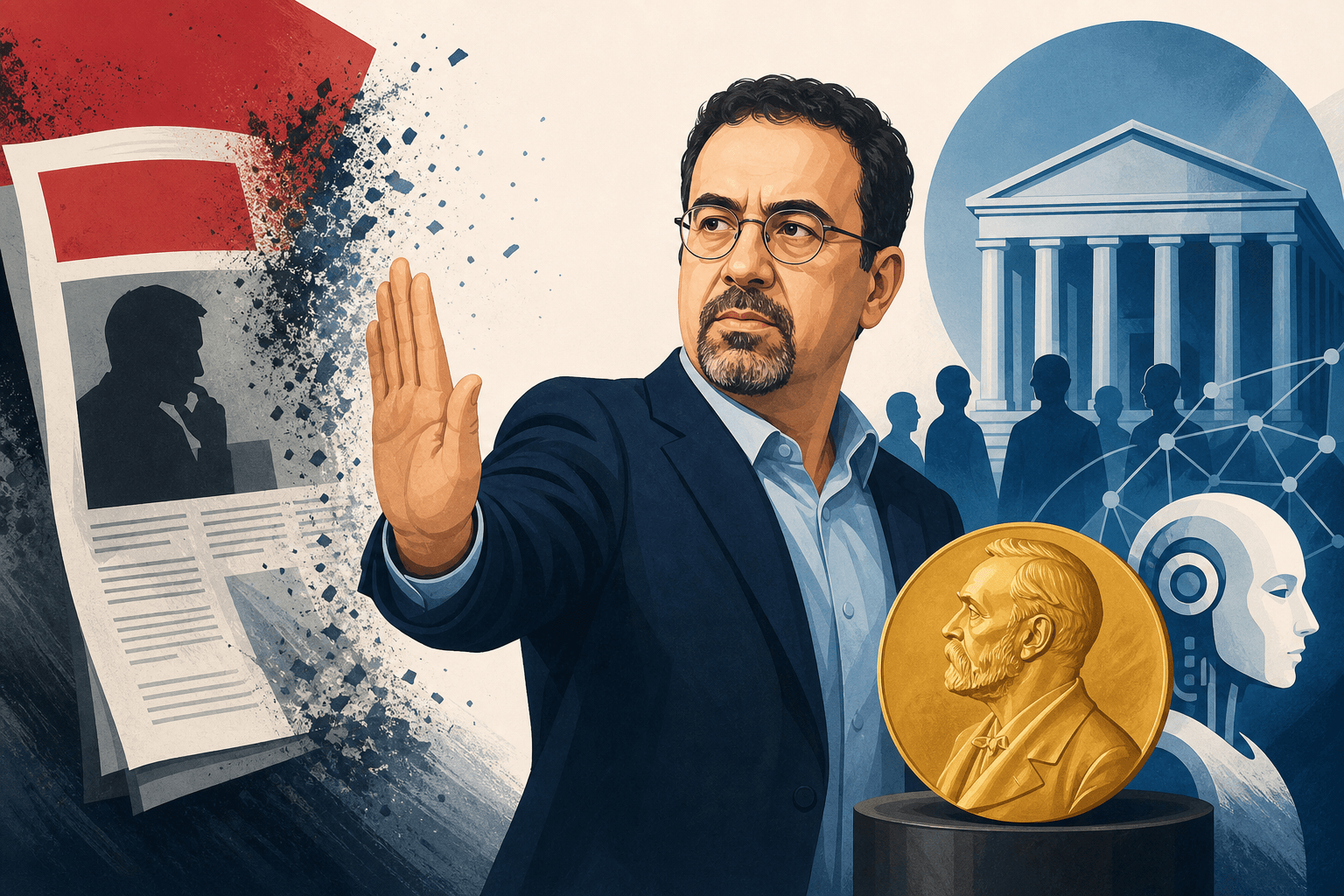
Seldom has a leading academic journal so publicly challenged the intellectual legacy of a reigning Nobel laureate. The Economist recently published an article titled 'The world's most influential economist is oddly unconvincing,' questioning whether Daron Acemoglu's towering reputation is commensurate with the substance of his research. The MIT professor, who shared the 2024 Nobel Prize in Economic Sciences, swiftly condemned the piece. He described it as a 'hit piece' and requested an opportunity to rebut the claims formally.
The magazine's critique comprised three principal objections. First, it questioned the empirical robustness of Acemoglu's celebrated 2001 paper with Simon Johnson and James Robinson. That landmark study linked colonial-era institutions to long-term differences in national prosperity. Second, The Economist challenged the explanatory power of his broader institutional framework. Third, it portrayed his views on artificial intelligence as excessively pessimistic and lacking credibility.
Acemoglu's institutional theory has profoundly shaped development economics over two decades. His 2001 paper alone has been cited more than twenty-three thousand times by fellow researchers. Yet critics have long noted potential methodological vulnerabilities in the settler mortality data underpinning the study. A 2012 analysis by economist David Albouy raised concerns about data substitution across countries. Even the Nobel Committee's own report acknowledged certain figures were 'superficial' in places.
The dispute has also reignited debate over Acemoglu's increasingly prominent commentary on technology. He has estimated that AI will deliver roughly 0.55 percent in total factor productivity gains over the next decade. This figure stands in stark contrast to Wall Street's far more euphoric projections. Social media users speculated that his recent advocacy for AI regulation may have precipitated the magazine's criticism. Several prominent economists rallied to his defense, suggesting the article conflated legitimate scholarly scrutiny with character assassination.
This high-profile confrontation underscores a broader tension within the economics profession itself. As Noah Smith, an economics commentator, observed, most top economists harbor questionable assumptions somewhere in their body of work. The episode raises pertinent questions about intellectual gatekeeping and the accountability of influential publications. Whether The Economist grants Acemoglu a formal rebuttal remains to be seen. Regardless, the controversy has thrust fundamental debates about institutions, technology, and prosperity firmly into the spotlight.