
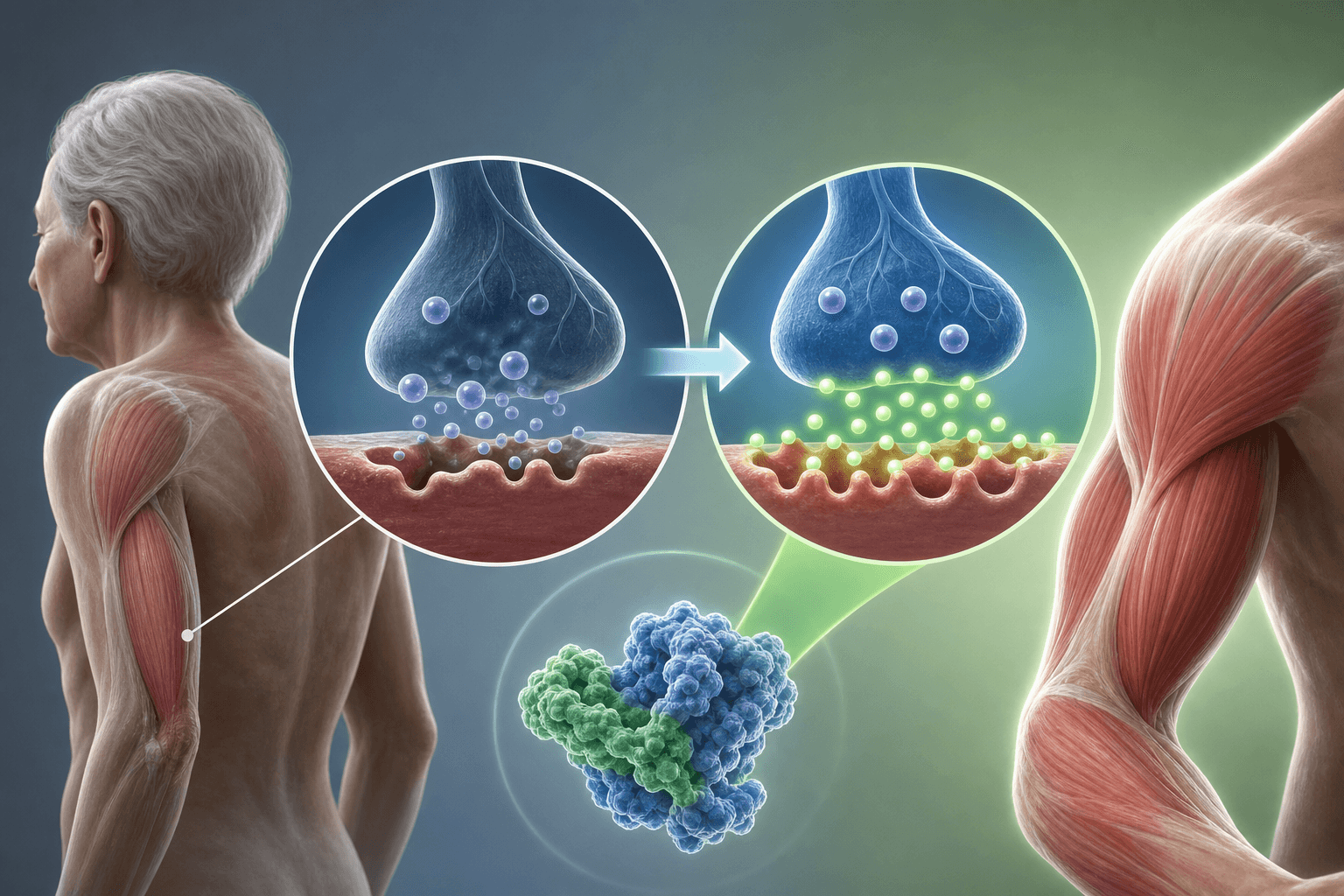
Seldom has a single discovery so fundamentally challenged prevailing assumptions about why muscles weaken with age. Researchers at the University of Missouri have identified a previously unrecognised breakdown in communication between nerves and muscles. This disruption at the neuromuscular junction contributes significantly to sarcopenia, a condition affecting nearly half of adults over eighty. The finding, published in The Journal of Clinical Investigation, suggests that age-related weakness may be more reversible than once believed.
Led by W. David Arnold, the international research team examined how nerve signals activate muscle fibres in older individuals. They discovered that a protein called NaV1.4 diminishes at the neuromuscular junction as people age. This localised reduction impairs the muscle's capacity to respond to nerve impulses, thereby undermining overall strength. Crucially, this excitability defect is distinct from other known causes of muscle deterioration.
What distinguishes this research from prior investigations is its integration of clinical and preclinical evidence across species. Weak older adults exhibited measurable transmission failure at the neuromuscular junction. In aged rodents, artificially inhibiting NaV1.4 in younger animals reproduced the same patterns of dysfunction. These convergent findings substantiate the claim that junction failure is a fundamental mechanism of sarcopenia.
The researchers subsequently explored a therapeutic intervention by targeting another protein, the chloride ion channel ClC-1. Inhibiting ClC-1 enhanced muscle excitability and improved neuromuscular transmission in older rodents. In preclinical trials, this approach acutely increased muscle force by over fourteen percent. A drug candidate called ignaseclant, which partially inhibits ClC-1, is now being evaluated for potential clinical application.
The implications of this discovery extend well beyond the laboratory. Sarcopenia diminishes independence and quality of life for millions of older adults worldwide. Should ClC-1 inhibition prove effective in human trials, it could constitute a paradigm shift in geriatric medicine. Arnold has expressed optimism that this work may ultimately yield widely accessible treatments for age-related muscle weakness.