
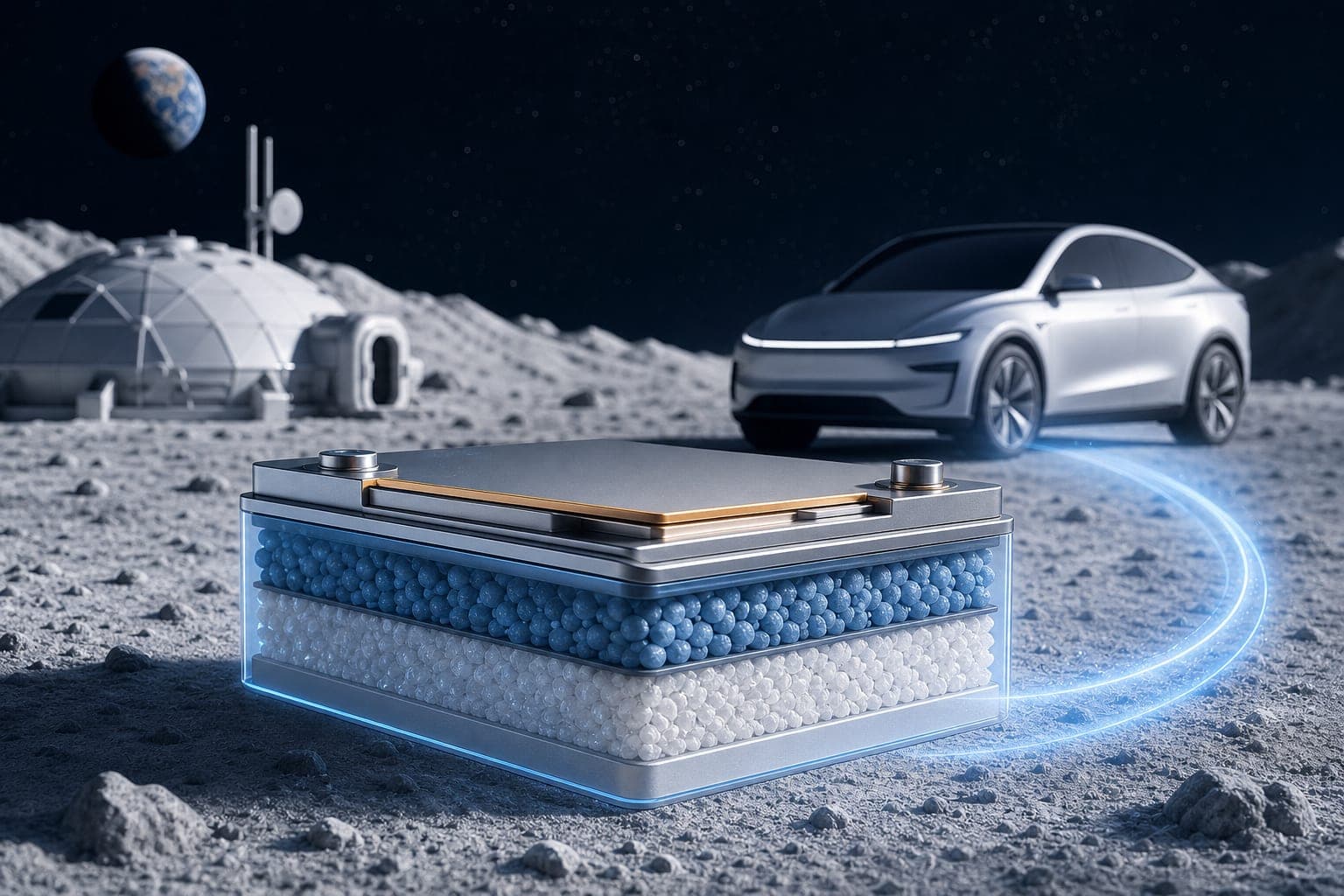
Seldom has a space-exploration initiative carried such profound implications for a terrestrial industry. NASA has developed a solid-state battery that endured minus 274 degrees Fahrenheit during thermal vacuum testing. The prototype emerged from the SPEARS project, designed to power equipment under the Artemis lunar program. Should this technology transition to commercial applications, it could fundamentally disrupt the electric vehicle sector.
Conventional lithium-ion batteries rely on liquid electrolytes that freeze and degrade in harsh conditions. These flammable liquids also pose escalating fire hazards, undermining consumer confidence in EV safety. NASA's solid-state architecture replaces those volatile liquids with solid ceramic or polymer materials. This substitution yields a more resilient and inherently safer energy storage platform.
During rigorous testing at NASA's Langley Research Center, the coin-cell prototypes demonstrated operational viability at minus 112 degrees Fahrenheit. Optimal performance occurred within a range of minus 76 to positive 176 degrees Fahrenheit. Crucially, the cells sustained no structural damage after exposure to extreme thermal cycles. Such durability could prove indispensable for EV deployment in cold-climate markets.
From a strategic standpoint, the commercial spinoff potential is considerable. NASA envisions applications spanning electric vehicles, drones, smartphones, and grid-scale energy storage. For automakers grappling with cold-weather range anxiety, this technology could represent a decisive competitive advantage. However, the batteries remain laboratory prototypes that have not yet undergone spaceflight validation.
Industry analysts will be monitoring whether incumbent battery manufacturers can integrate these advancements into scalable production. The trajectory from laboratory prototype to mass-market commercialization invariably demands substantial capital investment. Nevertheless, the convergence of aerospace innovation and automotive engineering may herald a new paradigm in energy storage. Stakeholders would be prudent to assess the long-term ROI implications of this emerging technology.