
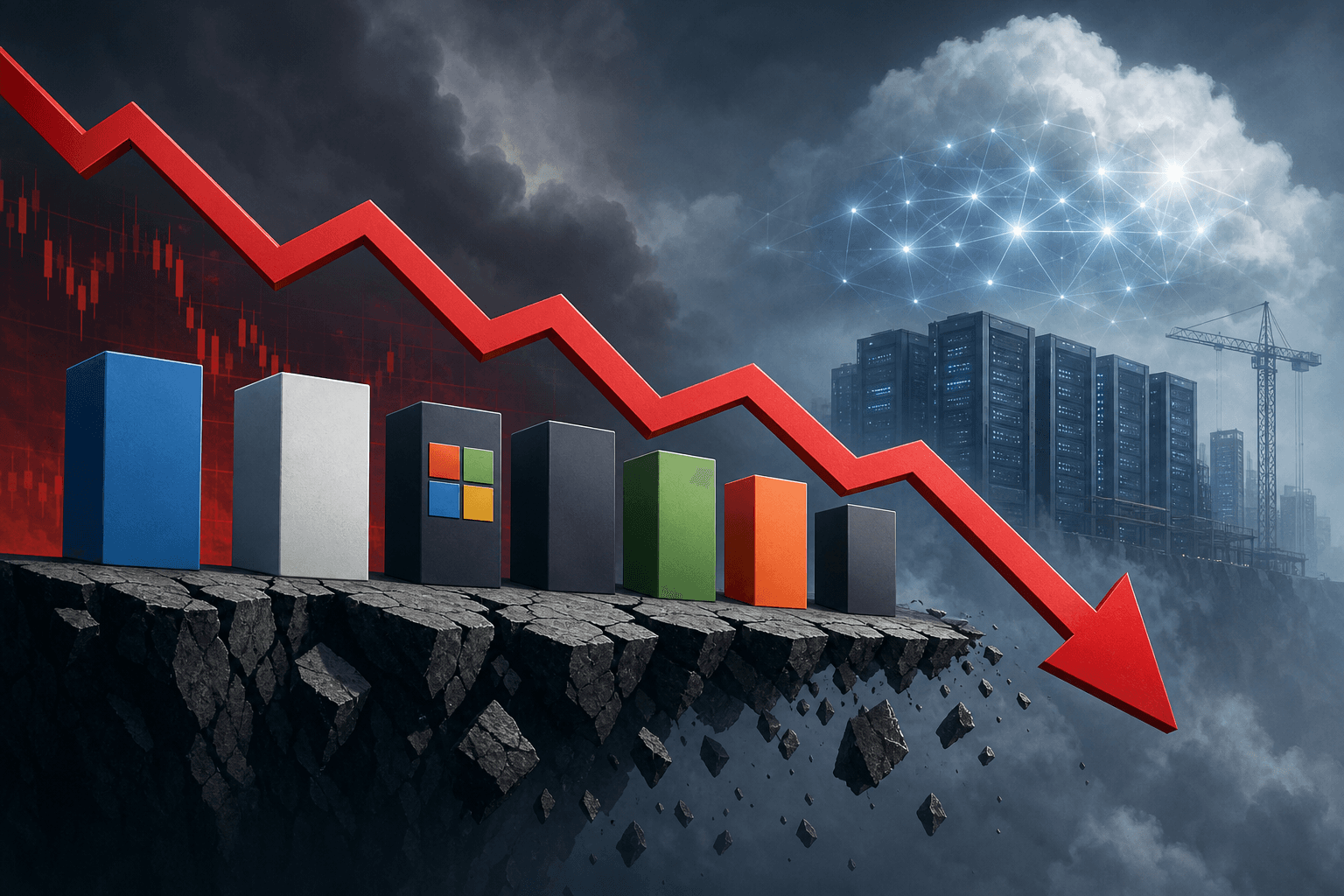
Seldom has Wall Street witnessed such a dramatic erosion of shareholder value in a single trading session. The so-called Magnificent Seven—comprising Microsoft, Amazon, Apple, Alphabet, Nvidia, Tesla, and Meta—collectively shed $797 billion in market capitalization on Thursday. The Bloomberg Magnificent Seven Index plunged 4.8%, marking its steepest decline since the tariff-driven selloff of April 2025. This precipitous drop underscores a fundamental shift in investor sentiment toward Big Tech's ambitious AI expenditures.
Alphabet and Tesla bore the brunt of the rout, with their quarterly earnings reports catalyzing the broader selloff. Tesla shares cratered approximately 14%, single-handedly erasing roughly $200 billion in shareholder value. Alphabet tumbled over 7% despite reporting robust revenue growth in its cloud-computing division. Notably, Alphabet's capital expenditure forecast for 2026 could reach $205 billion, pushing its free cash flow negative for the first time as a publicly traded entity.
The underlying apprehension centers on whether these colossal investments will generate commensurate returns. The Magnificent Seven collectively plan to spend more than $700 billion on AI-related capital expenditures this year. In 2025, announcements of increased AI spending typically propelled stock prices higher. However, that dynamic has inverted, as investors now demand tangible evidence of profitability rather than aspirational projections.
What distinguishes the current market environment from prior corrections is the growing divergence within the cohort itself. Apple has emerged as the group's standout performer, gaining roughly 18% year-to-date by largely avoiding massive AI infrastructure outlays. Conversely, Microsoft has declined more than 20% this year. JPMorgan strategists have drawn parallels between this internal fracture and the late-1990s internet bubble.
The ramifications extend well beyond these seven corporations. Geopolitical tensions in the Middle East have compounded the selloff by driving oil prices higher. Analysts suggest that the forthcoming earnings season will serve as a pivotal litmus test for the entire AI trade. Should these companies fail to demonstrate measurable returns on their expenditures, a broader market recalibration appears increasingly plausible.