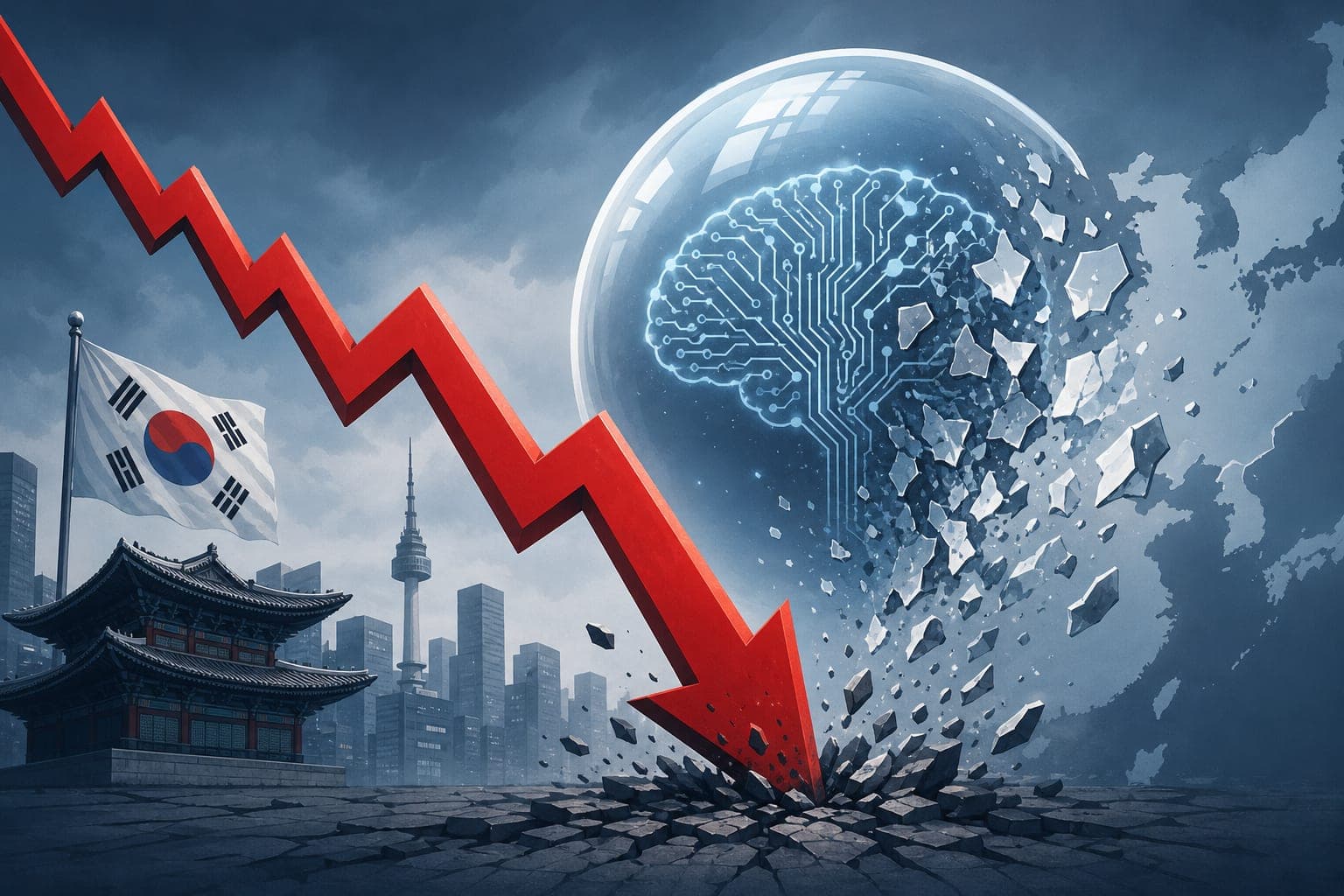
Seldom have Asian equity markets witnessed such a precipitous decline driven by a single sector's unraveling. South Korea's KOSPI index slid as much as 5.8 percent on Monday, extending a devastating rout. The benchmark had already plunged 5.21 percent on Friday, falling below the critical 5,000-point threshold. Markets across the region, including Hong Kong and mainland China, sank deeper into the red.
At the epicenter of this turmoil lies a fundamental question about artificial intelligence monetization. Technology firms have poured trillions of dollars into AI infrastructure, fueling apprehension about unsustainable debt levels. Global AI-related investment is projected to reach $2.7 trillion in 2026, according to Gartner. This debt-fuelled splurge has drawn inevitable comparisons to the dot-com crash of 2000.
The ramifications for South Korea's economy are particularly acute, given its reliance on semiconductor exports. Samsung Electronics and SK Hynix, which constitute more than half of the KOSPI's value, have borne the brunt. Foreign investors have sold approximately 220 trillion won in Korean equities since January. Harvard economist Kenneth Rogoff warned that Korea would feel the bubble's bursting sharply.
In response, South Korean authorities convened an emergency meeting and announced unprecedented stabilization measures. The government is preparing to deploy its market stabilization fund for the first time in eighteen years. Additionally, regulators will temporarily ease daily share buyback limits for listed companies over three months. These interventions underscore the gravity of the downturn facing policymakers.
Whether this correction represents a healthy recalibration or a harbinger of deeper losses remains contested. JPMorgan analysts characterized the pullback as largely an AI de-leveraging event while maintaining confidence in the sector. Conversely, Societe Generale's Asia strategist suggested that the peak growth phase may have already passed. Investors now face the formidable challenge of distinguishing structural value from speculative excess.