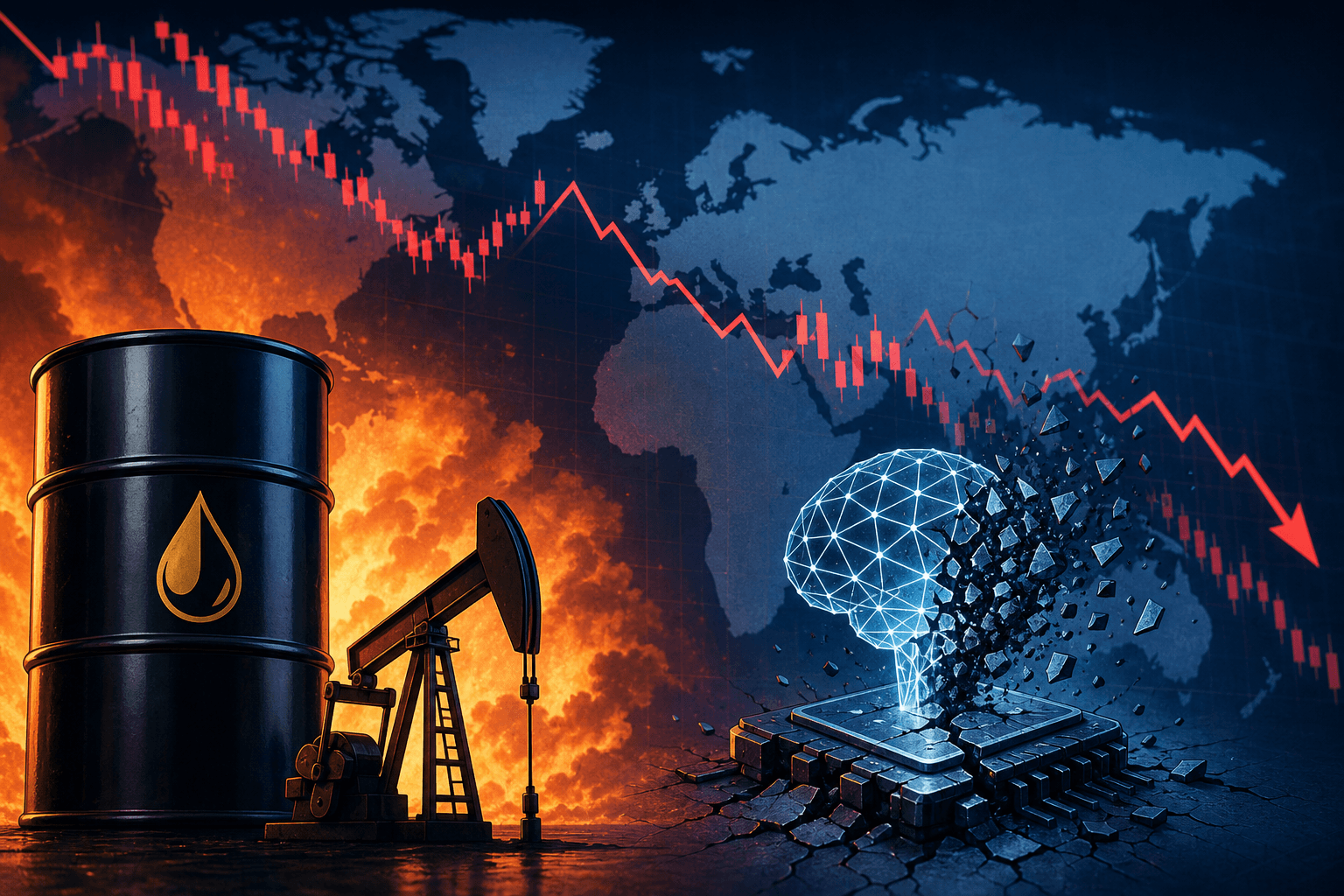
Seldom have two such formidable headwinds converged simultaneously to unsettle global financial markets. On July 23, escalating Middle East hostilities propelled Brent crude above $100 a barrel. Concurrently, disappointing earnings from Alphabet and Tesla reignited doubts about massive AI capital expenditures. The S&P 500 suffered its worst single-day decline in a month, falling 1.2 percent.
The technology sector bore the brunt of the selloff. The Magnificent Seven megacap stocks shed approximately $797 billion in market value collectively. Alphabet's shares plunged 7 percent after the company raised its 2026 capital expenditure forecast to $205 billion. Tesla tumbled over 14 percent as its free cash flow turned negative amid surging AI-related investment.
Oil markets compounded investor anxiety as geopolitical turmoil intensified. Iran-backed Houthi militants attacked Saudi tankers in the Red Sea, imperiling a critical shipping corridor. Brent crude surged 7 percent to a two-month high of $102, while disruptions near the Strait of Hormuz persisted. Global oil inventories remain depleted after months of conflict, heightening the risk of a supply squeeze.
The ramifications for monetary policy are particularly disconcerting. The 10-year U.S. Treasury yield climbed to an 18-month high of approximately 4.70 percent. Rising energy costs threaten to reignite inflationary pressures, potentially delaying any interest-rate relief from the Federal Reserve. Bond markets now reflect growing apprehension that tighter monetary conditions may endure longer than anticipated.
Asian equity markets absorbed the aftershock swiftly. Japan's Nikkei fell 3 percent, while South Korea's KOSPI declined 3.7 percent. Semiconductor heavyweights Samsung and SK Hynix each slumped more than 7 percent. Whether this turbulence represents a transient correction or a fundamental reassessment of risk remains an open question.