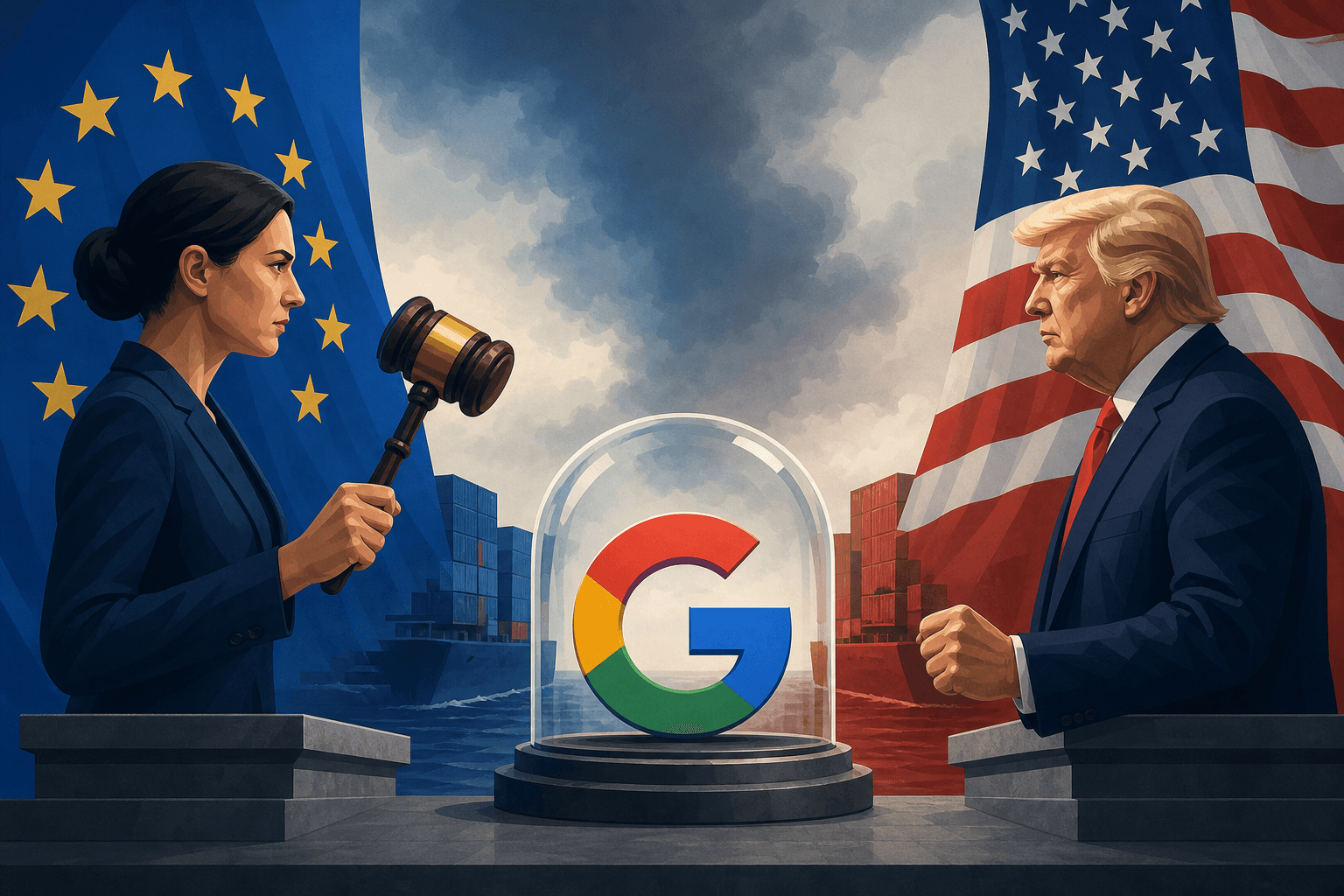
Seldom has a regulatory penalty ignited such a swift geopolitical backlash. On July 23, the European Commission levied an €890 million fine against Google for breaching the Digital Markets Act. The penalty targeted two distinct violations: self-preferencing in search results and restrictive practices on the Google Play Store. Within hours, President Trump vowed that the EU would pay a "very big price" for what he termed illegal conduct.
The fine comprised two components. Brussels imposed €460 million for Google's preferential treatment of its own services in search. A further €430 million addressed restrictions preventing app developers from steering users toward rival payment channels. Notably, this constitutes the largest monetary sanction issued under the DMA to date. Google has indicated it is reviewing the decision and weighing a potential appeal.
Trump's retaliation was both immediate and far-reaching. He announced a Section 301 trade investigation into what he called the EU's practice of robbing American companies. He further signaled that substantial tariffs on European goods would follow at the earliest opportunity. This legal mechanism grants the executive branch authority to impose trade sanctions against nations deemed to engage in discriminatory practices.
The broader strategic implications extend well beyond a single fine. The EU has previously penalized Apple, Meta, and Amazon under similar regulatory frameworks. Google's cumulative penalties from the European Commission now exceed €10 billion over nearly two decades. From Brussels' perspective, these enforcement actions safeguard market contestability and prevent dominant platforms from thwarting innovation.
For global markets, the standoff introduces considerable uncertainty into transatlantic commerce. Investors must now weigh regulatory risk alongside traditional financial metrics when assessing technology sector valuations. Had diplomatic channels been leveraged earlier, this escalation might have been averted. Whether this dispute culminates in sustained protectionism or a negotiated settlement remains an open question with profound ramifications.