
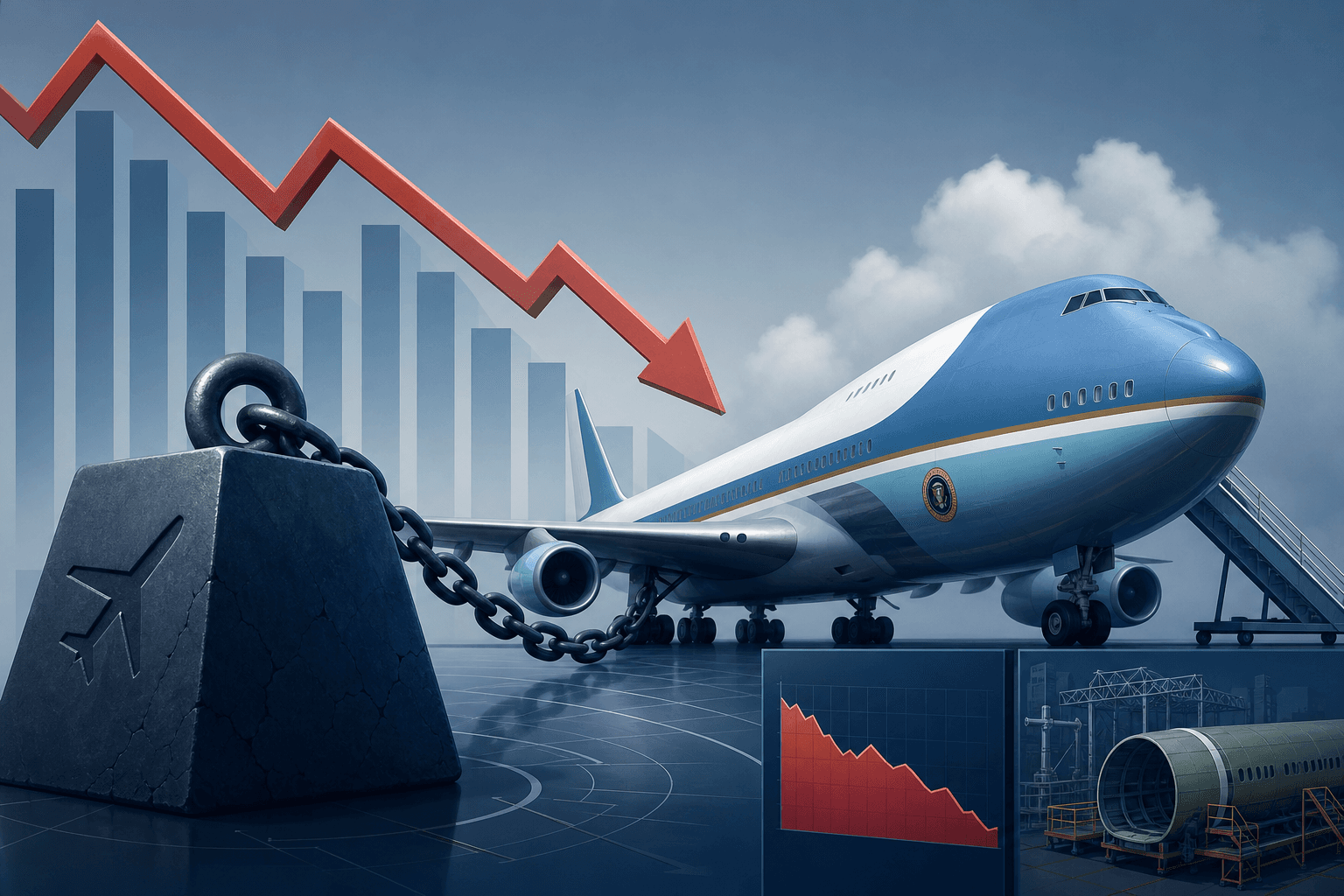
Boeing reported a wider-than-expected loss for the second quarter of 2026. The aerospace giant posted a net loss of $428 million. A $280 million charge on the Air Force One program significantly distorted results. The adjusted loss came to 76 cents per share. Analysts had anticipated a shortfall of only 30 cents per share.
The Air Force One overrun stems from a fixed-price contract signed in 2018. Boeing had agreed to build two presidential aircraft for $3.9 billion. However, accumulated losses on the program have now exceeded $2.8 billion. Cost overruns have been driven by engineering changes and supplier issues. The original delivery date of 2024 has been pushed back to 2028.
Despite the earnings miss, Boeing showed signs of an operational turnaround. Revenue climbed 8 percent year over year to $24.56 billion. The company delivered 171 commercial aircraft, a 14 percent increase. Free cash flow turned positive at $631 million. Had the Air Force One charge not occurred, results would have met expectations.
The quarter highlights the financial risks of fixed-price government contracts. Boeing must absorb any costs that exceed the original contract amount. CEO Kelly Ortberg acknowledged the challenge but reaffirmed the 2028 delivery target. Investors appeared to look past the loss toward improving operational metrics. Boeing's record backlog of $715 billion suggests long-term demand remains robust.