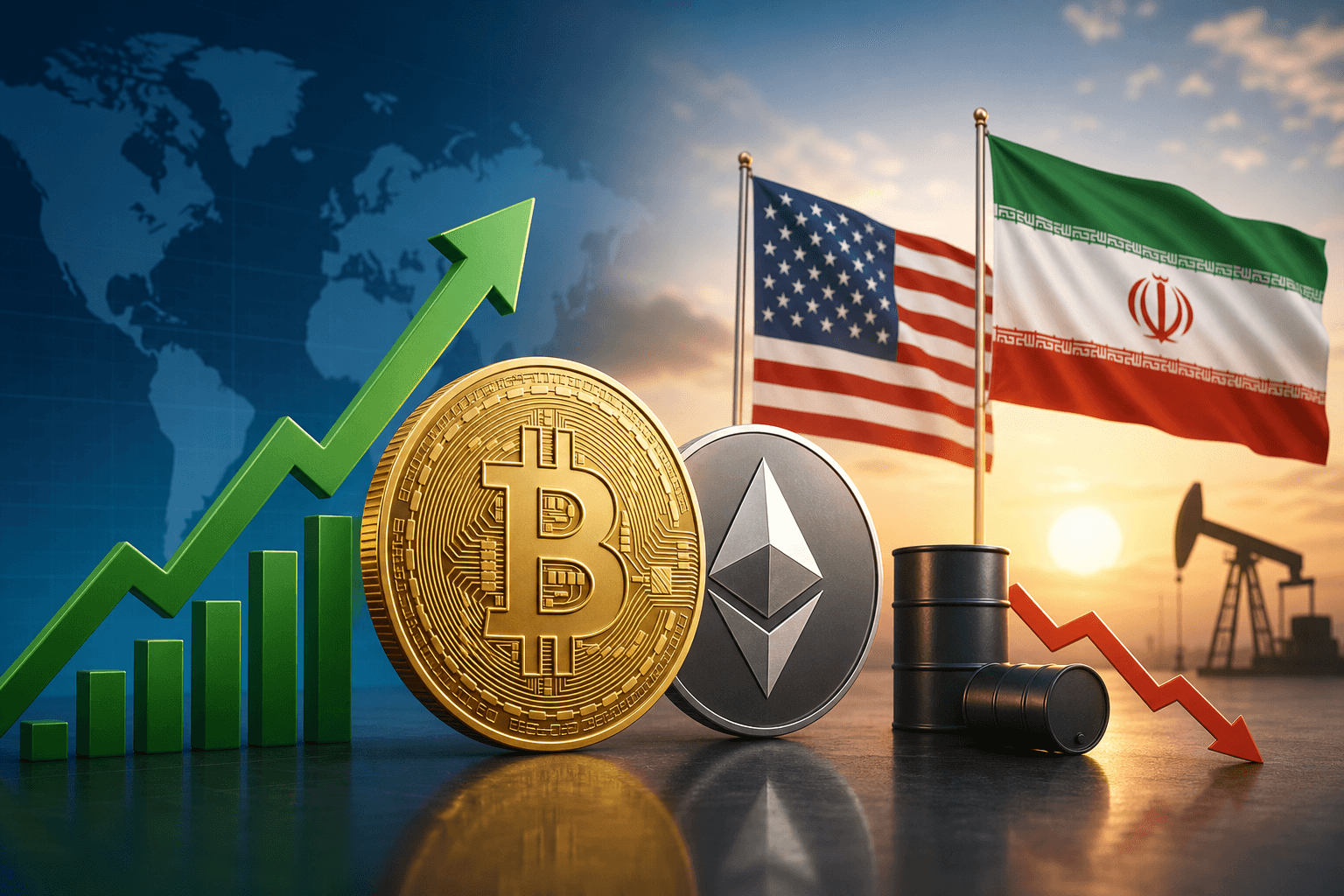
Seldom has the interplay between geopolitics and cryptocurrency been so starkly illustrated. Bitcoin surged past $65,000 on Sunday as the U.S. and Iran held fire. The de-escalation triggered what analysts are calling risk-on peace trades across global markets. Brent crude fell 4.7% to $92.19, alleviating inflation concerns that had weighed on speculative assets. Futures tied to WTI crude gapped approximately 5% lower, reinforcing the bullish sentiment.
Ethereum proved to be the standout performer, rising over 3% to nearly $1,950. Over the past month, ETH has outperformed Bitcoin by a considerable margin. This divergence suggests a nascent capital rotation into large-cap altcoins. Analysts note that such patterns have historically preceded broader market rallies in the digital asset space.
The conflict, which began in late February, had entered a fragile ceasefire during the second quarter. That truce quickly unraveled when hostilities resumed in early July, pushing oil above $80 per barrel. Bitcoin subsequently fell to approximately $62,000 as investors fled risk assets. The latest pause in military action has therefore been pivotal in restoring market confidence.
Yet formidable headwinds persist on the macroeconomic front. The Federal Reserve's July 28–29 meeting looms as the immediate risk event. Markets are pricing a meaningful probability of a rate hike rather than the cuts anticipated earlier. A hawkish stance from the Fed could tighten financial conditions and suppress risk appetite across all asset classes.
For institutional investors, the correlation between oil volatility and cryptocurrency valuations warrants scrutiny. Bitcoin ETFs recorded their largest quarterly outflow since launch during Q2 2026. Capital had rotated predominantly into AI equities, leaving digital assets structurally underweight. Whether this week's rally proves sustainable hinges on durable geopolitical calm and accommodative monetary policy signals.