
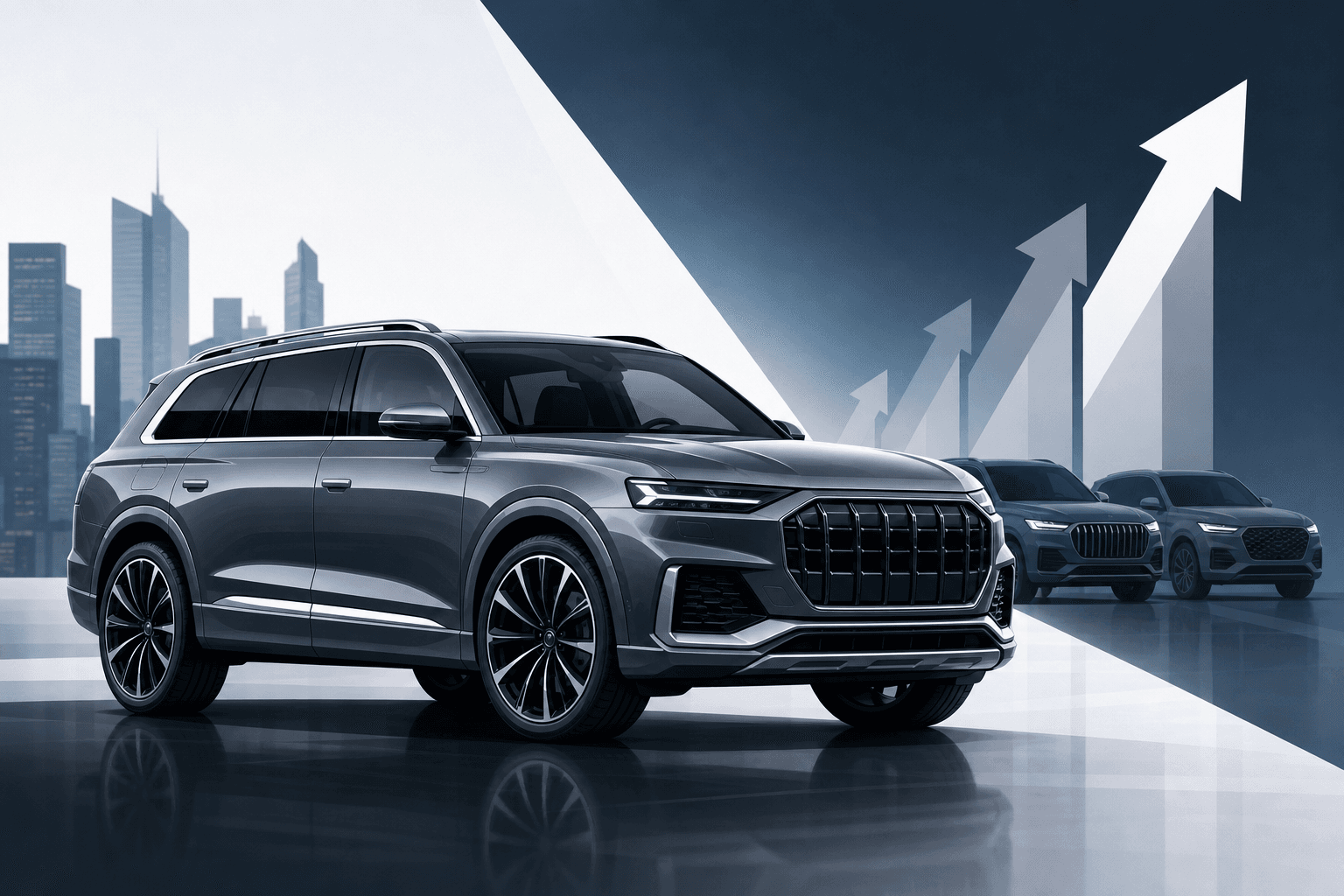
Audi has revealed the Q9, its first full-size three-row SUV, as part of a strategic push into the U.S. market. The flagship vehicle starts at $89,095, while the high-performance SQ9 begins at $119,395. Audi executives stated that the Q9 had been developed specifically with American buyers in mind. The vehicle is 209 inches long, making it slightly larger than the Mercedes GLS and BMW X7. Deliveries to U.S. dealerships are expected to begin in the fourth quarter of 2026.
The Q9 enters one of the most profitable segments in the U.S. luxury automotive market. Premium SUVs now account for more than 80% of luxury vehicle sales in the United States. Audi had previously lacked a dedicated full-size SUV, which had cost the brand potential customers. Rivals BMW and Mercedes have long dominated this segment with the X7 and GLS respectively. The BMW X7 recorded its highest annual sales in 2025, reaching over 31,000 units.
Audi's U.S. sales have been declining steadily, falling 17% in the first half of 2026. The brand is far more exposed to tariffs than its competitors because it imports all vehicles. Both BMW and Mercedes manufacture SUVs at their U.S. factories, which gives them a significant advantage. Had Audi established domestic production earlier, it could have avoided much of this competitive disadvantage. The Q9 launch represents an attempt to offset these structural challenges with a compelling product.
The Q9 is built on the new Premium Platform Combustion architecture, which supports multiple powertrain options. Industry analysts suggest that the vehicle could attract buyers who had been cross-shopping American full-size SUVs. However, the absence of a hybrid option at launch may prove to be a limitation. If Audi succeeds in capturing even a modest share of this segment, the Q9 could significantly boost revenue. The automaker's broader strategy depends on whether fresh products can reverse its declining trajectory.