
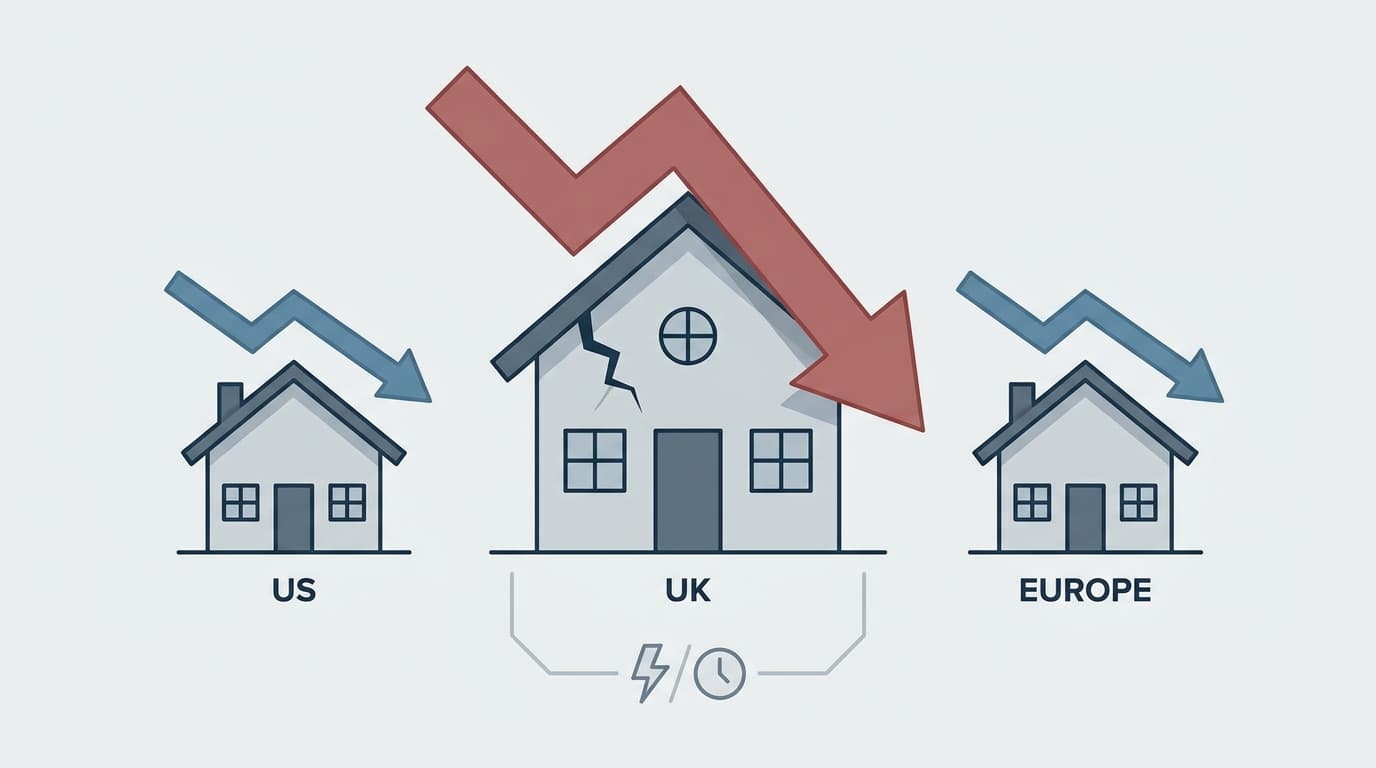
British homeowners now face a bigger mortgage shock than borrowers across the US and Europe. Analysts say the UK's reliance on imported energy has left households more exposed to rising costs. The average two-year fixed mortgage rate has climbed to 5.75 per cent. This sharp increase adds roughly £107 to monthly repayments on a typical loan. By contrast, US mortgage rates have risen by just 0.38 percentage points.
The structure of Britain's mortgage market compounds the problem significantly. Most UK home loans are fixed for only two to five years. In fact, 92.4 per cent of new loans were fixed for up to five years recently. American homeowners enjoy greater protection through their standard 30-year fixed mortgages. Countries like France, Germany, and Spain also offer longer-term deals that shield borrowers.
Around 1.8 million fixed-rate deals are set to expire this year alone. When these deals end, borrowers must accept current higher rates or face further uncertainty. The Bank of England reports that 5.2 million households could see mortgage costs rise. Many borrowers coming off older five-year deals will see repayments increase substantially. This wave of renewals could dampen housing market activity and reduce buyer demand.
The broader economic outlook remains uncertain for the UK housing sector. Higher energy prices have pushed inflation up to 3.3 per cent. Some analysts predict the Bank of England may raise its base rate further. If borrowing costs continued to rise, first-time buyers would struggle even more to enter the market. Industry experts urge affected homeowners to seek professional financial guidance promptly.