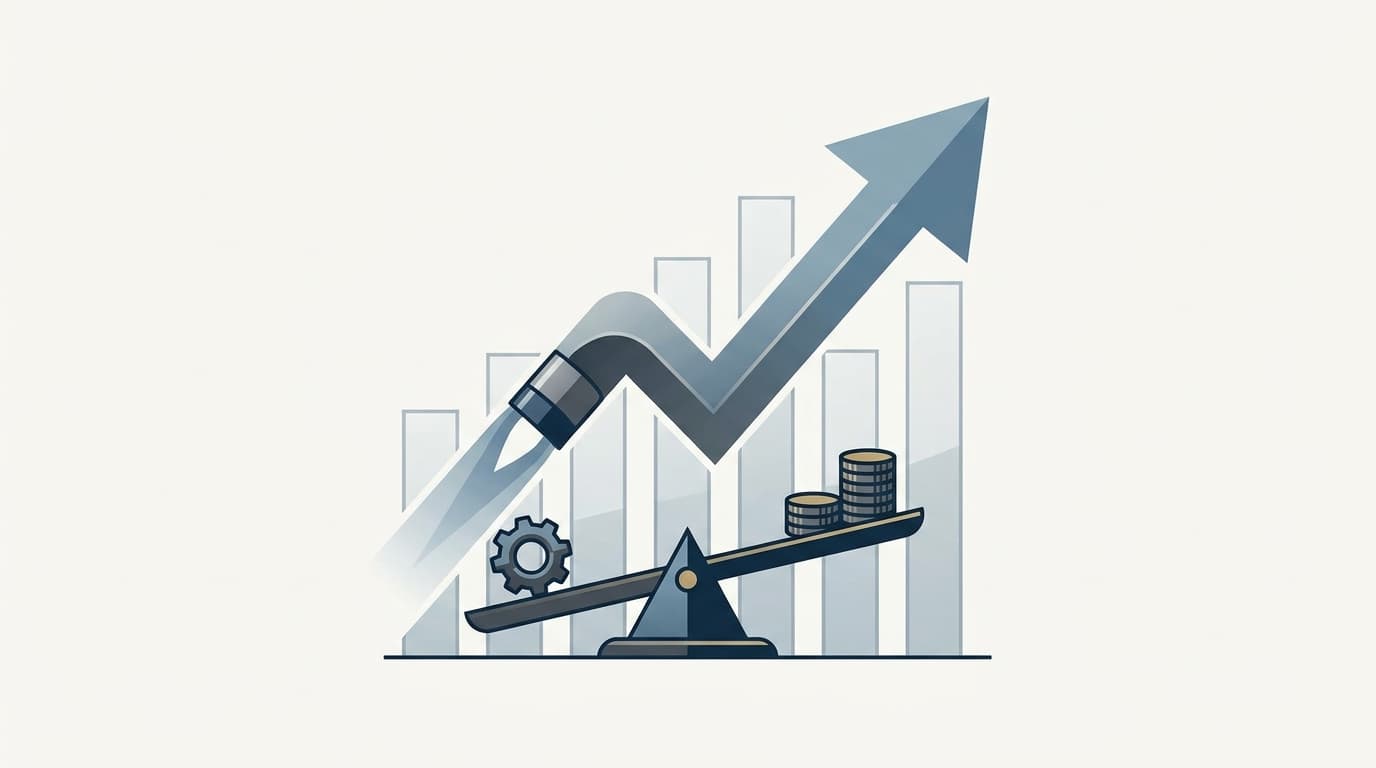

Seldom has corporate capital allocation provoked such polarised debate as the current AI spending frenzy gripping Silicon Valley. Amazon, Alphabet, Meta, and Microsoft have collectively earmarked roughly $660 billion in capital expenditure for 2026. This figure represents a 60 percent surge from the $410 billion they spent in 2025. It also marks a staggering 165 percent increase from $245 billion just two years prior. The sheer magnitude of this outlay is, by most accounts, unprecedented in modern economic history.
Even record-breaking financial performance has failed to assuage investor anxiety. Alphabet surpassed $400 billion in annual revenue for the first time, generating $132 billion in profit during 2025. Yet its plan to double capital expenditure to as much as $185 billion rattled shareholders and knocked its shares. Amazon fell sharply after announcing its capex would reach $200 billion this year, exceeding already eye-watering projections. Apple, which has largely abstained from the AI arms race, emerged as the sole beneficiary.
Market analysts have been unequivocal in voicing their apprehension. One Jefferies analyst noted that bubble fears are settling back in around the technology sector. Dec Mullarkey of SLC Management cautioned that elevated capex signals longer timelines for AI strategies to materialise. Investors, he suggested, are fixated on when AI-related revenue will begin to materialise in earnest. The prevailing sentiment reflects a fundamental tension between long-term technological conviction and near-term profitability.
The ramifications extend well beyond the hyperscalers themselves. Software stocks have suffered as new AI coding tools from Anthropic and OpenAI threaten to disrupt established business models. Markets were further unsettled by the collapse of OpenAI's $100 billion infrastructure deal with Nvidia. Oracle, heavily reliant on OpenAI for its cloud ambitions, dropped 18 percent over five trading days. Traditional software firms face an existential reckoning as capital flows toward foundational AI infrastructure.
What distinguishes this cycle from previous technology booms is the extraordinary concentration of spending among so few companies. During the 1990s telecom boom, peak annual expenditure reached roughly $200 billion across dozens of firms. Today, four corporations alone are deploying more than triple that sum. Whether this constitutes visionary investment or reckless exuberance will ultimately hinge on AI's capacity to deliver tangible economic returns. For now, the market's verdict remains decidedly sceptical.