
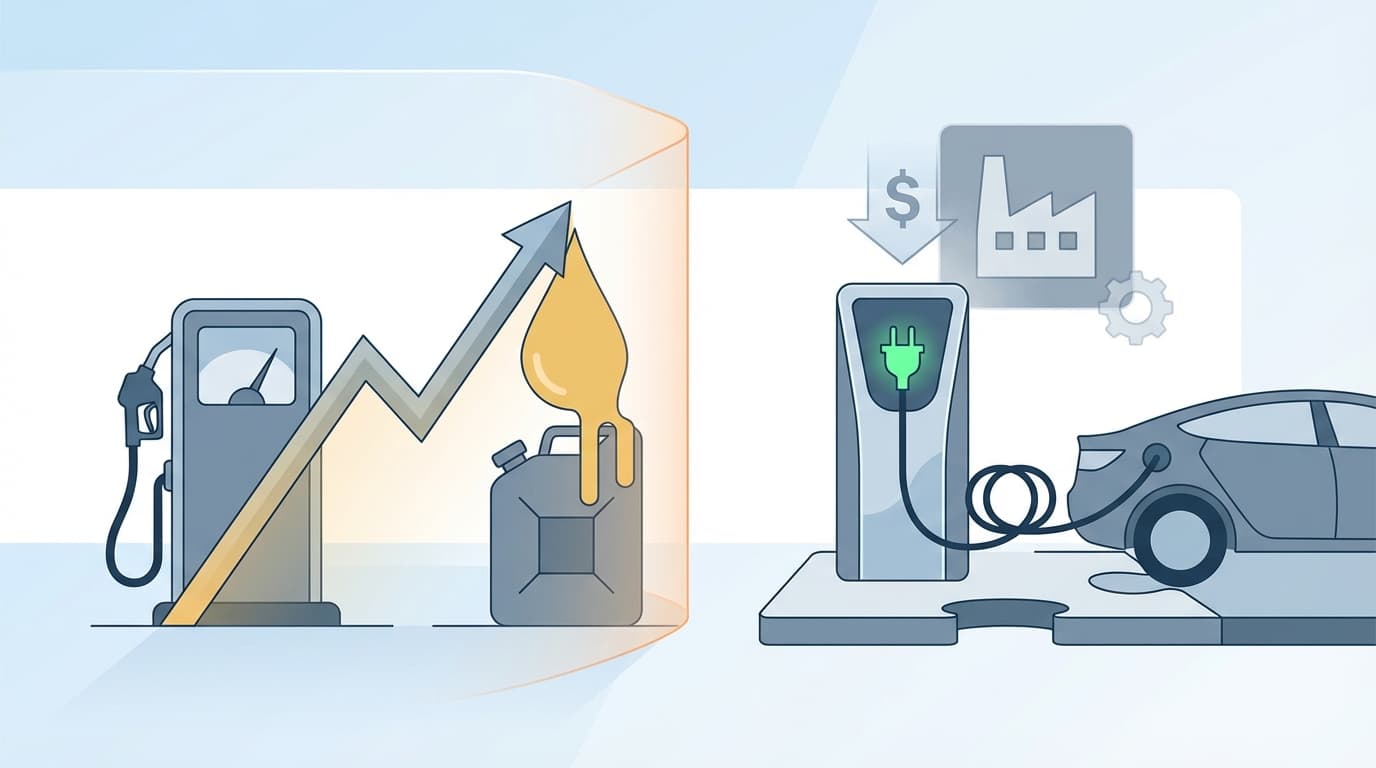
Gas prices in the United States have surged past four dollars per gallon. Many consumers are now contemplating whether an electric vehicle might save them money. According to Edmunds, online shoppers were 17% more likely to research EVs in early March. Interest then jumped another 8% in the following weeks. However, industry analysts caution that heightened curiosity does not necessarily translate into actual purchases.
The primary impediment remains the substantial upfront cost of electric vehicles. According to Cox Automotive, EVs cost roughly $6,500 more than comparable gasoline-powered cars. New car prices are already approaching $50,000 on average. At four dollars per gallon, households spend approximately $240 monthly on fuel. That figure represents only about a third of a typical new car payment.
Automakers have significantly scaled back their electric vehicle strategies in recent months. Ford, which reported $19.5 billion in losses from its EV pullback, halted production of its Lightning pickup. CEO Jim Farley stated that Ford would concentrate exclusively on more affordable EV models. Tesla, the largest American EV maker, reported its biggest drop in global sales last year. Most manufacturers are not accelerating EV production despite rising gas prices.
Experts argue that only a sustained increase in gas prices would materially alter consumer buying behavior. Stephanie Valdez Streaty of Cox Automotive noted that consumers must believe prices will remain elevated for years. Had gas prices been persistently high, more buyers might have already committed to electric vehicles. Instead, the near-term impact is more likely to appear in reduced household trips and spending cutbacks. The EV market's trajectory ultimately depends on whether current price pressures endure long enough.