
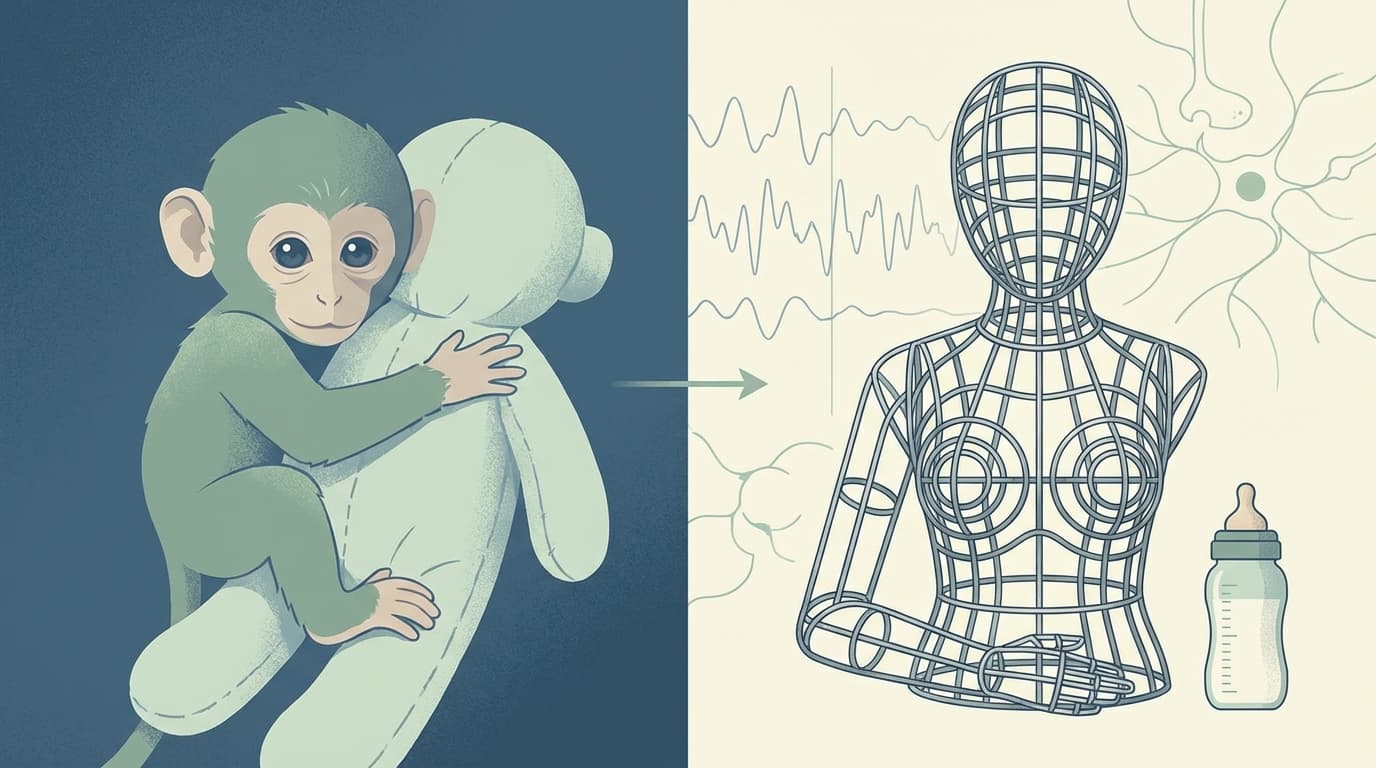
A baby macaque named Punch has captured hearts across the world. After being abandoned by his mother at Ichikawa City Zoo in Japan, Punch was rejected by his troop. Zookeepers then provided him with a stuffed orangutan toy from IKEA. Videos of Punch clinging to this toy have since gone viral worldwide. His story, however, is more than a heartbreaking internet sensation.
Punch's behavior closely parallels a famous psychology experiment from the 1950s. US researcher Harry Harlow had separated infant rhesus monkeys from their mothers at birth. He then offered them two surrogate mothers in their enclosure. One was made of cold wire but provided food through a small feeder. The other was covered in soft cloth but offered no nourishment at all.
The results were remarkable and challenged the dominant scientific view of that era. Behaviourists had predicted that infants would prefer whichever surrogate provided food. Instead, the monkeys spent significantly more time clinging to the soft cloth mother. This demonstrated that emotional comfort outweighed physical nourishment in forming attachments. Harlow's discovery completely reoriented the prevailing theory on child development.
Mark Nielsen, an Associate Professor at The University of Queensland, has analysed the parallel. He notes that Punch's situation inadvertently reflects Harlow's controlled experiment. The monkey sought a comforting and soft safe place, which the toy provided. Today, most researchers would consider Harlow's original methods unethical for primates. Nevertheless, Punch remains a powerful reminder of the importance of emotional nourishment.