
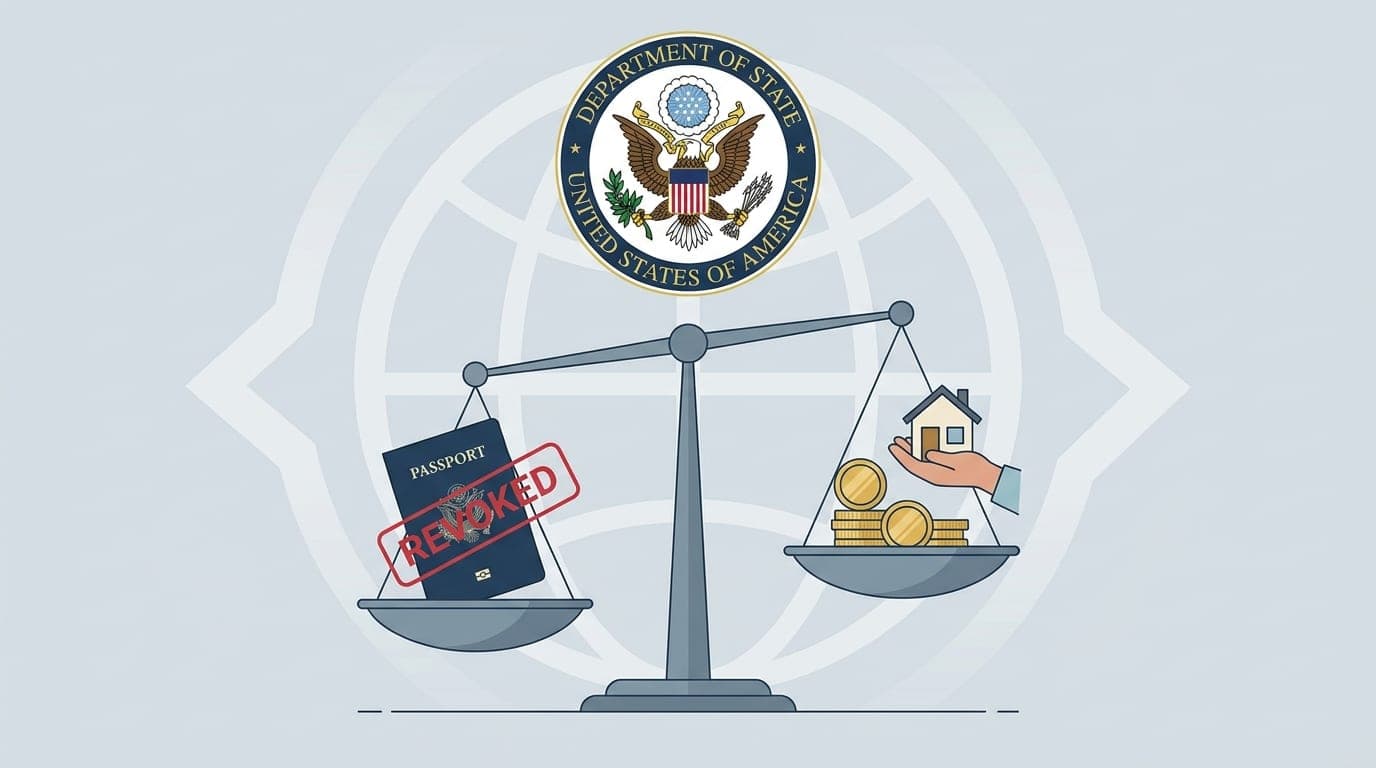
The United States government has announced a strict new measure to enforce child support payments. The Department of State will begin revoking passports of parents who owe unpaid child support. Initially, revocations will focus on individuals who owe $100,000 or more. Approximately 2,700 American passport holders fall into this category. This policy represents a significant expansion of existing federal enforcement tools.
The passport denial program was originally enacted as part of a 1996 federal law. Under this legislation, parents owing more than $2,500 in child support could be denied passports. However, the law had been largely underutilized for decades by most states. Previously, only those who applied to renew their passports were subject to the penalty. The new policy now allows the government to proactively revoke active passports.
Officials have stated that this enforcement strategy has already proven effective. Since the program began in 1998, states have collected approximately $657 million in overdue payments. Furthermore, hundreds of parents reportedly resolved their debts after the policy expansion was announced. Once a passport has been revoked, it cannot be used for travel even after payment.
This measure has sparked a broader debate about governmental authority and parental obligations. Supporters argue that restricting travel privileges is a legitimate way to compel compliance. Critics, however, question whether such punitive measures could disproportionately affect certain populations. The program will soon expand to include all parents who owe more than $2,500.