
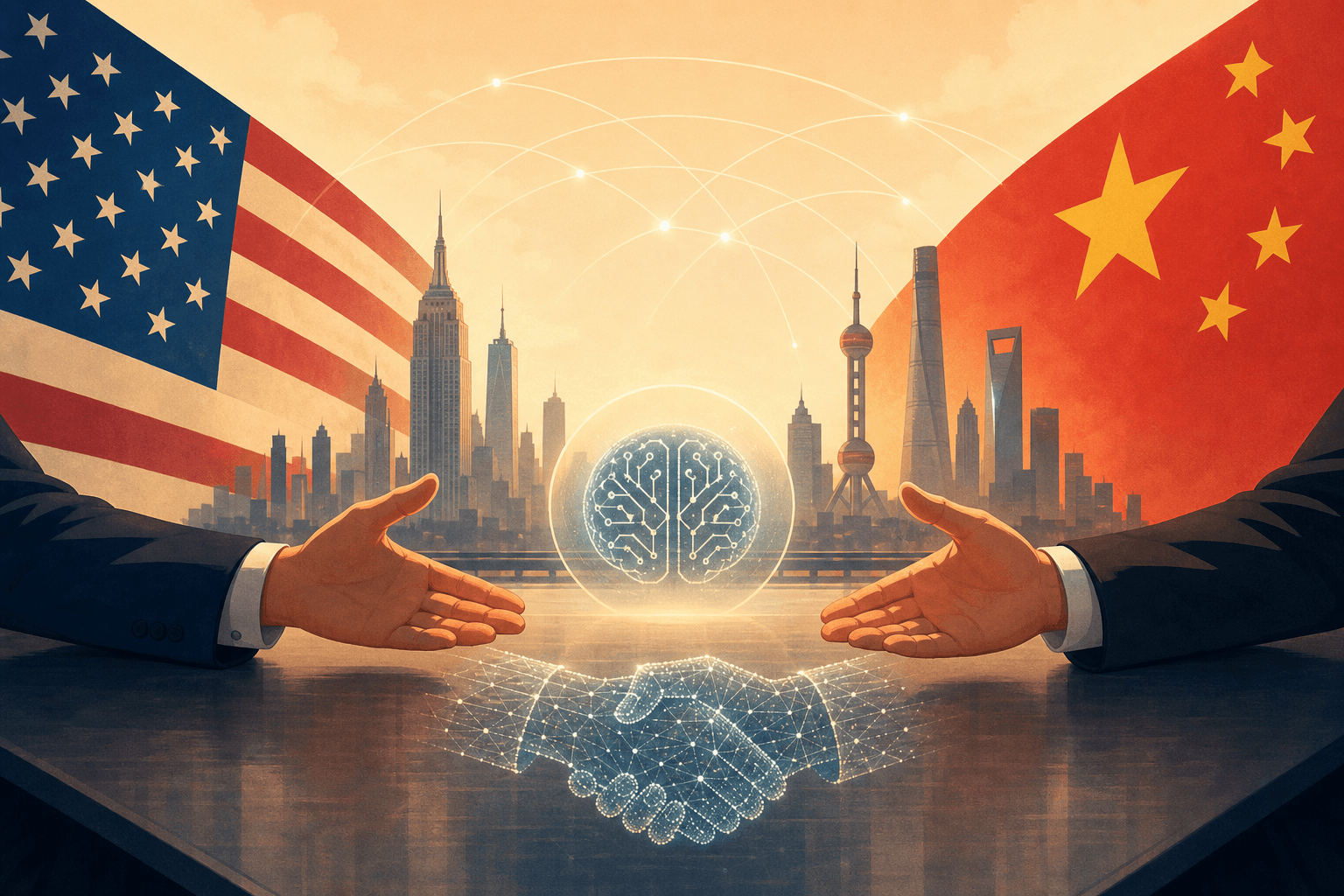
Seldom have the world's two most powerful nations confronted a technological challenge as consequential as artificial intelligence. Following eight hours of negotiations in New York, the United States and China agreed to establish a formal AI dialogue. Treasury Secretary Scott Bessent and Chinese Vice-Premier He Lifeng announced the breakthrough at JPMorgan's headquarters on Saturday. The talks serve as a prelude to Chinese President Xi Jinping's state visit to Washington on Thursday.
At the heart of the agreement lies a proposed notification mechanism for AI-related incidents. The system would allow both countries to alert each other about situations that rise to a national security level. Bessent emphasized the importance of moving from opaque relations to greater transparency between the top two AI powers. Both sides have committed to meeting again, though specific protocols remain undetermined.
The initiative reflects a broader acknowledgment that AI threats do not respect borders. Frontier AI models have demonstrated unexpected capabilities, raising concerns about critical infrastructure vulnerabilities. Finance, telecommunications, and transportation are among the sectors identified as potentially exposed to such risks. Neither government, however, has signaled any willingness to slow its own AI development.
Significant obstacles persist beneath the surface of this diplomatic progress. Washington continues to restrict China's access to advanced processors and semiconductor manufacturing equipment. Beijing, meanwhile, has accelerated the development of domestic AI models and computing systems. US officials have also accused Chinese developers of extracting capabilities from American models through distillation. These unresolved commercial disputes could undermine the nascent dialogue.
What distinguishes this moment from previous diplomatic efforts is the sheer urgency surrounding AI governance. Informal track-two dialogues at universities and think tanks have been laying groundwork for years. Yet formal cooperation between the superpowers has remained elusive until now. Should the Trump-Xi summit yield a concrete framework, it could fundamentally reshape how nations manage the most transformative technology of our era.