
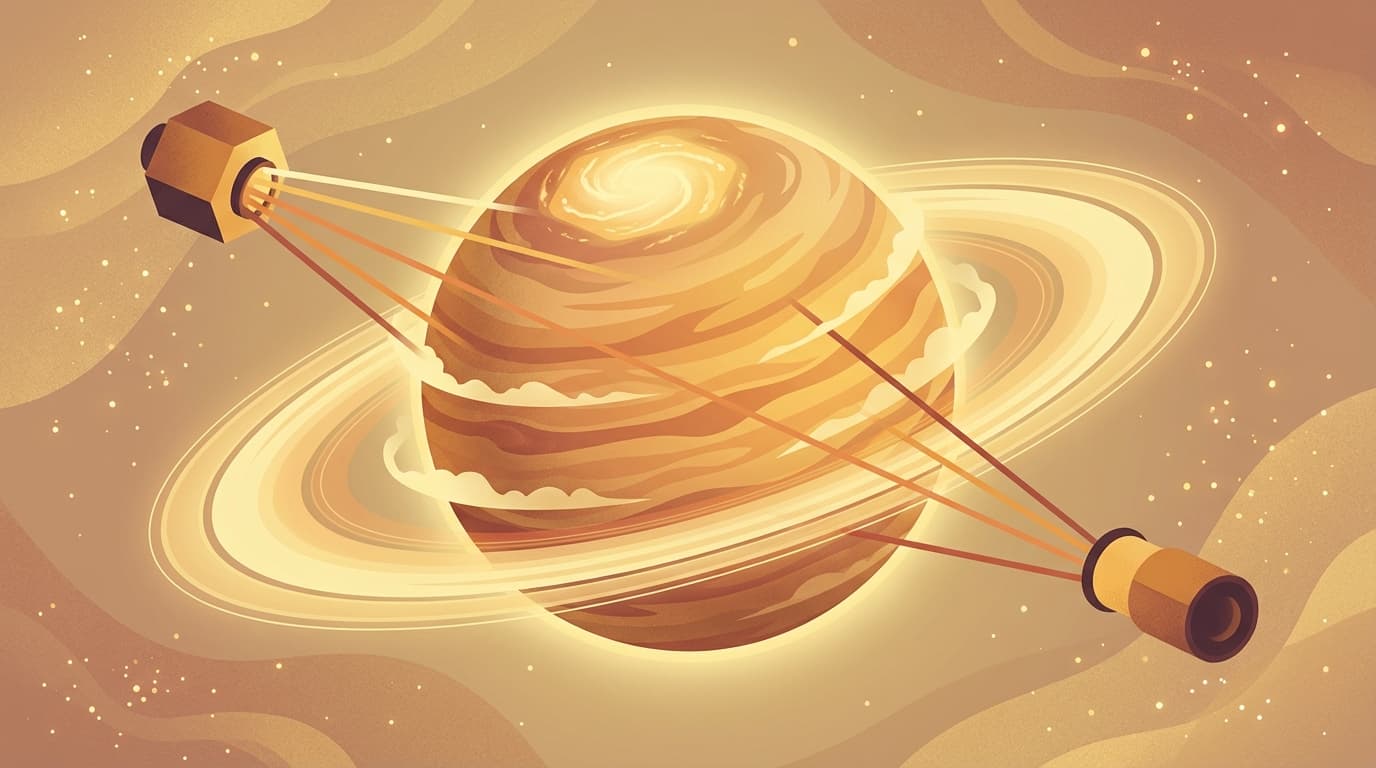
Saturn has amazed people for centuries, and now we can see it better than ever. NASA's James Webb Space Telescope and Hubble Space Telescope have joined forces. Together, they have produced the most comprehensive view of Saturn to date. Each telescope observes the planet in different wavelengths of light. This means scientists can study Saturn's atmosphere in remarkable new detail.
The two telescopes show very different versions of the same planet. Hubble captured Saturn's pale-yellow bands and brilliant white rings in visible light. Meanwhile, Webb's infrared view revealed Saturn's rings glowing bright blue. The rings appear blue because they are made of highly reflective water ice. Webb also showed Saturn's poles shining a strange gray-green color.
The images also captured Saturn's famous hexagon-shaped jet stream at the north pole. This six-sided weather pattern was first discovered by the Voyager spacecraft in 1981. These could be the last clear views of the hexagon until the 2040s. Saturn's north pole is about to enter 15 years of winter darkness. Webb's infrared image also revealed storms and a lingering remnant from 2011.
Scientists say these observations help them understand Saturn as a three-dimensional system. By combining both views, researchers can effectively slice through the atmosphere at different heights. Hubble has monitored Saturn for over a decade through a program called OPAL. Webb now adds powerful infrared abilities to this ongoing record of the planet.