
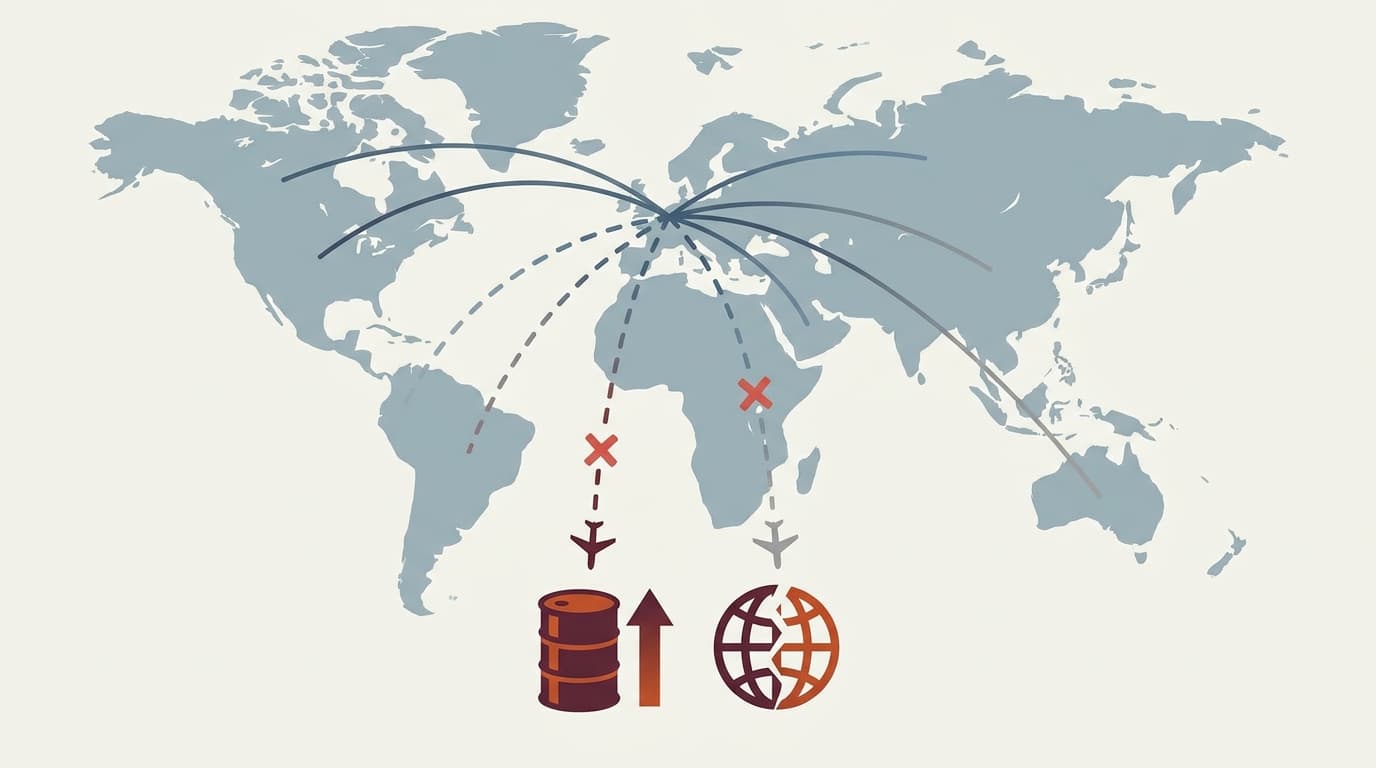
Turkish Airlines, the world's largest carrier by country reach, has made a bold decision. The airline has suspended flights to 23 cities across Africa, Europe, Asia, and the Americas. The suspensions fall into two categories: five mandatory and eighteen optional. The mandatory cuts involve five Iranian cities where airspace remains closed. The optional pauses affect less-trafficked destinations with weaker financial performance.
Rising jet fuel prices are the primary factor behind these route suspensions. Fuel costs in Europe have reportedly increased by over 100 percent in 2026. Geopolitical instability in the Middle East has disrupted supply chains and raised operating expenses. The cuts reduce the airline's weekly departures by more than 100 flights. Analysts say the airline is consolidating capacity on higher-performing routes.
Africa has been hit hardest by the restructuring. Nearly a fifth of Turkish Airlines' African passenger network has been removed. Nine of the ten suspended African cities are in sub-Saharan Africa. European destinations like Billund and Leipzig face longer suspensions extending into winter 2027. Havana, the only affected city in the Americas, will also lose service.
Despite these cuts, the airline recorded a turnover of 24 billion dollars in 2025. Most suspended routes are expected to resume between October 2026 and March 2027. However, Hurghada in Egypt appears to be a permanent cut from the network. The airline is also expanding its pilot training fleet, signaling long-term confidence in growth.