
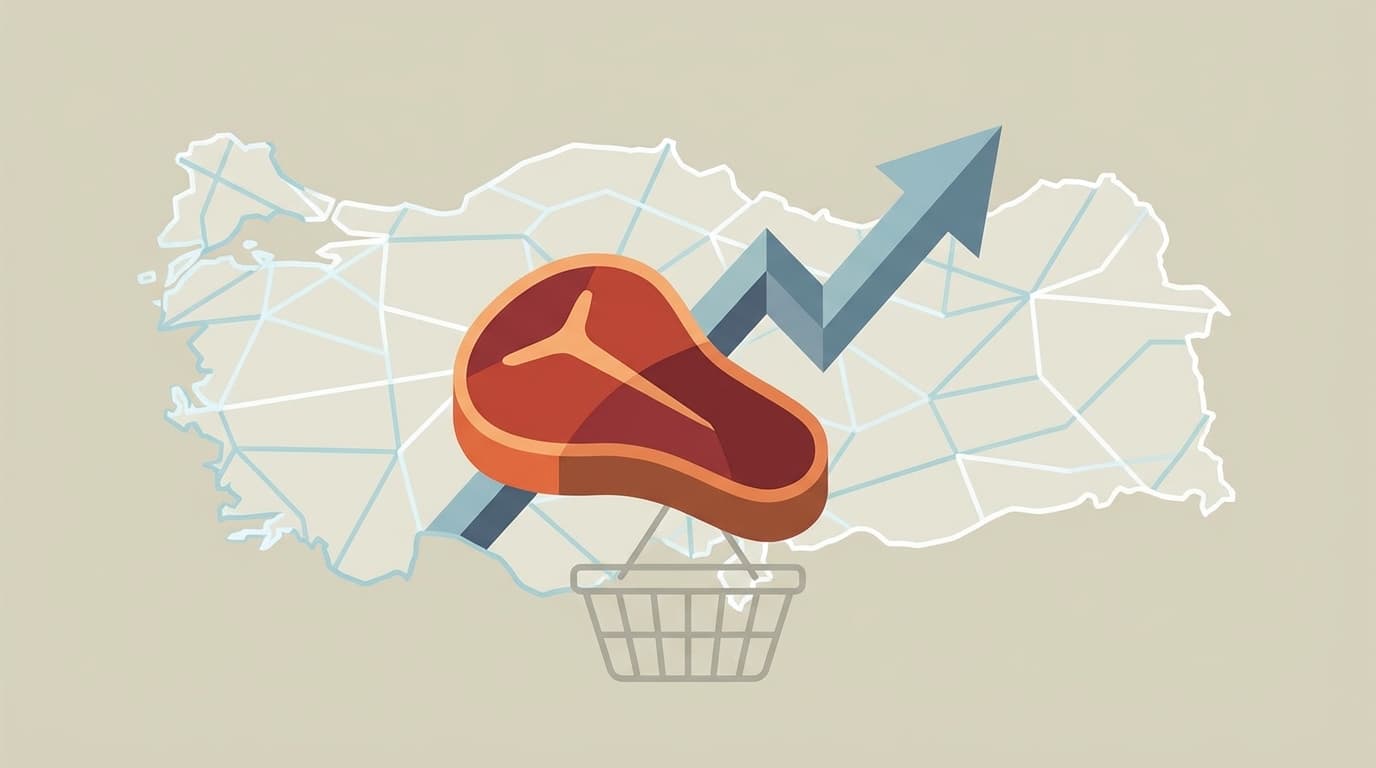
Turkey's cost-of-living crisis has reached a critical point. A recent headline from Yeniçağ Gazetesi declared that citizens fear passing butcher shops. This stark statement reflects the severe erosion of purchasing power across the country. Annual inflation stood at 31.53% in February 2026, with food prices climbing even faster. For many households, red meat has shifted from a dietary staple to an unaffordable luxury.
The data behind the headline is alarming. According to economist İnan Mutlu, beef prices surged by 591% over three years. Average food prices rose by 327% during the same period. In 2020, one kilogram of beef cost approximately 60 Turkish lira. By 2025, that figure had soared to nearly 900 lira. Turkey's food inflation rate reached 27.4%, nearly twelve times the eurozone average.
Structural factors have driven these unprecedented increases. Feed costs, which represent the largest expense in livestock production, rose approximately 330%. Turkey depends heavily on imported raw materials such as soybeans and corn. Currency depreciation has amplified these costs significantly. Many small and medium-sized livestock producers have been forced to abandon their operations entirely.
The consequences extend beyond household budgets. Economists warn of potential public health risks from declining protein consumption. Families now reserve beef for special occasions rather than weekly meals. Had policymakers invested in domestic production earlier, the sector might have avoided such vulnerability. Addressing this crisis will require strategic reforms in agricultural policy and supply chain management.