
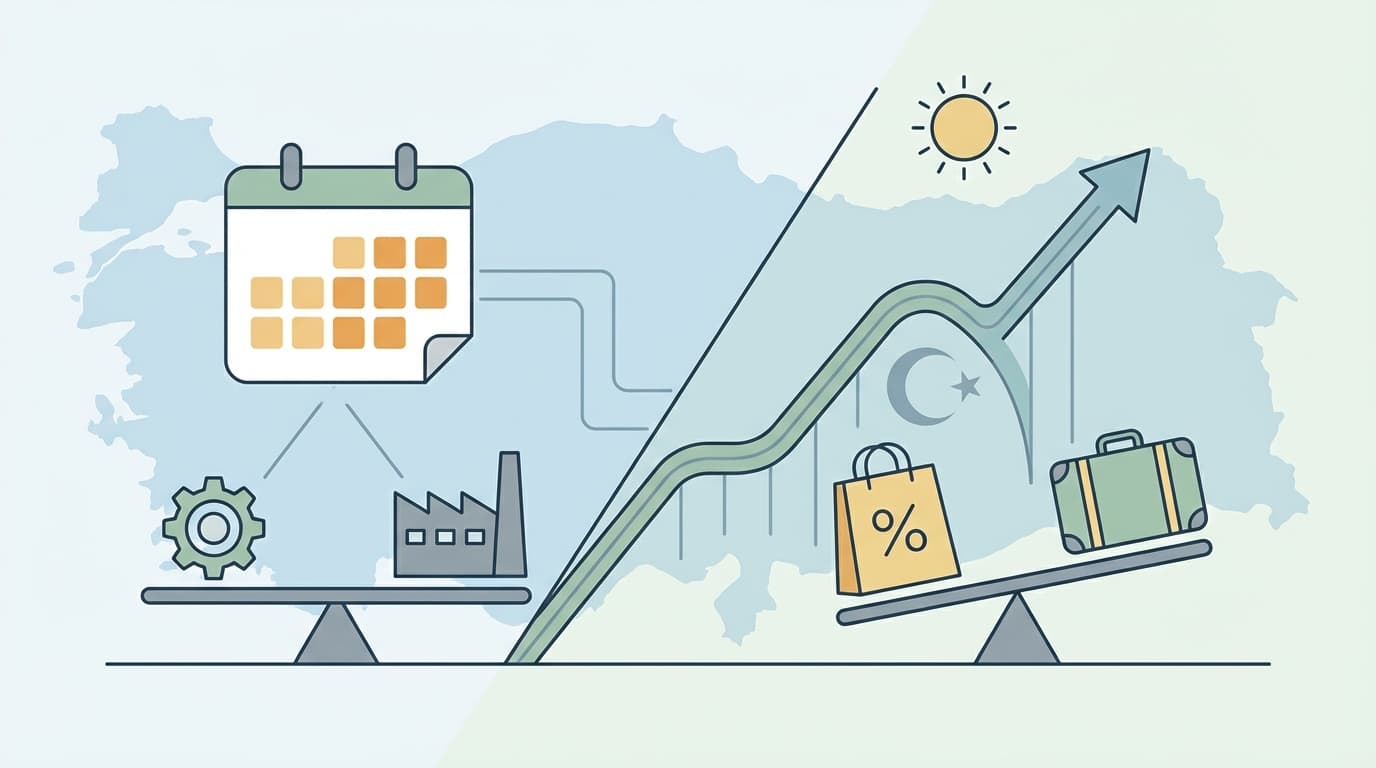
Turkey's 2026 Eid al-Fitr holiday has sparked a major debate among businesses. The official break begins on the afternoon of Thursday, March 19. It continues through Sunday, March 22, totaling three and a half days. However, discussions are underway about extending the holiday to nine days. If the government granted additional administrative leave, workers could enjoy an extended break.
The precedent for such an extension was set in 2025. Last year, the government declared extra bridge days after Eid al-Fitr. This created up to nine consecutive days off when combined with the weekend. Both public and private sector employees benefited from the longer rest period. Many analysts now expect a similar announcement for 2026.
Economists hold mixed views on the potential impact of extended holidays. Research suggests that retail sales during Eid periods can spike by twenty percent. Turkey's tourism sector generated over sixty-one billion dollars in 2024. Hospitality and retail businesses clearly gain from longer breaks. However, manufacturing and export sectors often suffer from halted production lines.
The broader economic picture adds complexity to this debate. Turkey's GDP growth is projected at 3.2 percent in 2026. Experts warn that extended holidays could reduce overall productivity in key industries. If policymakers balanced worker well-being with economic output, both sides would benefit. The final decision will likely shape business planning across the country for months.