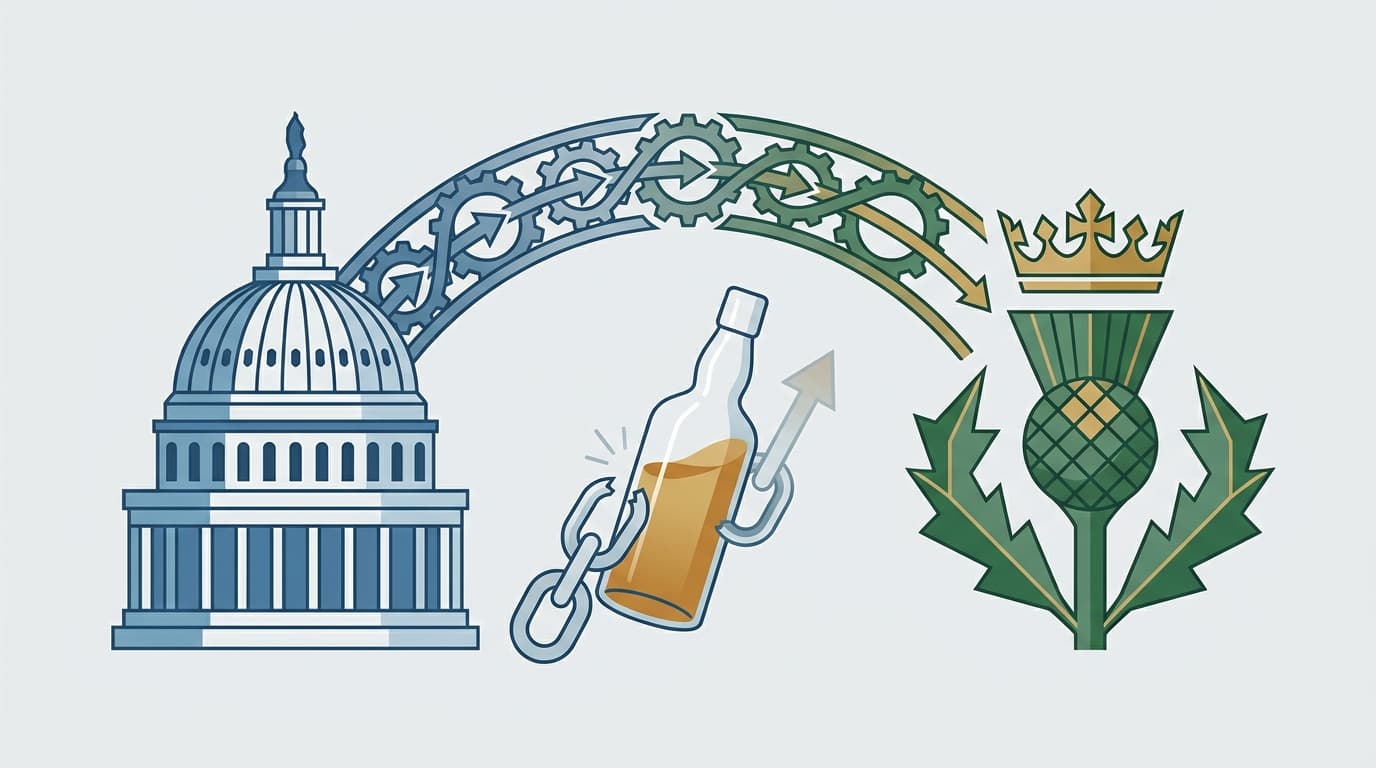
President Donald Trump announced the removal of tariffs on Scotch whisky following a royal state visit. King Charles III and Queen Camilla had concluded a four-day diplomatic visit to Washington. Trump credited the royal couple for persuading him to make this unprecedented trade decision. The announcement was widely regarded as a diplomatic gesture to strengthen transatlantic relations. Industry leaders described the move as a significant boost for the beverage sector.
The 10% baseline tariff on U.K. goods, which had been imposed in April 2025, severely affected Scotch exports. The Scotch Whisky Association reported that export volumes to the U.S. fell by 15%. Furthermore, the tariff had been costing the industry approximately £4 million per week in lost revenue. Scotch whisky employs around 40,000 people in Scotland and represents 21% of U.K. food exports. Had the tariff remained in place, the cumulative economic damage would have been devastating.
The tariff removal also addresses the barrel trade between Scotland and Kentucky. Scottish distillers have long been the largest purchasers of used bourbon barrels from Kentucky. Kentucky's bourbon industry generates over $9 billion in annual economic output. The reciprocal relationship between these two industries had been disrupted by the trade restrictions. Restoring this partnership could reinvigorate communities that depend on the spirits sector.
Despite this positive development, broader challenges remain for the global spirits industry. U.S. spirits exports declined nearly 4% last year, while American whiskey exports plummeted 19%. Trade tensions with Canada and the European Union continue to suppress market growth. Analysts suggest that although this bilateral agreement is welcome, it alone cannot restore pre-tariff conditions. Nevertheless, the decision demonstrates how diplomatic engagement can yield tangible economic outcomes.