
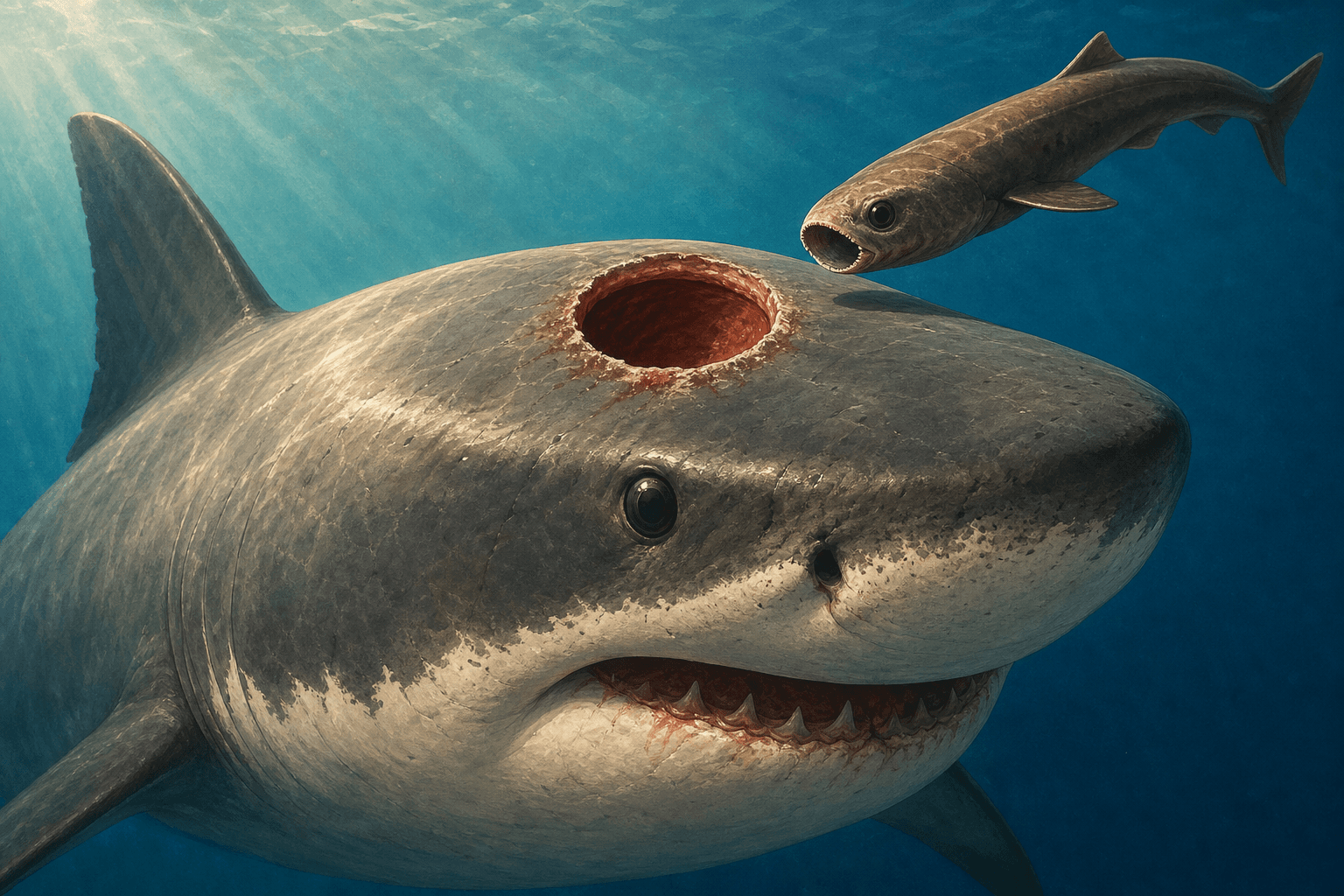
A great white shark was recently found with a strange mark on its head. The 16-foot female had a perfectly circular hole that looked almost like a blowhole. Scientists from the California White Shark Project shared a video of the discovery. They said the wound tells an interesting story about life in the deep ocean.
The mysterious hole was caused by a cookiecutter shark, a small but fierce predator. This creature is only about 20 inches long, much smaller than a great white. It latches onto larger animals using its lips like suction cups. Then it spins its body to cut out a round plug of flesh.
Researchers published a study in the journal Frontiers in Marine Science in 2025. They proposed a system to classify the different scars found on great white sharks. Scars can reveal interactions with other animals, boats, rocks, or even mating. Cookiecutter wounds suggest the white sharks were migrating through deep offshore waters.
This discovery reminds us that even the ocean's top predators face dangers. If we could follow great whites on their long journeys, we would witness many hidden battles. Scientists believe that studying scars is like reading a shark's life story. Every wound is a clue about the challenges these powerful animals survive.