The US Supreme Court heard oral arguments on April 29 in a landmark immigration case. The justices considered whether the Trump administration may legally end Temporary Protected Status. TPS is a humanitarian program that allows people to live and work in the United States. It applies when conditions in their home countries are too dangerous for safe return. This case specifically involves immigrants from Haiti and Syria.
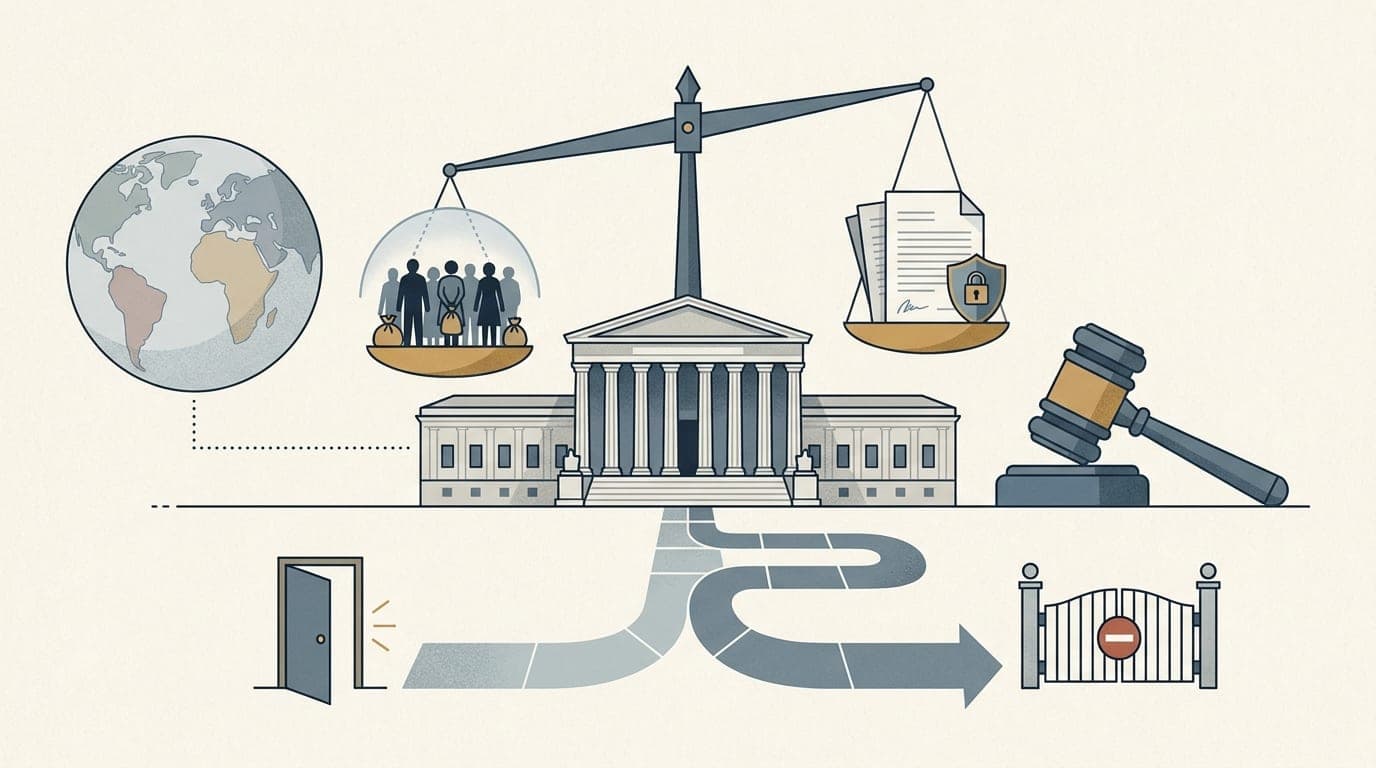
Conservative justices appeared sympathetic to the administration's legal position during the hearing. Several conservative justices focused on whether federal courts can review TPS decisions at all. Congress had included a provision stating that such government determinations are not subject to review. The administration's solicitor general argued that this provision bars all judicial oversight of TPS terminations. Approximately 350,000 Haitians and 6,000 Syrians could lose their protected status if the court rules accordingly.
The case has deep historical roots. Haiti was first designated for TPS after a devastating earthquake killed over 300,000 people in 2010. Syria received its designation in 2012 due to extraordinary conditions caused by armed conflict. Former Homeland Security Secretary Kristi Noem had terminated both designations. She concluded that neither country met the statutory criteria for continued protection. However, lower courts blocked these terminations, citing procedural violations and potential racial discrimination.
The implications of this ruling extend far beyond Haiti and Syria. More than one million immigrants from 17 countries currently hold TPS in the United States. A decision favoring the administration could prevent legal challenges to future TPS terminations. The ruling is expected by late June or early July. Immigrant communities across the nation are watching this consequential case with profound concern.