
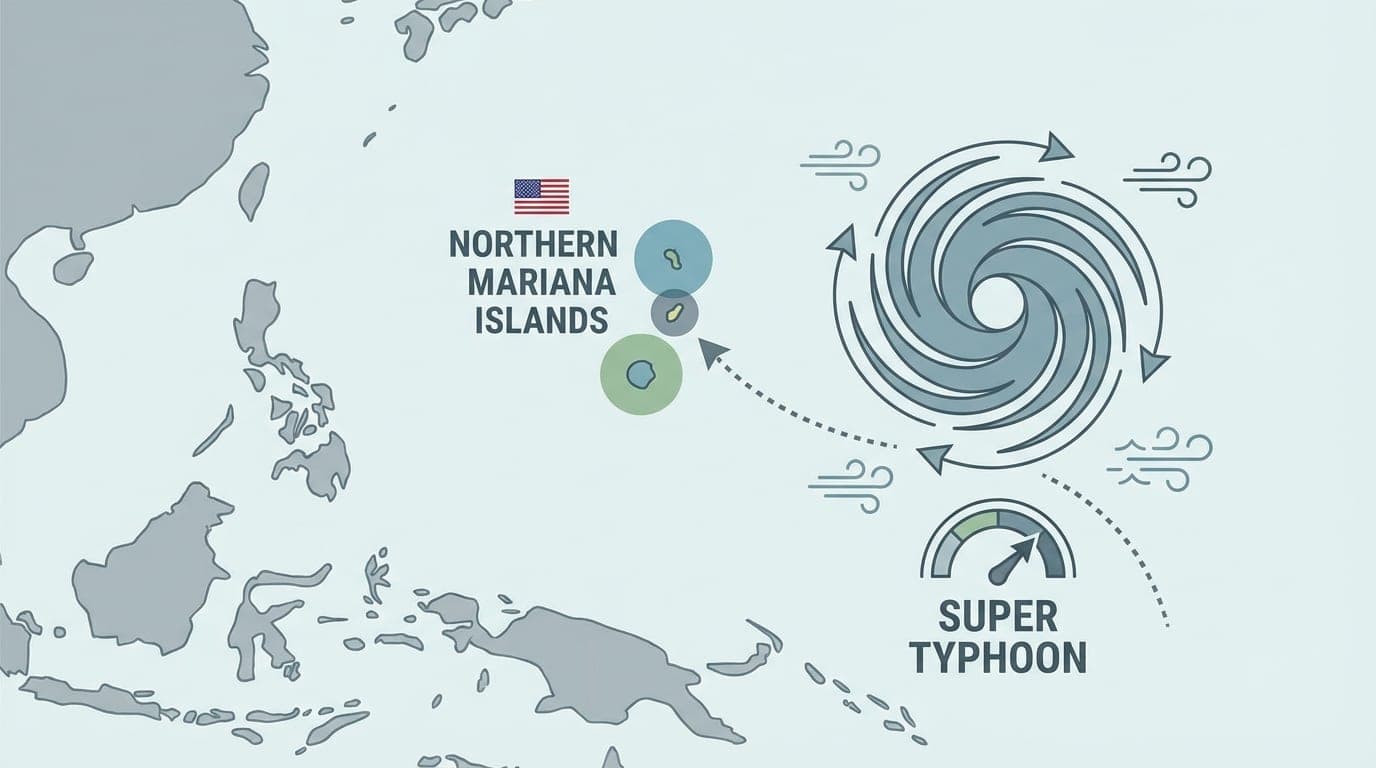
Super Typhoon Sinlaku has emerged as the strongest storm on the planet in 2026. The massive cyclone is currently tracking toward U.S. territories in the Western Pacific. At its peak intensity, the storm produced sustained winds of 180 mph. Wind gusts were recorded as high as 220 mph, making this an unprecedented April event. Meteorologists have classified Sinlaku as a Category 5 equivalent super typhoon.
The islands of Saipan, Tinian, and Rota face the most severe threat from this storm. These islands belong to the Commonwealth of the Northern Mariana Islands, a U.S. territory. Typhoon warnings have been issued for all three islands through at least Wednesday evening. Forecasters predict that 15 to 25 inches of rainfall could fall near the storm's center. Storm surge of five to eight feet is also anticipated along exposed coastlines.
Authorities have taken extensive preparedness measures in response to the approaching typhoon. A federal emergency declaration has been approved, enabling disaster relief from national agencies. Hundreds of residents have evacuated to designated shelters across Saipan and Tinian. Officials have urged people in non-concrete housing to relocate immediately to reinforced buildings. Outpatient clinics have been closed, though emergency rooms remain operational throughout the event.
This storm has raised broader concerns about climate patterns and disaster resilience in the Pacific. Storms of this intensity are relatively rare during April in the Western Pacific region. Had communities not invested in disaster preparedness infrastructure, the consequences could have been far worse. Scientists suggest that unusually warm ocean waters may have contributed to Sinlaku's rapid intensification. This event underscores the critical importance of monitoring climate change and strengthening resilience.