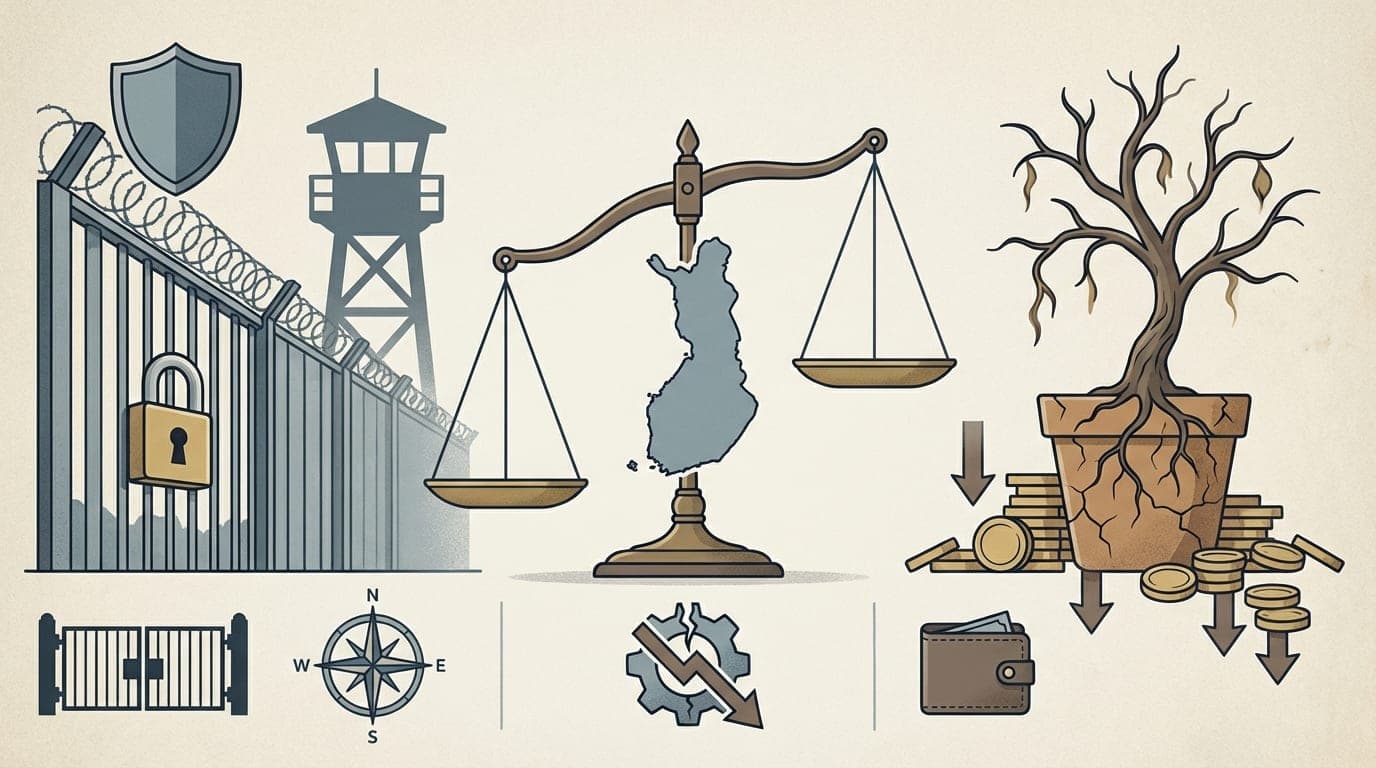
Seldom has a geopolitical decision yielded such a stark illustration of the tension between national security and local prosperity. Finland closed its entire border with Russia in December 2023, citing allegations of hybrid warfare. Helsinki accused Moscow of orchestrating a surge of approximately 1,300 migrants across the frontier. The Kremlin denied this charge, yet the border has remained sealed ever since. What was initially framed as a temporary measure has, by all accounts, become a permanent fixture.
The municipality of Tohmajarvi, home to the Niirala border crossing, exemplifies the economic fallout. At its peak, the Niirala crossing facilitated nearly two million border crossings annually. Local authority chief Mikko Lopponen has noted that this figure has now dropped to zero. Businesses that once thrived on cross-border trade and tourism have been left in a precarious position. A local store reported that its sales had halved since the closure took effect.
The broader economic indicators paint a similarly troubling picture for the region. Finland recorded the highest unemployment rate in the European Union at 10.2 percent in December. In Tohmajarvi specifically, unemployment reached a staggering 18.2 percent during the same period. Finnish exports to Russia plummeted from five percent of total exports in 2021 to less than one percent by 2023. Small enterprises in eastern border municipalities have struggled disproportionately to diversify their markets.
Nevertheless, the rationale for the closure is deeply rooted in historical and contemporary security imperatives. Most of Finnish Karelia was seized by Soviet forces in 1940 during the Winter War. Finland subsequently abandoned decades of military non-alignment by joining NATO in April 2023. The government is now constructing a 200-kilometre barrier fence equipped with cameras and sensors. Defence Minister Antti Hakkanen has emphasised the urgency of strengthening Finland's defensive capabilities.
What distinguishes this situation is the paradox it presents for policymakers and affected communities alike. Economist Tomi Kristeri has suggested that the overall national economic impact has been less severe than anticipated. However, this aggregate assessment obscures the acute suffering of border communities dependent on Russian commerce. The fundamental question remains whether the imperative of national security can be reconciled with sustainable regional development.