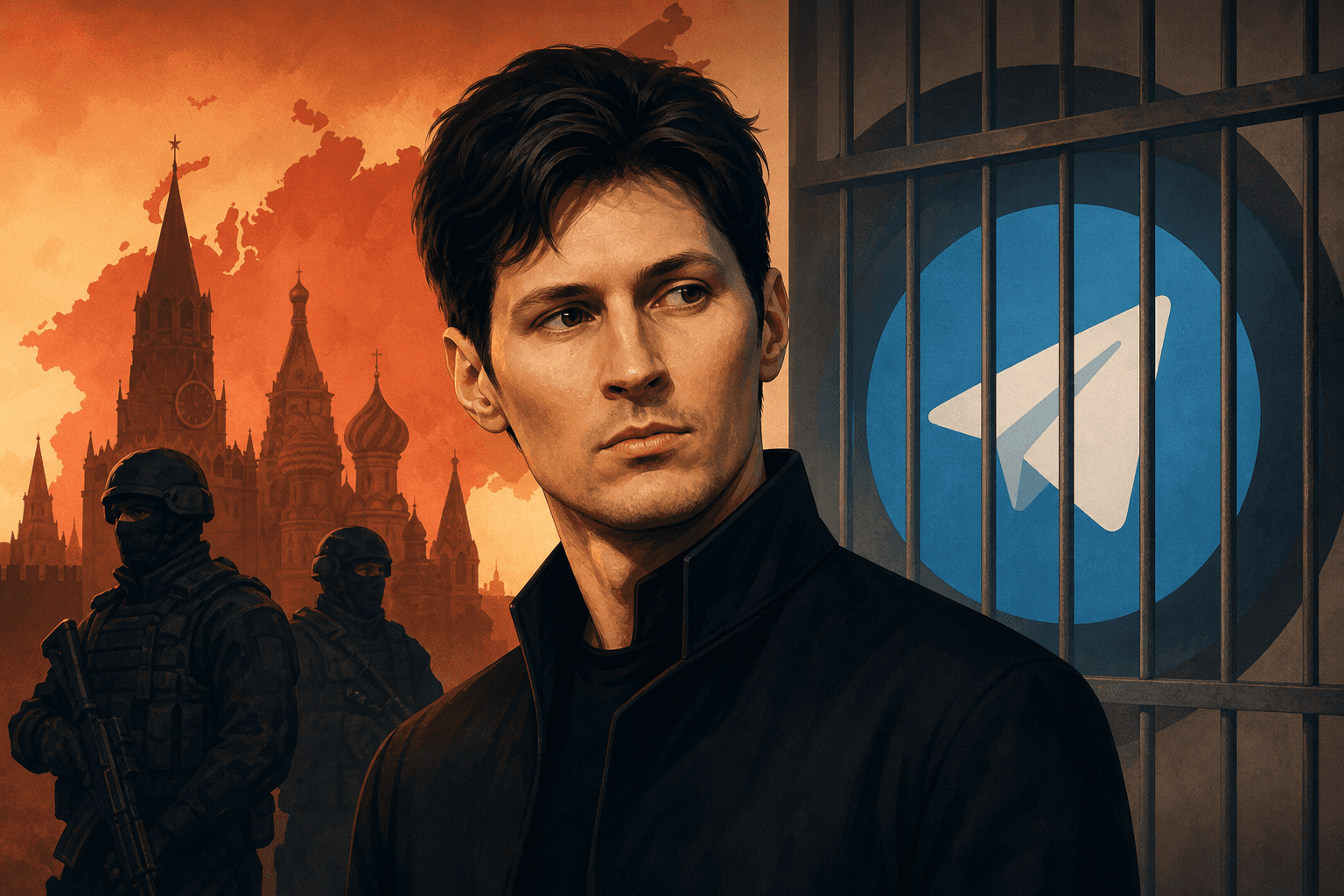
Seldom has a tech founder faced criminal charges from two countries simultaneously. Pavel Durov, the billionaire behind Telegram, now confronts that reality. Russia's Federal Security Service, known as the FSB, charged him with aiding terrorism on July 29, 2026. He has also been placed on an international wanted list. The 41-year-old entrepreneur, who holds French and Emirati citizenship, currently resides in Dubai.
The FSB alleges that Telegram failed to remove channels and bots used to coordinate terrorist attacks inside Russia. Specifically, authorities claim Ukrainian intelligence operatives exploited a dating chatbot to recruit young Russians for sabotage. According to officials, 46 individuals aged 12 to 22 have been detained since July 2025 across the country. These detainees allegedly carried out arson attacks and assaults on law enforcement officers. If convicted under Russian law, Durov could face life in prison.
This is not Durov's first confrontation with state authorities. In 2024, French authorities arrested him in Paris over allegations of permitting illicit activity on Telegram. Those charges included complicity in drug trafficking and the distribution of child exploitation material. France later lifted his travel restrictions in November 2025, though the criminal investigation remains ongoing. Durov has consistently denied any wrongdoing in both cases.
The charges coincide with Russia's broader campaign to curtail internet freedom and suppress independent platforms. Since early 2026, authorities have throttled Telegram access and promoted a state-backed alternative called MAX. Critics contend that MAX, which openly shares user data with the government, functions primarily as a surveillance tool. Durov himself has accused Russian authorities of fabricating pretexts to undermine privacy and free speech. The move to restrict Telegram has provoked widespread discontent, even among pro-Kremlin military bloggers.
This case raises profound questions about the accountability of technology platforms for their users' conduct. Should founders bear criminal liability when governments deem their platforms insufficiently moderated? Had Durov complied with Russian demands years ago, Telegram would have become yet another censored platform. The implications extend far beyond one entrepreneur, touching every digital citizen who values both security and liberty.