
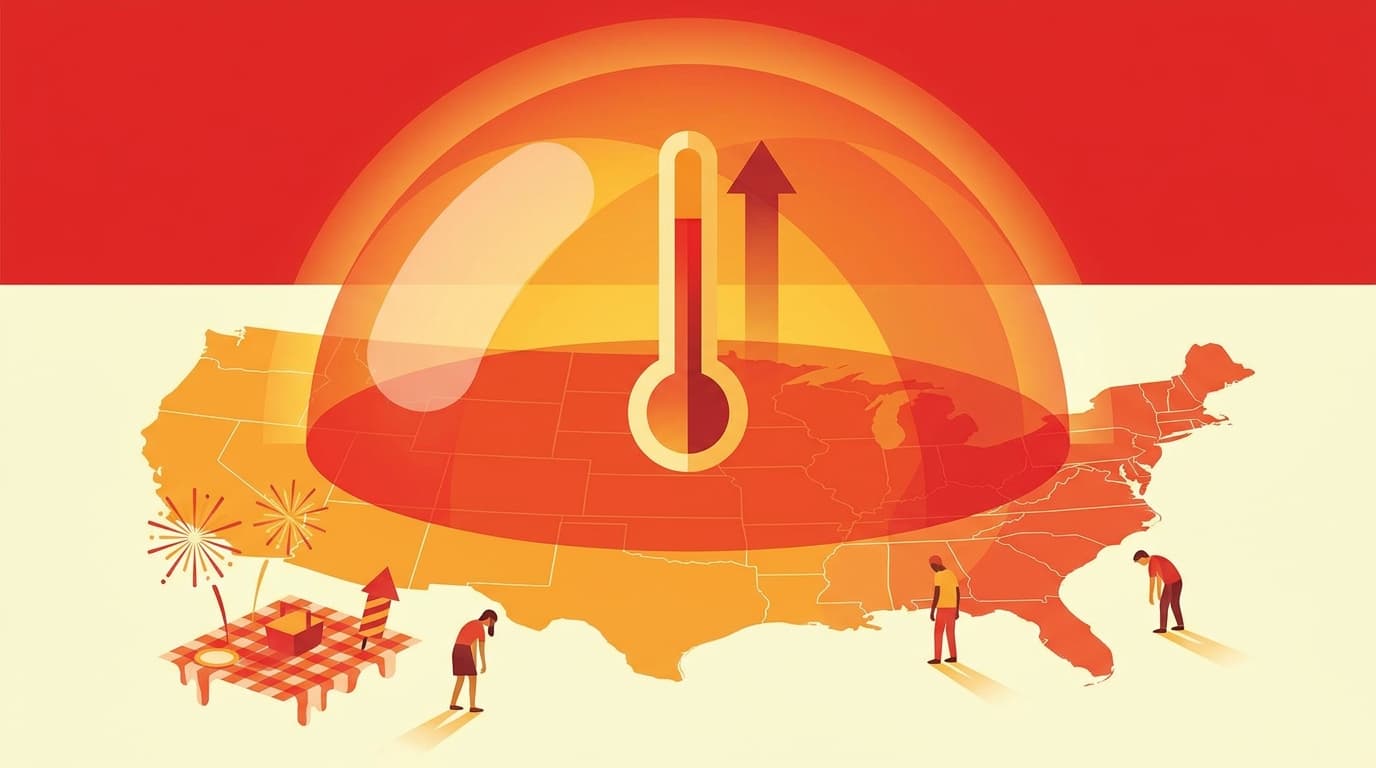
A prolonged and dangerous heat wave is scorching the eastern half of the United States this week. Millions of Americans had been preparing for outdoor Independence Day celebrations. However, a sprawling heat dome has settled over the region, bringing oppressive conditions. Temperatures in the mid-90s to low 100s are expected across numerous states. High humidity will push "feels like" temperatures above 110 degrees in some areas.
The heat dome, which had been building since late June, will peak around July 3 and 4. Over 180 million people in the Midwest and East face major or extreme heat risk. Cities such as New York, Philadelphia, and Washington, D.C., could reach 100 degrees or higher. New York City's Central Park could record its first triple-digit temperature since 2012. Washington, D.C., may experience three or more consecutive days above 100 degrees.
Health officials have warned that this heat wave poses a severe threat to public safety. Heat is the deadliest type of weather in the United States, surpassing tornadoes and hurricanes. Overnight temperatures will remain dangerously warm, offering little relief from the daytime heat. Had cities not opened cooling centers, vulnerable populations would have been at even greater risk. Prolonged exposure to extreme heat can cause heat exhaustion and potentially fatal heat stroke.
The heat wave coincides with America's 250th anniversary, one of the busiest outdoor celebration periods. Washington, D.C., is preparing for a surge of visitors attending parades, concerts, and fireworks. Organizers have arranged hydration stations, first aid tents, and extra ambulances for holiday events. Scientists argue that heat waves are becoming more frequent and intense due to climate change. If fossil fuel emissions had been reduced earlier, such extreme weather events might have been less severe.