
Billions of years ago, the universe was shrouded in complete darkness. The first stars eventually ignited and transformed space, allowing light to flow freely. These original stars, known as Population III, have never been found by astronomers. However, scientists have now identified the next best thing. A second-generation star has been discovered that preserves chemical traces from those earliest stars.
The star, designated PicII-503, is located approximately 150,000 light-years from Earth. It resides in Pictor II, an ultra-faint dwarf galaxy that is over ten billion years old. According to the study published in Nature Astronomy, PicII-503 contains roughly 43,000 times less iron than our Sun. Remarkably, its carbon abundance is about 3,000 times higher relative to its iron content. This extraordinary composition makes it the most iron-poor star ever found beyond the Milky Way.
The research was led by astrophysicist Anirudh Chiti of Stanford University. Chiti described the discovery as being at the edge of what scientists thought possible. The star was identified using data from the Dark Energy Camera's MAGIC survey. This 54-night observing program had been specifically designed to locate chemically primitive stars. Pictor II, being a fossil galaxy, provided an ideal environment for this unprecedented search.
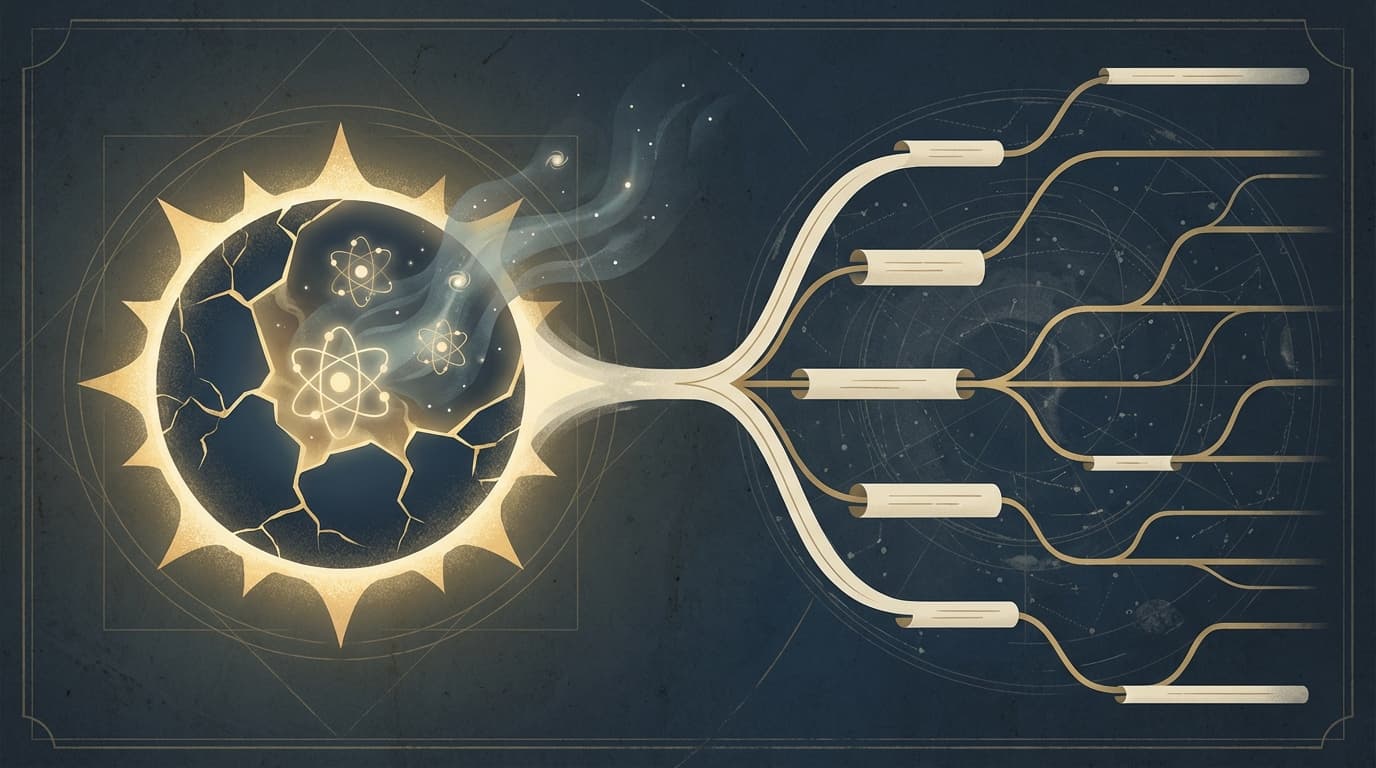
Scientists believe PicII-503 formed from debris produced by a low-energy supernova explosion. In such an event, lighter elements like carbon would have escaped into space. Meanwhile, heavier elements such as iron would have collapsed back into the remnant. This finding connects to similar ancient stars observed in the Milky Way's outer regions. Future telescopes, including the Vera C. Rubin Observatory, may reveal additional stellar fossils from this primordial era.