A remarkable scientific study has revealed that psychedelic drugs can reduce aggression in fish. Researchers administered psilocybin, the compound found in magic mushrooms, to a highly aggressive species. The fish had been known for their hostile behavior toward other members of their species. After being exposed to a low dose, the fish demonstrated significantly less aggressive conduct. This unprecedented finding was published in the journal Frontiers in Behavioral Neuroscience.
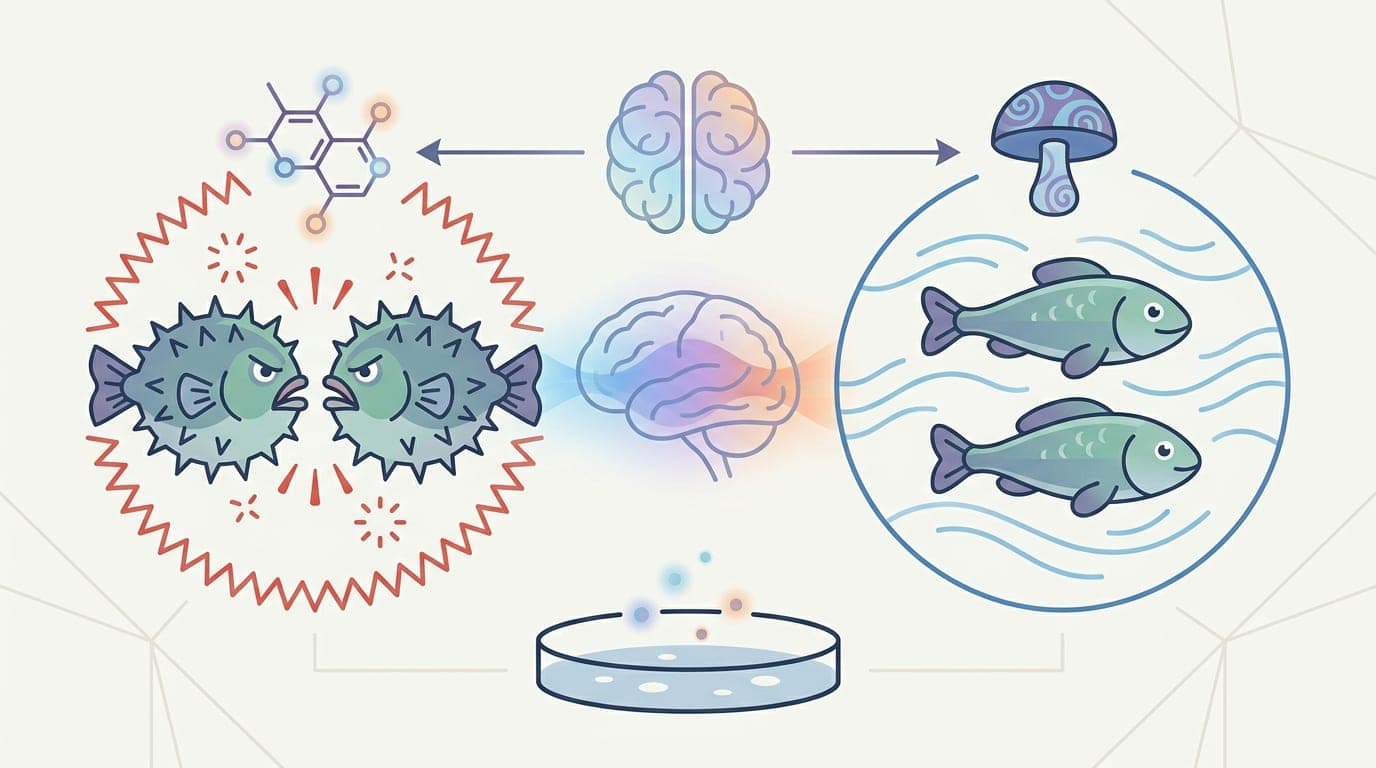
The researchers used the mangrove rivulus, a species notorious for its extreme aggression. Two fish were placed in a tank separated by a mesh barrier. One fish was then removed and exposed to psilocybin for twenty minutes. Upon being returned, the treated fish showed far fewer high-energy attacks such as charging. However, lower-energy behaviors like sizing up opponents were not eliminated by the treatment.
The choice of this particular species was deliberate and scientifically significant. The mangrove rivulus is a rare hermaphroditic fish that reproduces through self-fertilization. Consequently, its offspring are essentially genetic clones of one another. Had the researchers used a genetically diverse species, behavioral differences might have been attributed to genetics. By eliminating genetic variation, any observed changes could be attributed solely to psilocybin.
These findings could eventually yield insights relevant to human brain research. Humans and fish share certain aspects of neural anatomy, which makes comparisons possible. Lead researcher Dayna Forsyth noted that the selective reduction in aggression was unexpected. The team had predicted that all aggressive behaviors would decrease equally. This nuanced outcome suggests that psilocybin targets specific neural mechanisms governing high-energy hostility.