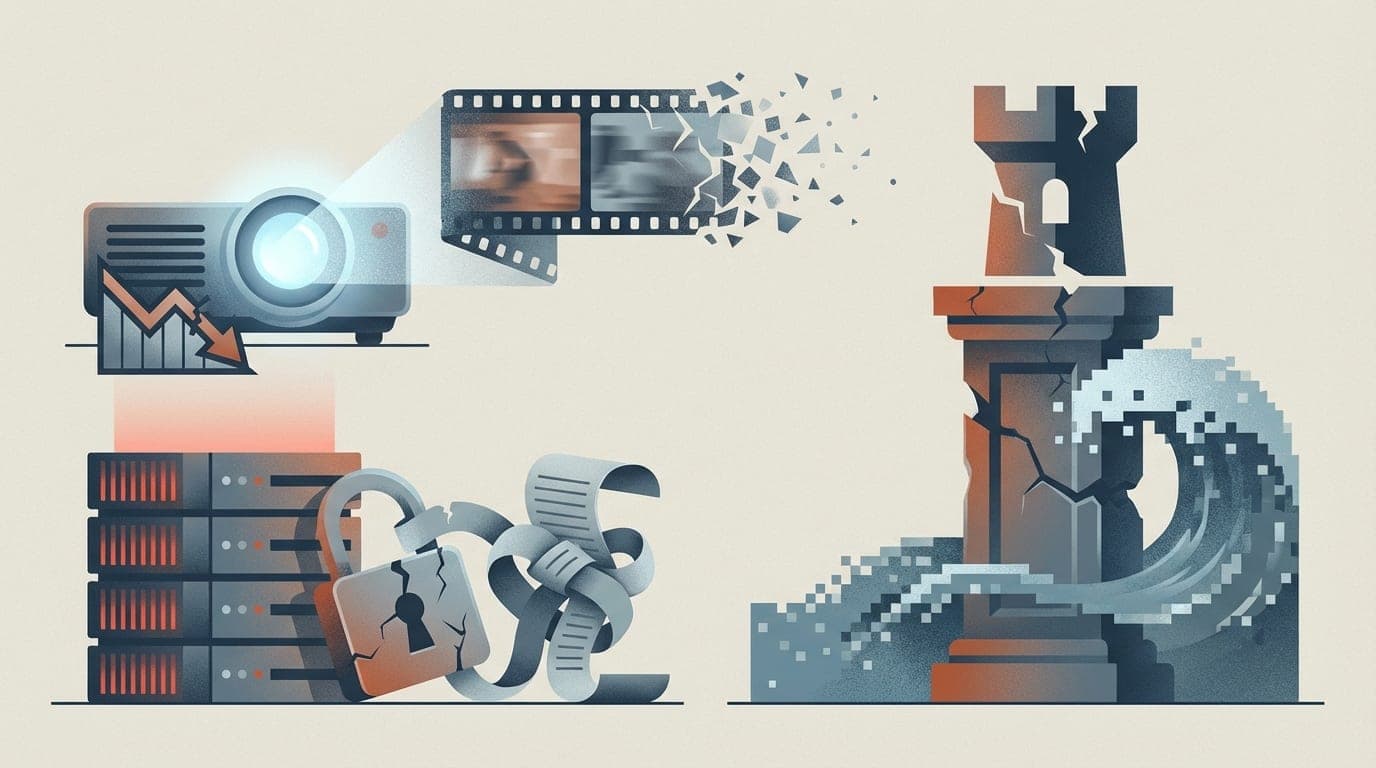
Seldom has a technology product experienced such a precipitous reversal of fortune. OpenAI announced on March 24, 2026, that it would discontinue Sora, its AI video generation platform. The decision came merely six months after the standalone app's high-profile launch. This abrupt withdrawal has sent shockwaves through the technology and entertainment industries alike.
Sora's trajectory initially appeared remarkably promising. The app surged to the top of Apple's App Store upon its September 2025 release. It reached one million downloads in fewer than five days. By November, total downloads had peaked at approximately 3.3 million across iOS and Google Play. However, engagement subsequently plummeted, with downloads declining to roughly 1.1 million by February 2026.
Several converging factors precipitated this discontinuation. Video generation demands substantially more computational resources than text-based tasks. OpenAI acknowledged the necessity of making trade-offs regarding products with high compute requirements. Furthermore, the platform attracted considerable scrutiny over deepfakes and copyright infringement. Users exploited weaknesses in safety measures to generate unauthorized depictions of public figures and copyrighted characters.
The ramifications extend well beyond OpenAI's product portfolio. Disney's planned one-billion-dollar investment and character licensing agreement has been terminated entirely. No funds were ever exchanged between the two companies. OpenAI is reportedly refocusing its resources on enterprise products and coding tools ahead of a prospective initial public offering. Competitors such as Google DeepMind and ByteDance continue to develop rival video generation models.
Sora's demise illuminates broader tensions inherent in commercializing generative AI. The platform generated merely 2.1 million dollars in lifetime revenue from in-app purchases. Ethical concerns surrounding intellectual property and consent remain largely unresolved across the industry. Whether AI video generation proves commercially viable will depend on how subsequent platforms navigate these formidable challenges.