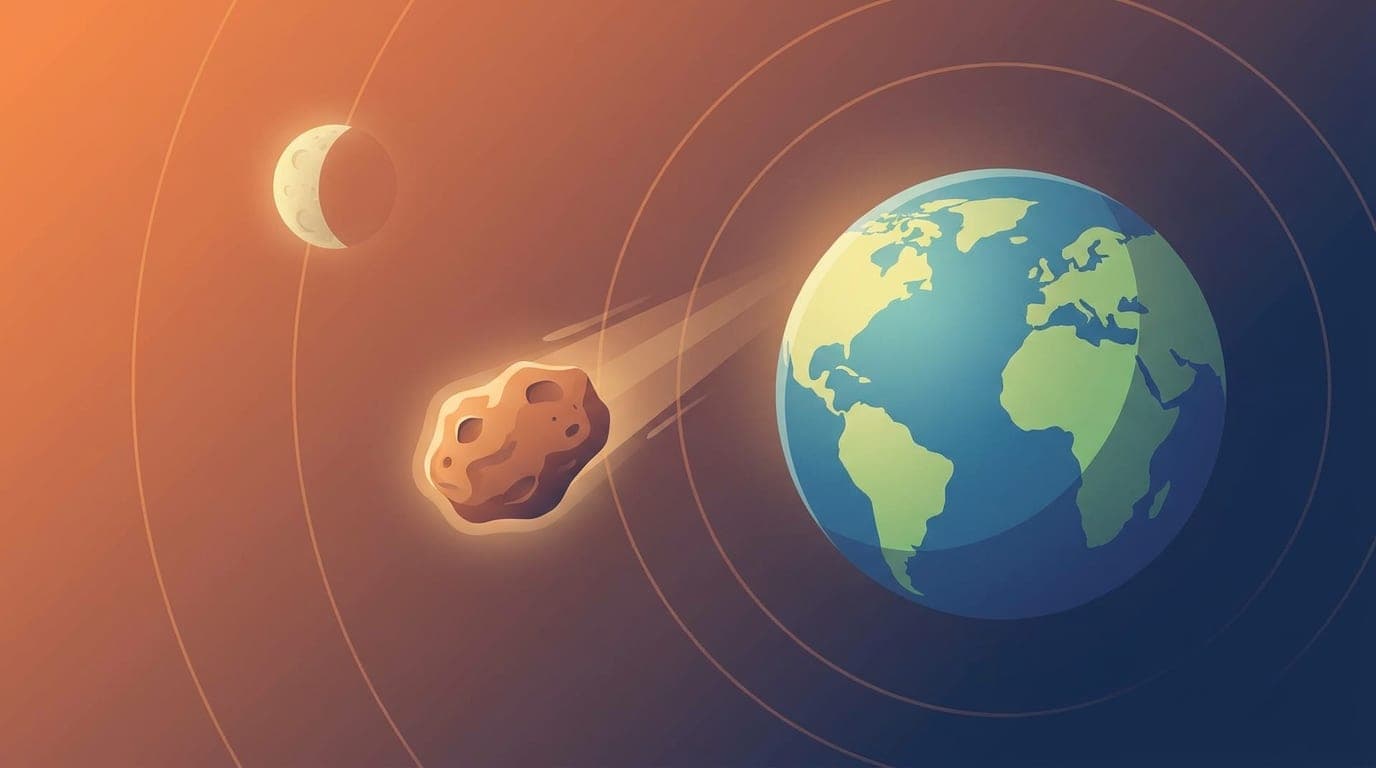
A small asteroid is about to make a surprisingly close visit to Earth. The space rock, named 2026 JH2, was discovered just days ago on May 10. It will pass within about 57,000 miles of our planet on Monday. That is much closer than the moon, which orbits at about 238,855 miles away. Scientists have confirmed that the asteroid poses no threat to Earth.
The asteroid is estimated to be roughly 62 feet wide. It was first spotted by the Mount Lemmon Survey in Arizona. This astronomical project is based in the Santa Catalina Mountains. The space rock will reach its closest approach around 6:00 p.m. ET. At that point, it is expected to reach its peak brightness.
Although the asteroid is not dangerous, its close flyby is still significant. Events like this give scientists a rare opportunity to study near-Earth objects. If an asteroid of this size were to enter our atmosphere, it could cause damage. That is why researchers are eager to observe 2026 JH2 as it passes. Understanding these objects helps us prepare for potential future encounters.
Space agencies around the world constantly monitor the sky for asteroids. New discoveries happen regularly, but close approaches like this one are uncommon. If we invested more in detection technology, we would find these objects even sooner. This event reminds us that space is full of surprises. It also shows how important continued research and observation truly are.