
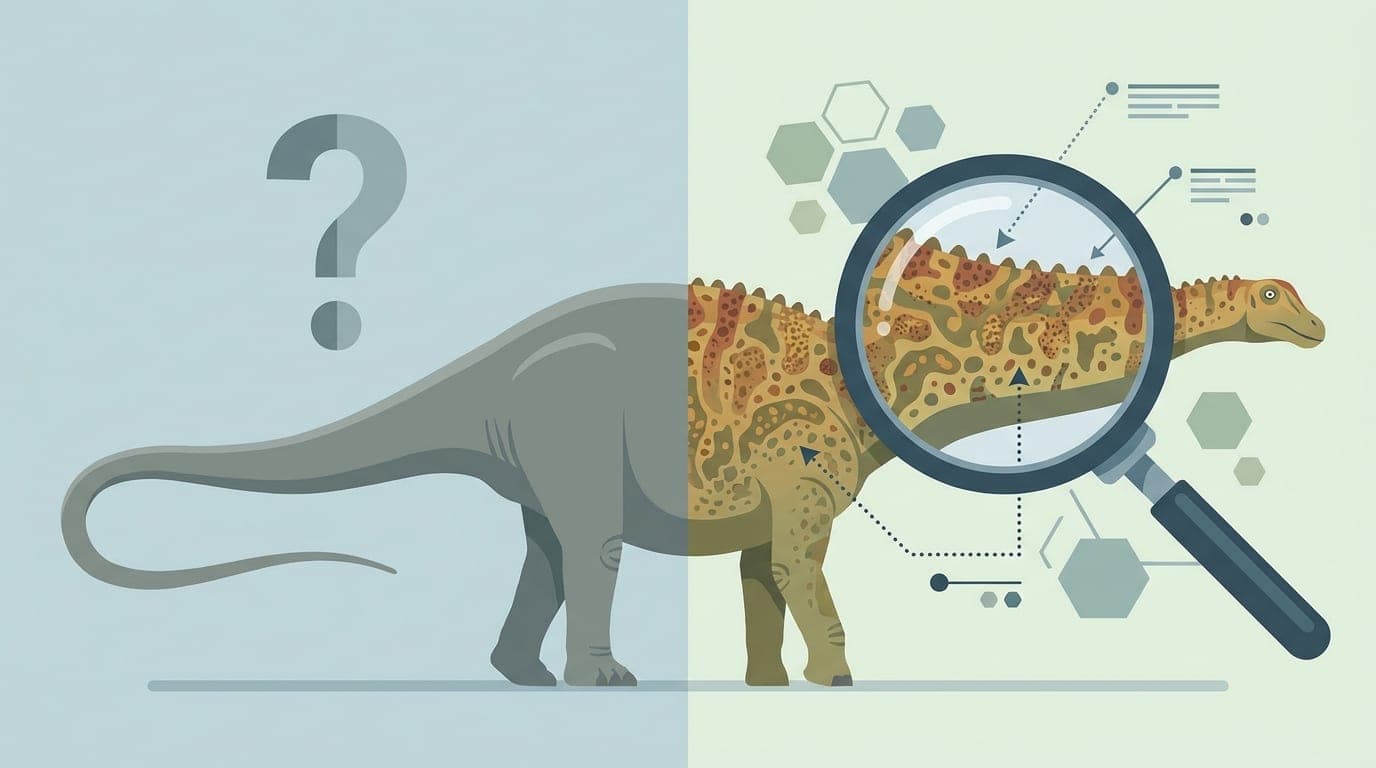
For over a century, scientists imagined sauropod dinosaurs as plain, grey giants. Diplodocus, a massive long-necked plant-eater, was often depicted this way. However, a remarkable discovery in Montana has challenged these assumptions. Researchers have found fossilized skin impressions from juvenile Diplodocus specimens. These fossils date back approximately 150 million years to the Late Jurassic period.
The preserved skin was examined using powerful scanning electron microscopes. Scientists identified tiny structures called melanosomes within the skin layers. Melanosomes are small bodies inside cells that produce and store pigment. Two distinct types were found in the Diplodocus skin samples. Oblong melanosomes are linked to darker colours like brown or black. Disc-shaped melanosomes are associated with lighter or reflective colours.
The presence of both melanosome types suggests a speckled pattern on the skin. This pattern resembles the skin of modern crocodiles, which share similar scales. Researchers believe the speckling may have served as camouflage for survival. Young Diplodocus would have been vulnerable to large predators like Allosaurus. If they had possessed plain skin, they would have been easier to spot.
This discovery is considered significant because it is the first evidence of colour in sauropods. Previously, colour research had only been conducted on feathered dinosaurs. The study was published in the journal Royal Society Open Science. Future research may reveal the precise colours of Diplodocus skin. Scientists also hope to determine whether adults displayed the same patterns.